 Nozzle School
PLA vs ABS: Which Filament Should You Use?
PLA vs ABS compared: strength, heat resistance, warping, fumes, enclosures, acetone smoothing and cost, plus when ASA or PETG is the better choice.
Choose PLA if you’re learning, printing on an open printer, or making anything that stays indoors and away from heat: it’s easier to print, barely warps and has no strong smell. Choose ABS only when a part has to survive real heat (around 80–100 °C, such as inside a car in summer) or take knocks, and only if you have an enclosure and good ventilation, because ABS warps and gives off fumes.
This guide compares the two side by side, explains how to print each one, and covers the safety side of ABS that most comparisons skip. It also explains why many people who think they need ABS are better off with PETG or ASA. For the wider picture of every common material, see our 3D printing filament guide.
PLA vs ABS at a glance
| PLA | ABS | |
|---|---|---|
| Nozzle temperature | 190–220 °C | 230–260 °C |
| Bed temperature | 50–65 °C | 90–110 °C |
| Part cooling fan | 100% after the first layers | Off, or 0–30% |
| Enclosure | Not needed (often better without) | Strongly recommended |
| Ease of printing | Easiest of all | Hard on an open printer |
| Warping | Very low | High |
| Strength | Stiff and strong, but brittle | Less stiff, tougher, bends before it breaks |
| Heat resistance | Softens around 55–60 °C | Softens around 95–105 °C |
| Smell and fumes | Faint, slightly sweet | Strong plastic smell; needs ventilation |
| Outdoors and sunlight | Poor | Fair; yellows and gets brittle in sun over time |
| Sanding, drilling, gluing | Possible, but gums up when warm | Easy; can be glued and smoothed with acetone |
| Typical price | The cheapest | Similar to PLA |
The temperature ranges are typical starting points. Always check the range printed on your spool, because blends and brands vary.
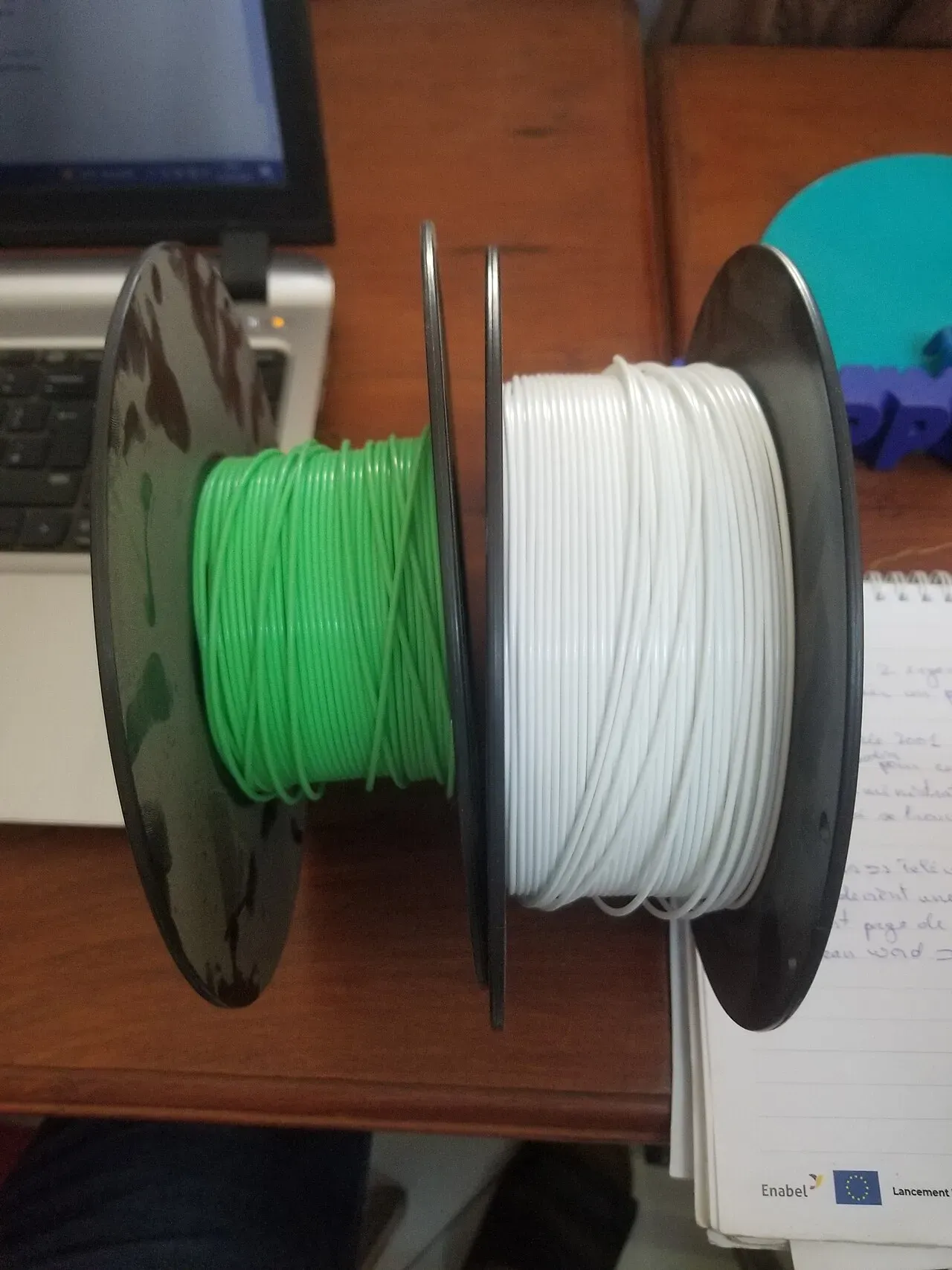 PLA: the beginner's filament.Photo: Richardspa ·CC0 ·Wikimedia Commons
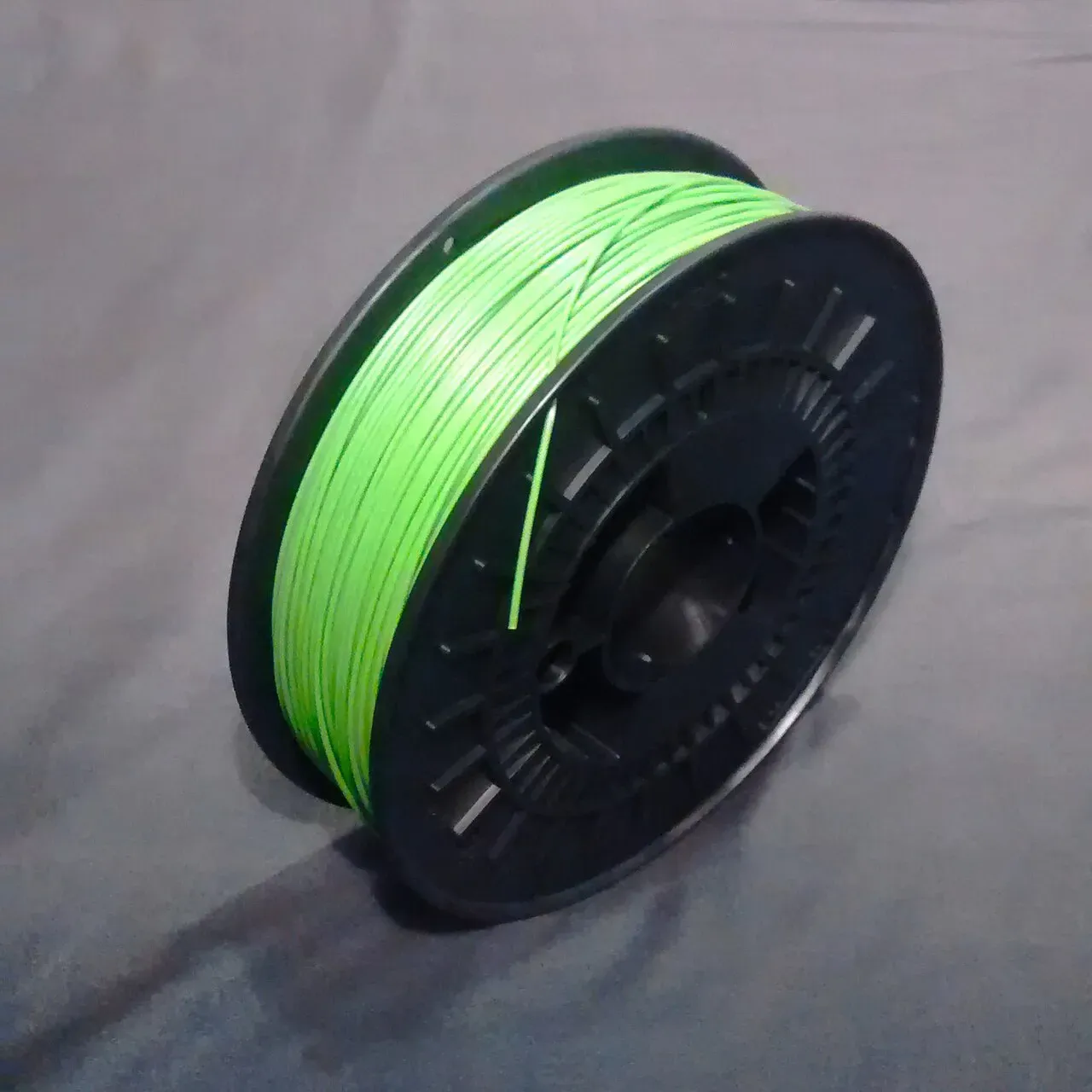 A spool of ABS.Photo: Tatár Lehel ·CC BY-SA 3.0 ·Wikimedia Commons
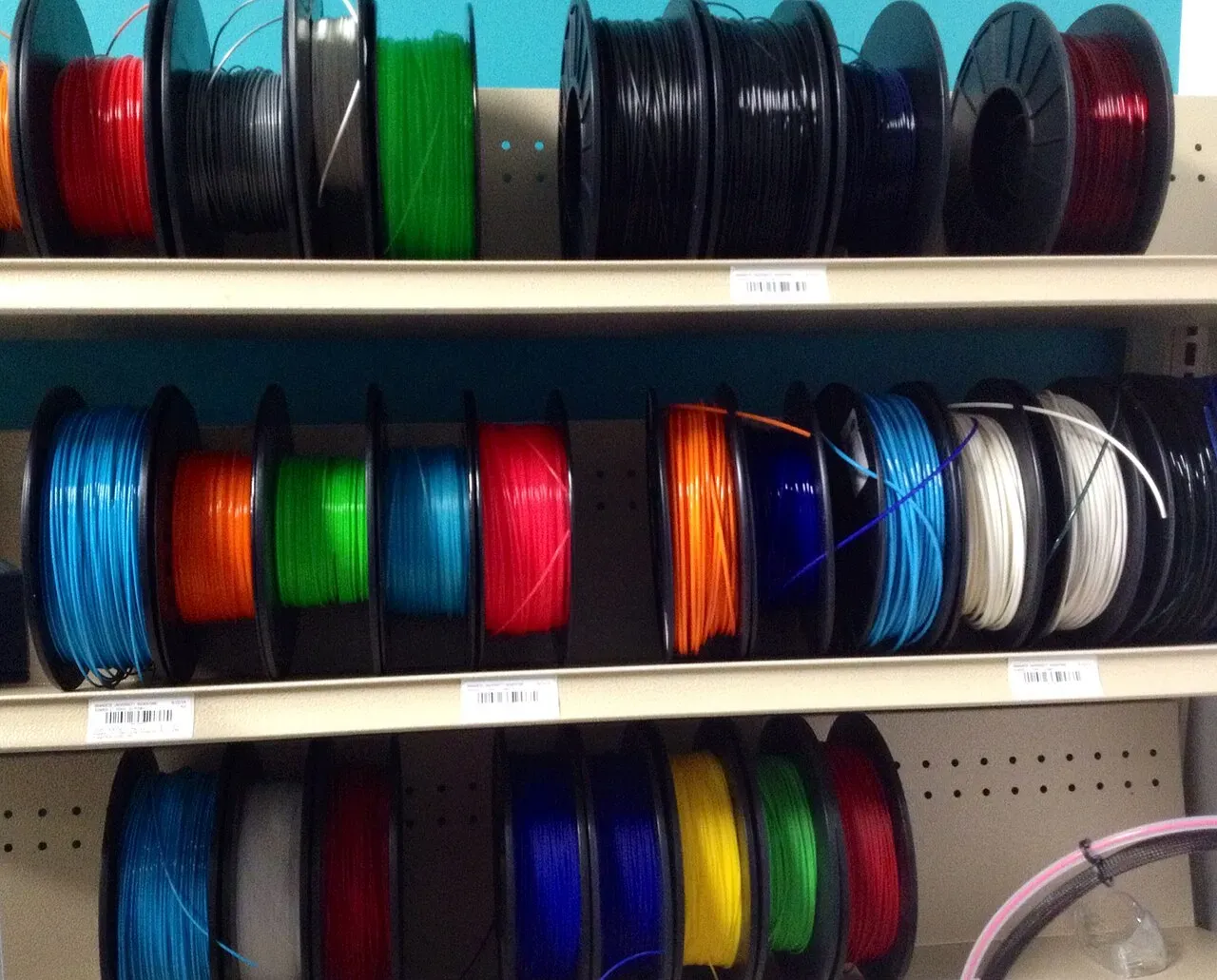 Filament comes in almost every colour.Photo: westonhighschool library ·CC BY-SA 2.0 ·Wikimedia Commons
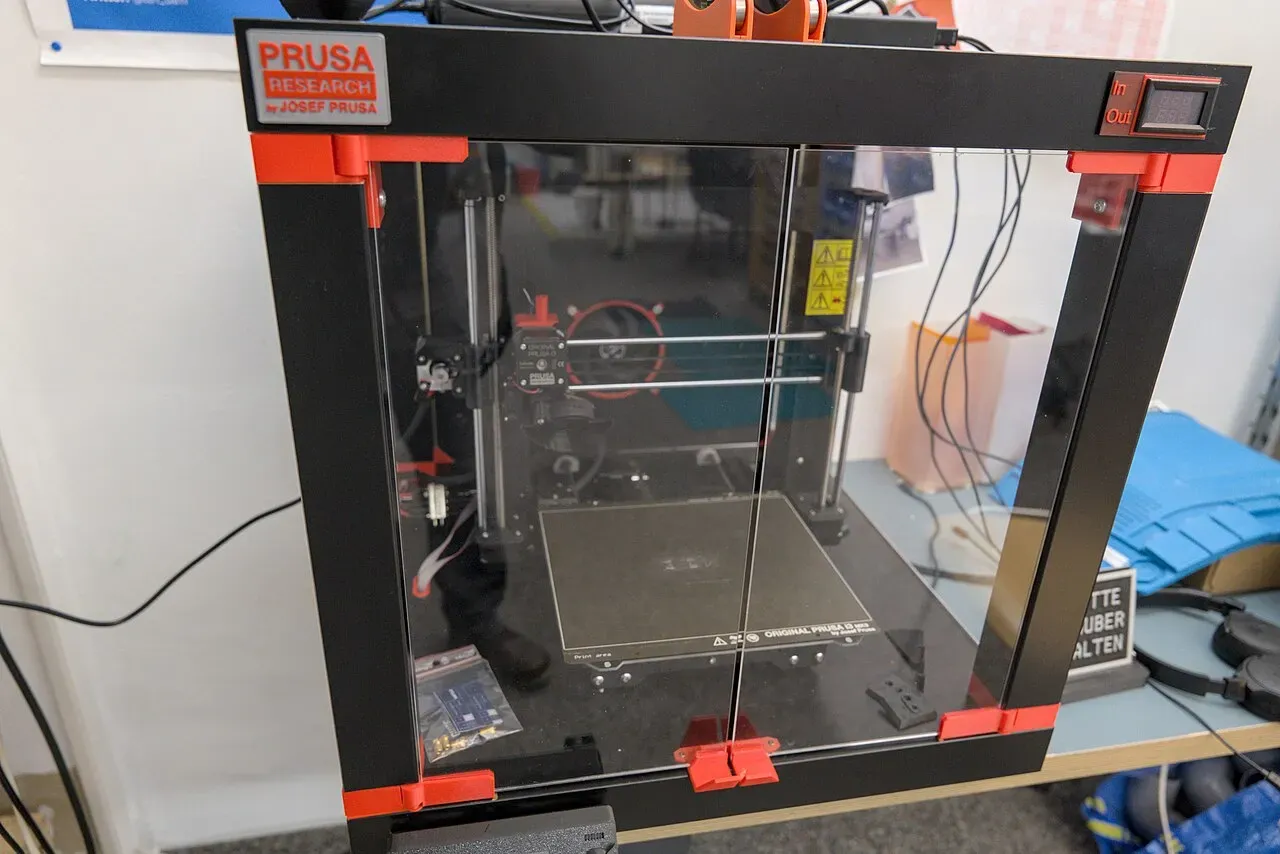 An enclosure keeps heat in for ABS and ASA.Photo: -stk ·CC BY-SA 4.0 ·Wikimedia Commons
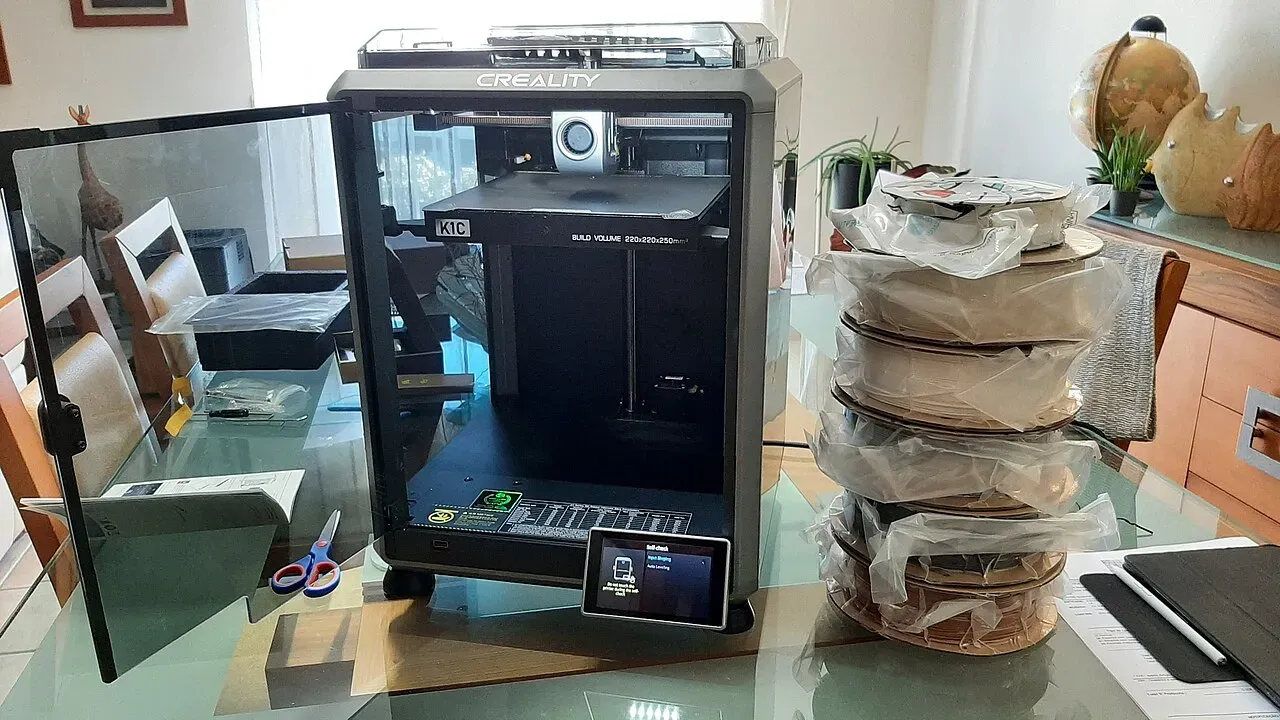 An enclosed CoreXY printer on a home desk.Photo: Mortymore ·CC BY 2.0 ·Wikimedia Commons
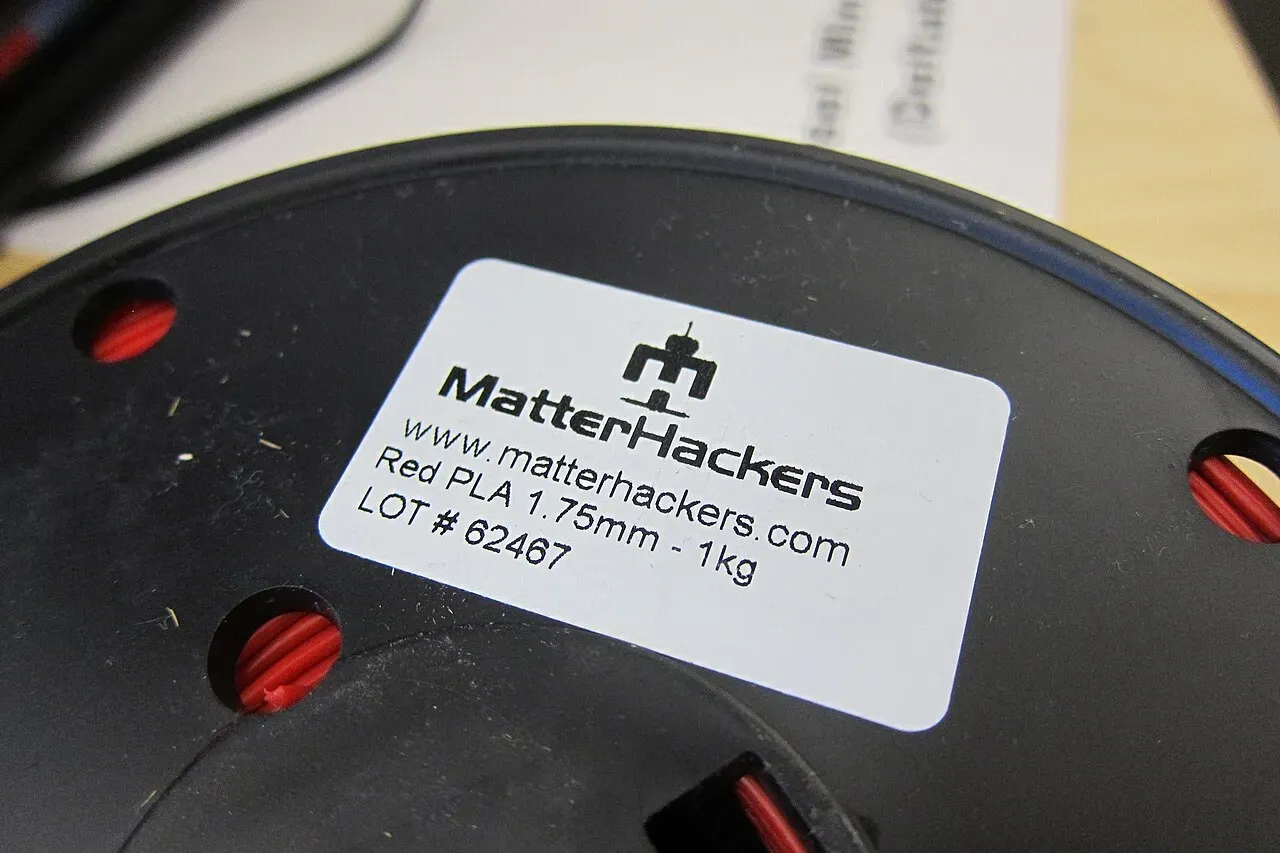 Read the label: material, 1.75 mm diameter, 1 kg.Photo: John Abella from Outside Philadelphia, USA ·CC BY 2.0 ·Wikimedia Commons
Choose PLA if…
- You’re new to 3D printing or still learning your printer.
- Your printer is open (no enclosure), or it sits in a room where people sleep, work or study.
- The part is decorative or a prototype: models, figures, vases, organisers, test fits.
- You want the sharpest detail and the fewest failed prints.
- The part stays indoors, away from heaters, sunny windows and hot cars.
Choose ABS if…
- The part has to survive heat that would soften PLA: a car interior, near a motor, a lamp housing, a bracket beside a radiator.
- It needs to take impacts or flex a little without snapping.
- You want to sand, drill, glue or acetone-smooth the finished part.
- You have an enclosed printer and somewhere it can vent fumes, such as a garage, workshop or a filtered enclosure.
If the last point isn’t true for you, skip ahead to when to choose ASA or PETG instead. Most of the time one of them gives you what you wanted from ABS with fewer headaches.
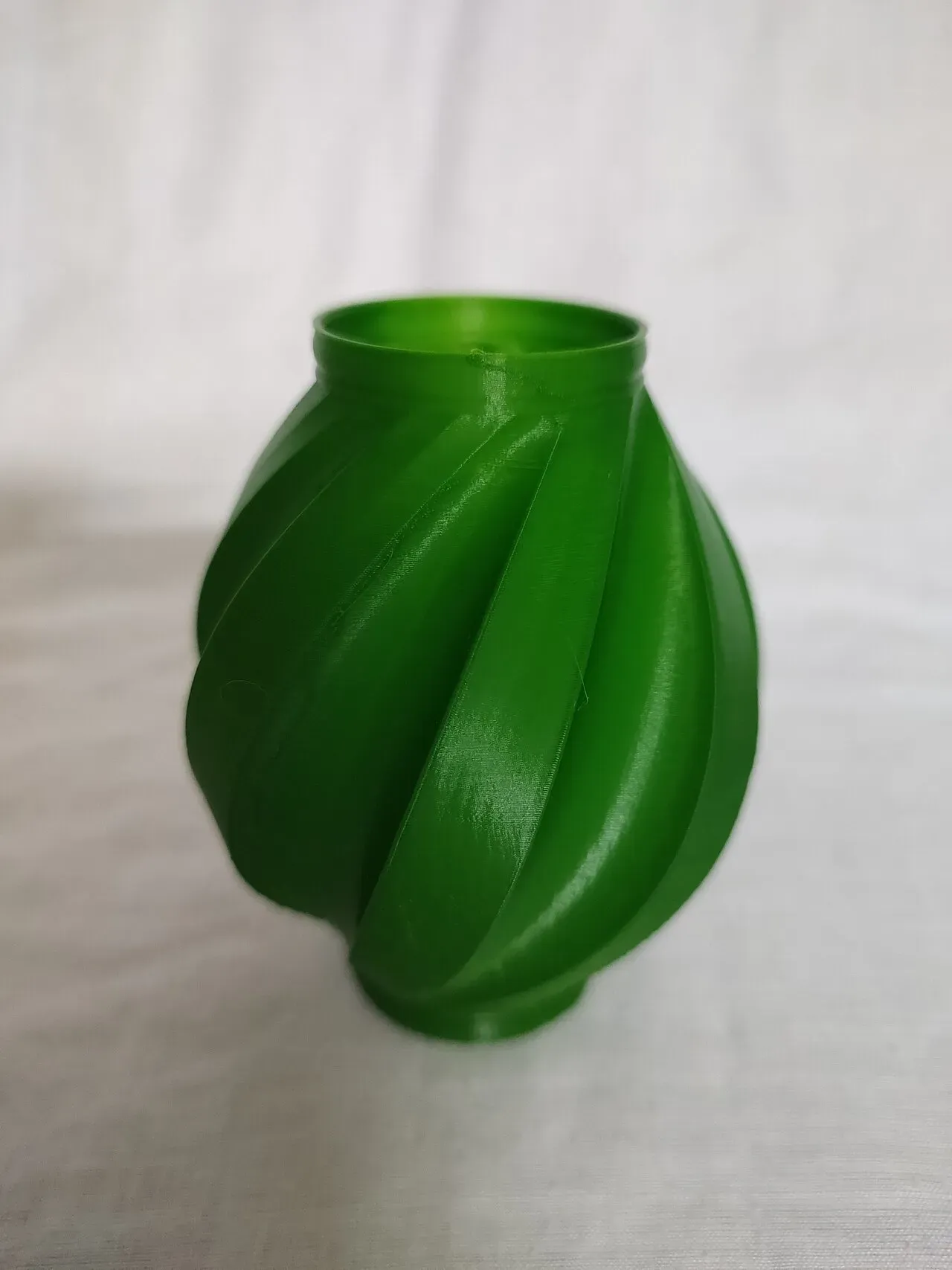 A twisted vase printed in a single wall.Photo: Sumanbargavr ·CC BY-SA 4.0 ·Wikimedia Commons
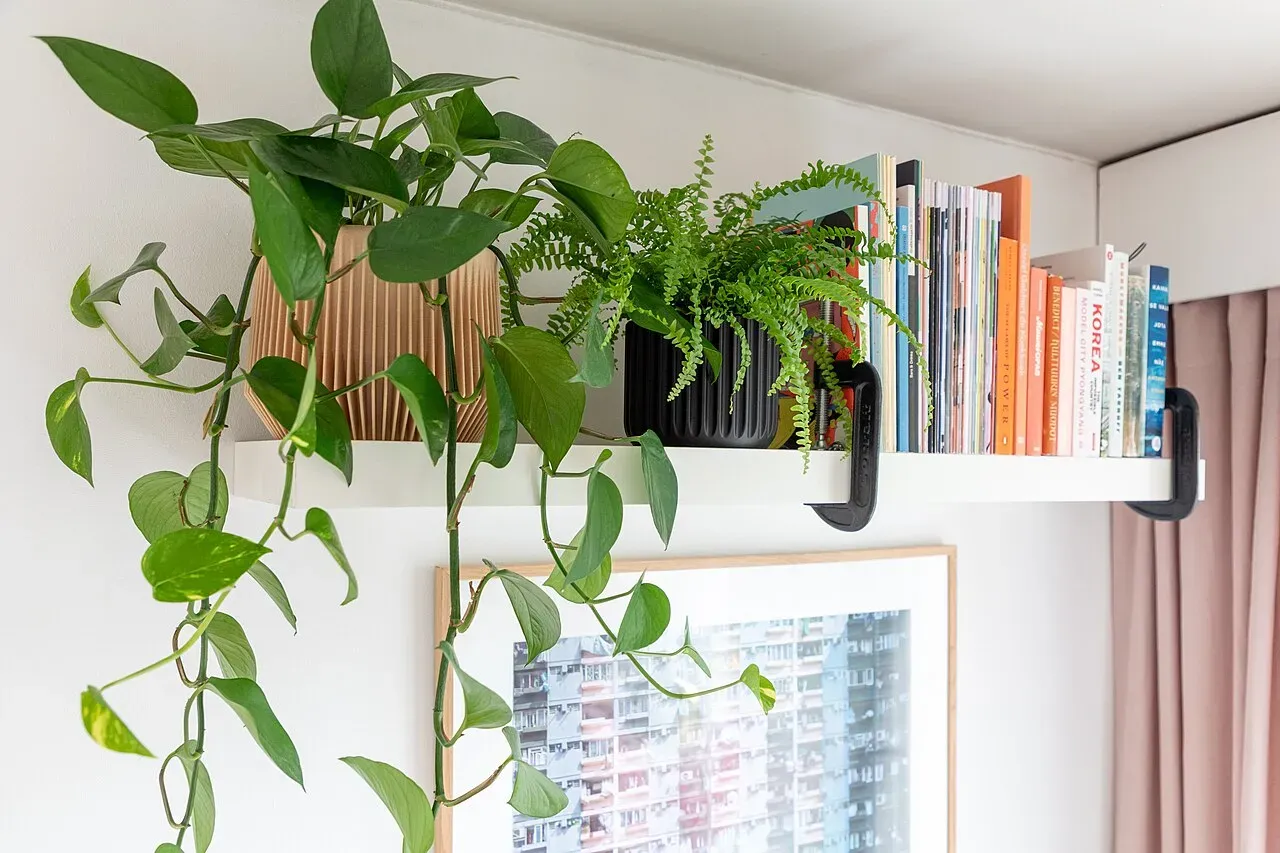 Useful prints: planters on a shelf.Photo: Aaaatu ·CC BY-SA 4.0 ·Wikimedia Commons
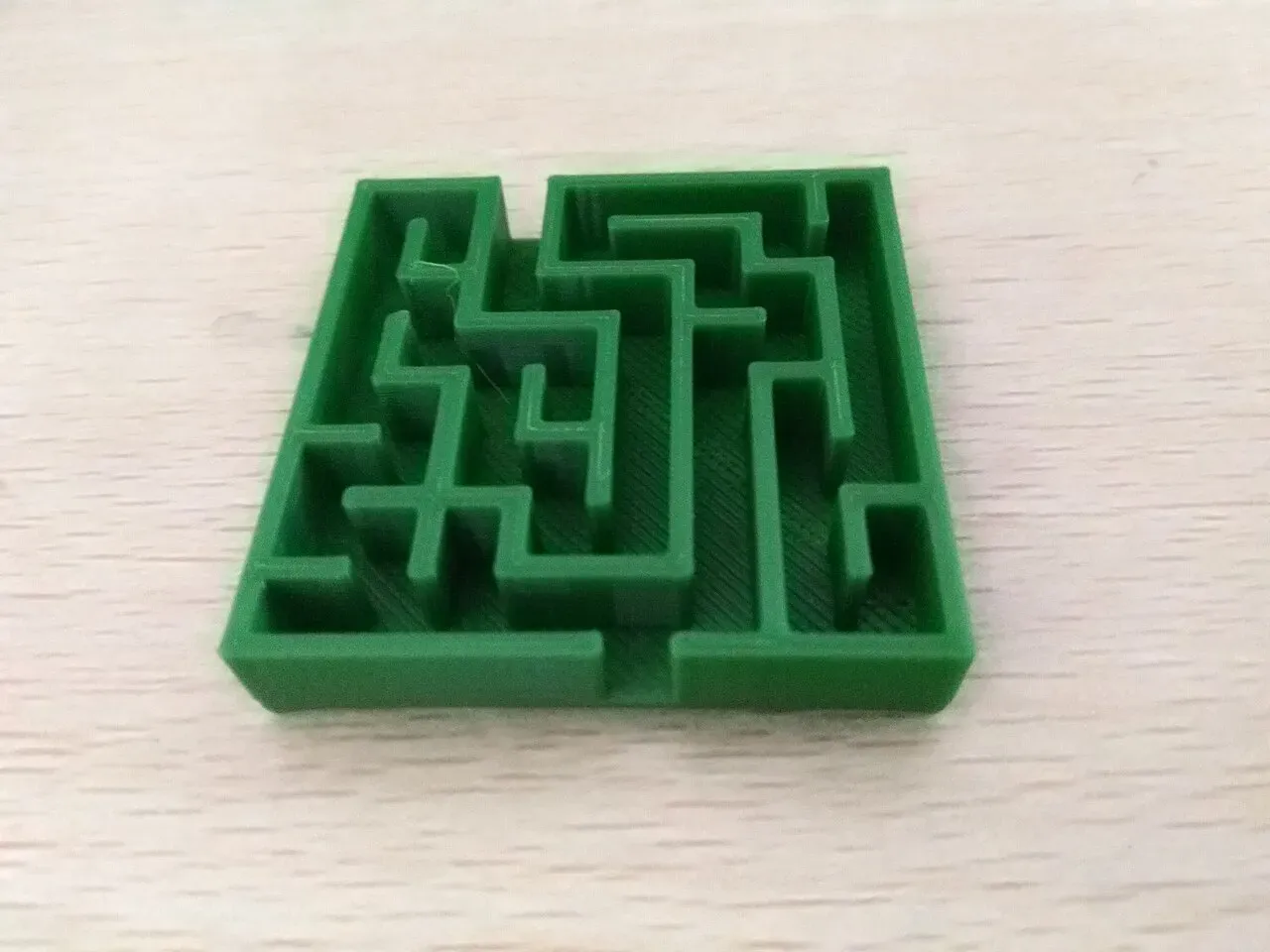 A printed maze puzzle.Photo: Sumanbargavr ·CC BY-SA 4.0 ·Wikimedia Commons
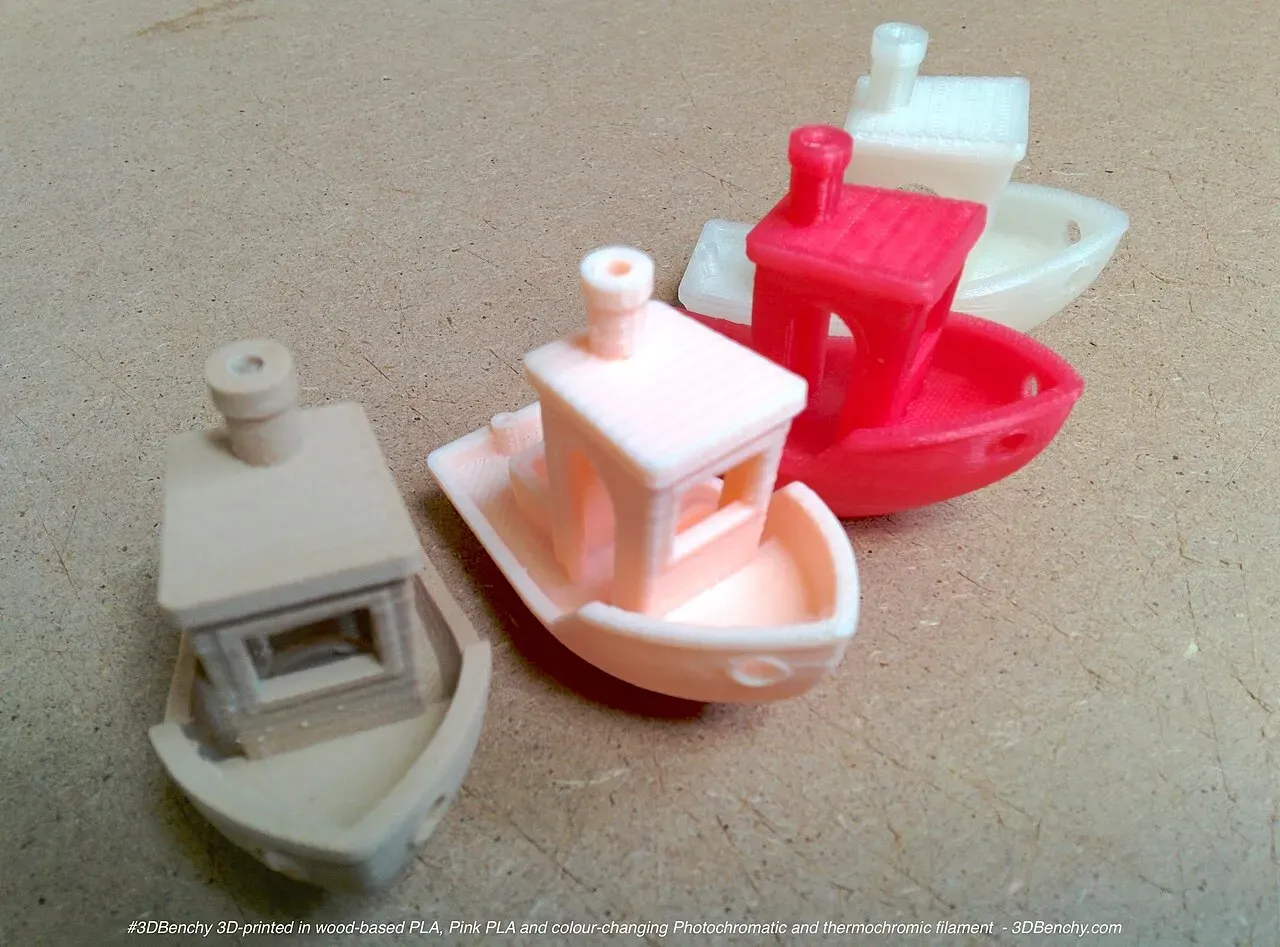 Printed Benchys in different filaments.Photo: 3DBenchy ·CC BY 2.0 ·Wikimedia Commons
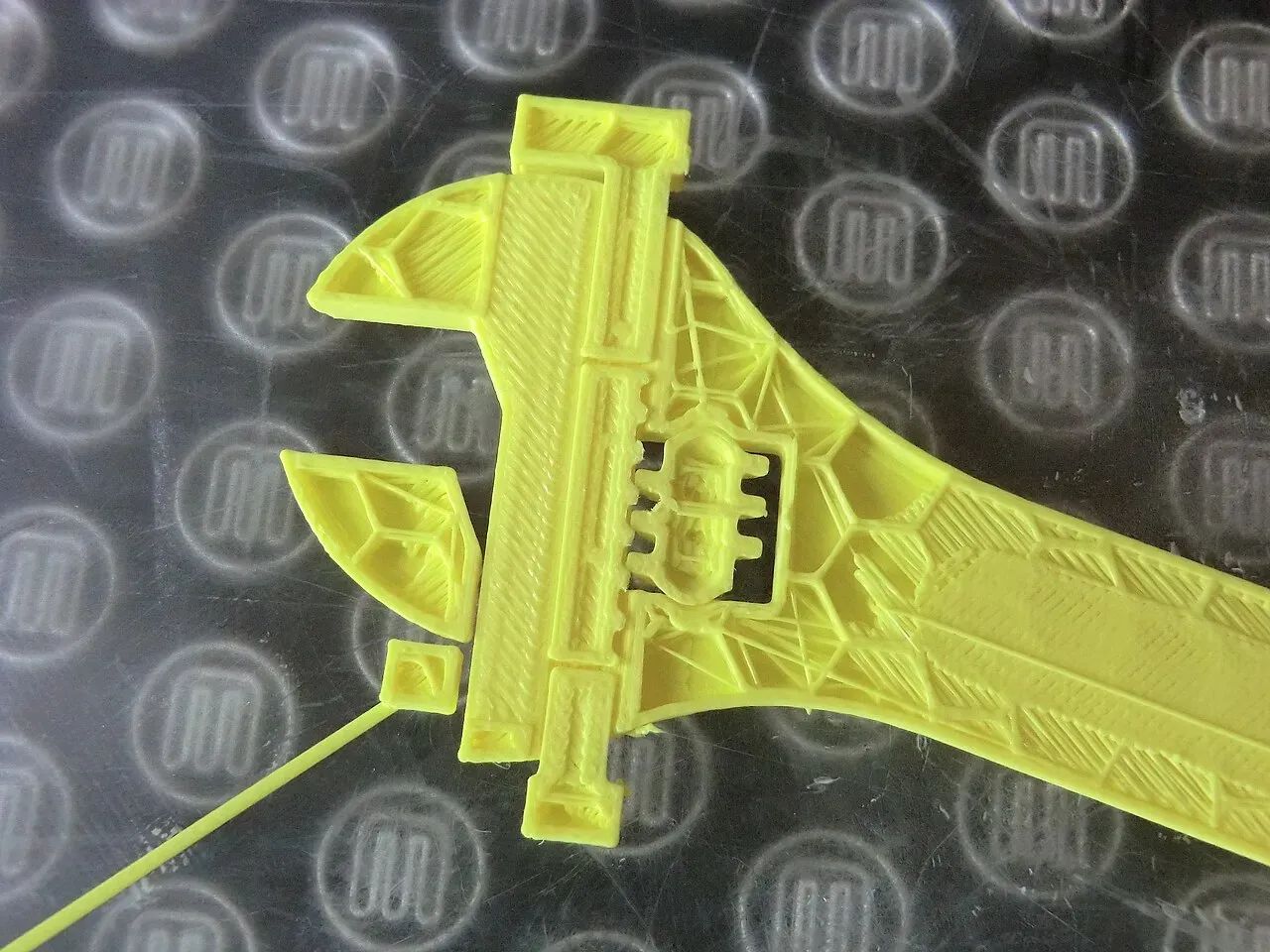 A working wrench printed in one piece.Photo: Creative Tools from Halmdstad, Sweden ·CC BY 2.0 ·Wikimedia Commons
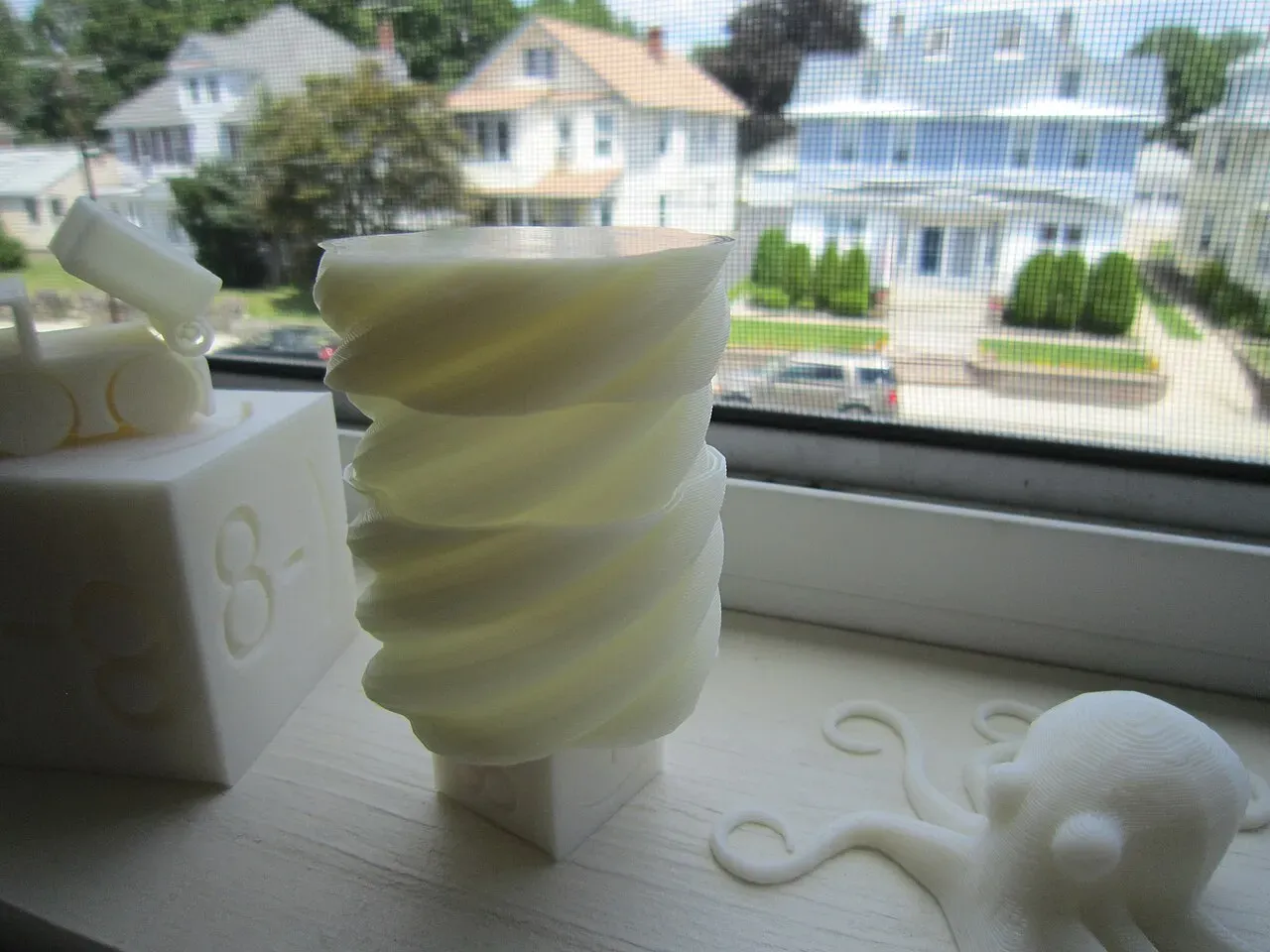 A screw-top box: threads print well at 0.2 mm layers.Photo: syvwlch ·CC BY 2.0 ·Wikimedia Commons
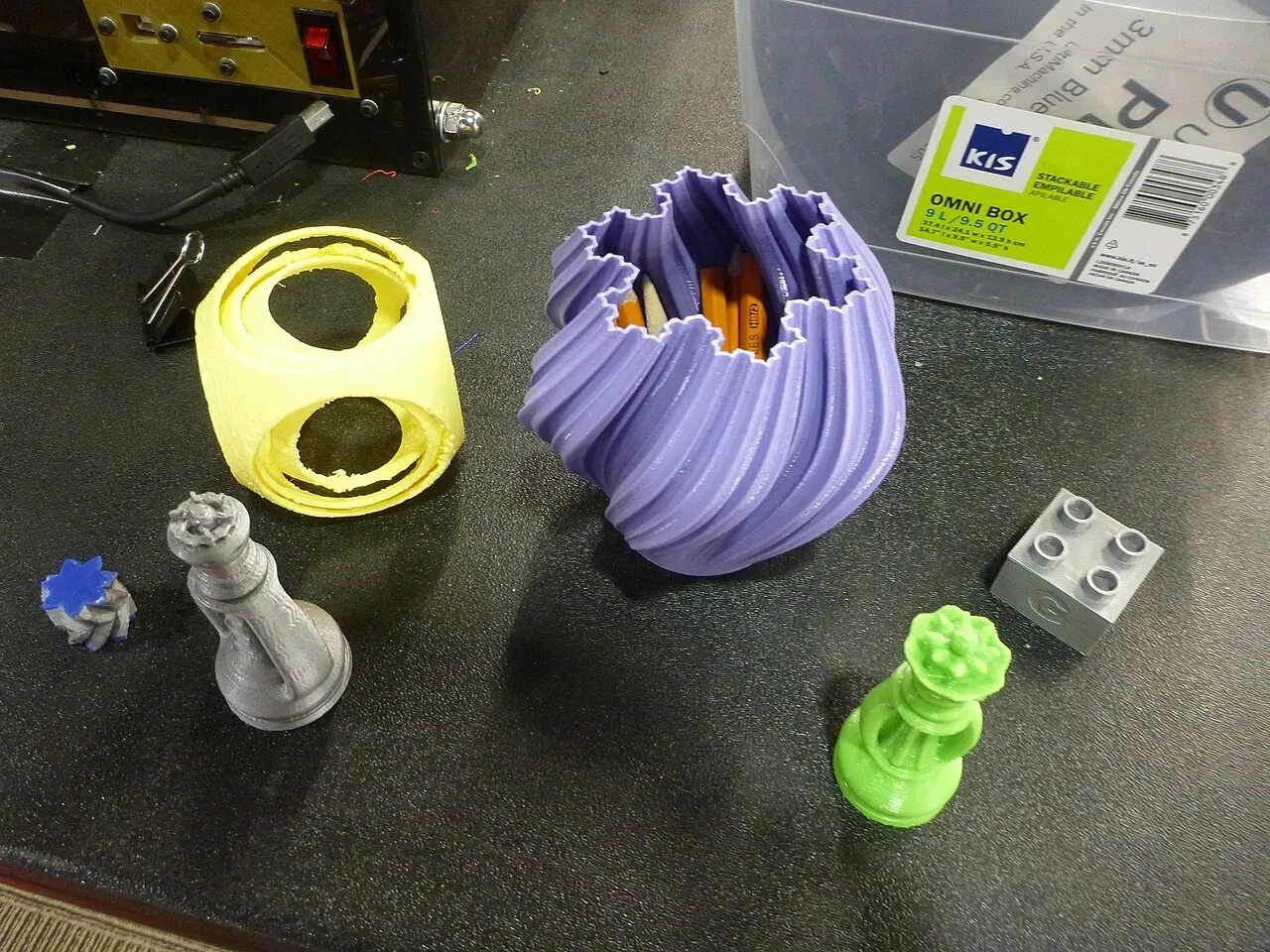 A table of small prints.Photo: Trevor Prentice ·CC BY-SA 2.0 ·Wikimedia Commons
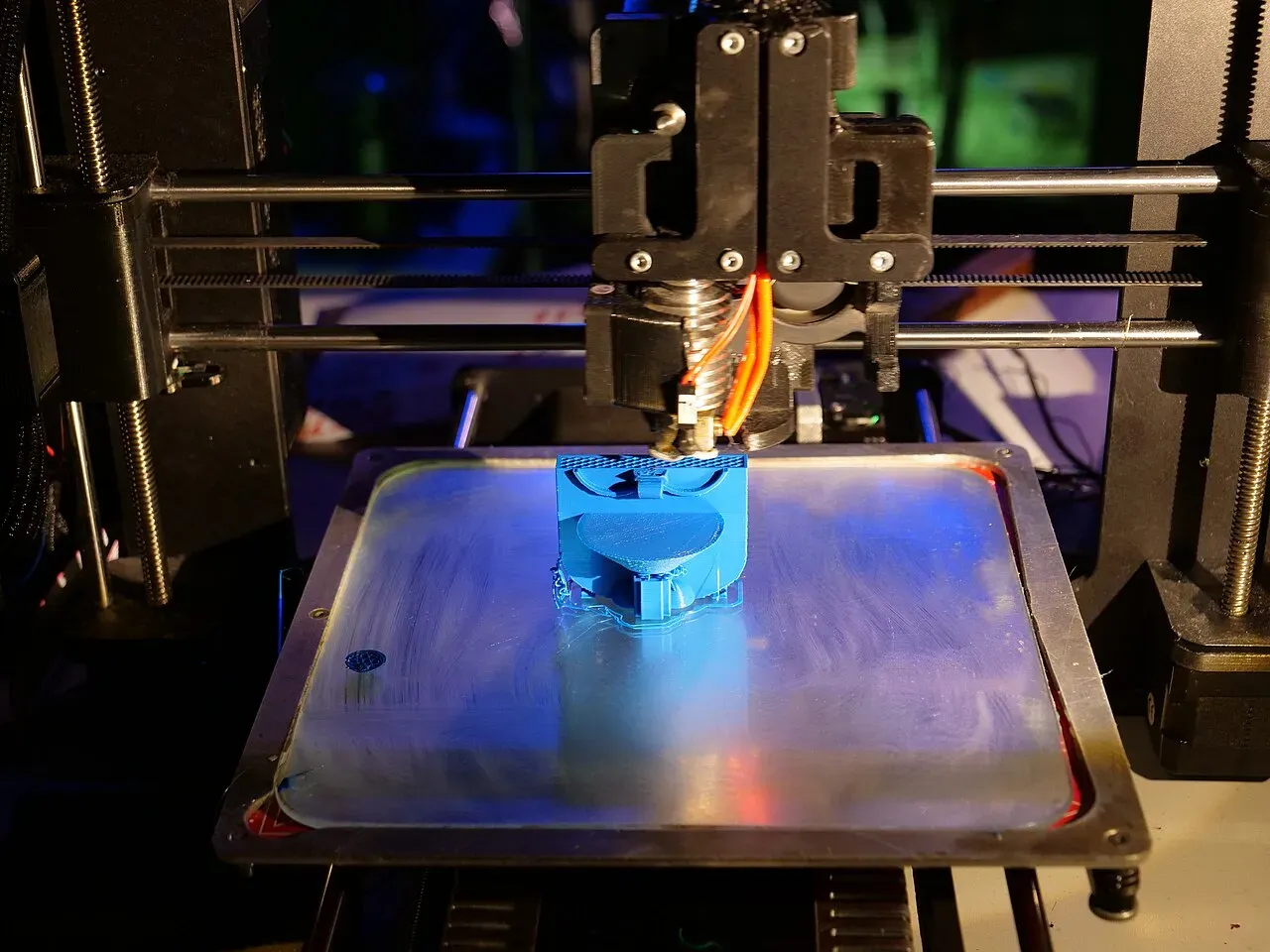 A part being printed on a spring-steel bed.Photo: Leonhard Lenz ·CC BY-SA 4.0 ·Wikimedia Commons
What the two plastics are
PLA (polylactic acid) is made from plant starch such as corn or sugarcane. It melts at low temperatures and sets quickly, which is why it prints crisp detail and stays put on the bed.
ABS (acrylonitrile butadiene styrene) is an oil-based engineering plastic. You’ve handled it many times: it’s used for LEGO bricks, keyboard keycaps, appliance housings and car trim. The butadiene part is rubbery, which gives ABS its toughness, and the whole blend stays solid to a much higher temperature than PLA.11Moulded LEGO bricks are made under tightly controlled factory conditions. A 3D-printed ABS part is made of layers and won’t match a moulded part’s strength or surface, even though it’s the same type of plastic.
That difference in where each one softens drives almost everything else in this comparison. PLA is easy because it sets quickly at low temperatures. ABS is useful because it stays solid when hot, and difficult for the same reason: it has to be printed hot, and it shrinks a lot as it cools from those temperatures.
20 °C · PLA rigid, 0.3 mm · ABS rigid, 0.5 mm
- ← → hot plate ±5 °C (Shift ±1), 20–120 °C; or drag ↔
- End straight to 120 °C
- Home fresh brackets at 20 °C
Strength: which is stronger?
“Stronger” means different things, and PLA and ABS each win at one of them.
- Stiffness: PLA is stiffer. Under a steady load at room temperature, a PLA part bends less. A PLA shelf bracket holds its shape well, as long as it stays cool.
- Toughness: ABS is tougher. It bends and absorbs a knock before it breaks, where PLA tends to snap suddenly. Clips, snap-fits, hinges and anything that might be dropped favour ABS.
- Layer strength: this depends on how you print it more than which plastic it is. ABS bonds its layers well when it’s printed warm and enclosed. Printed in a cold room or a draught, ABS layers can split apart, and a well-printed PLA part can easily beat it.
So for a decorative part or a rigid jig that lives indoors, PLA is often the better material. For a part that gets hit, flexed or snapped together, ABS (or PETG) is the safer bet.
Heat resistance
This is where ABS clearly wins.
PLA starts to soften around 55–60 °C. That sounds high, but a closed car in summer sun can get hotter than that inside, and so can the area around a lamp, a motor or a heater. PLA parts left there can warp, droop or bend.
ABS stays rigid until about 95–105 °C. That covers car interiors, most electronics enclosures, and parts that sit near motors or warm appliances.
If heat is your only reason for leaving PLA, you have options: PETG softens around 80 °C, which covers many warm-but-not-hot places, and ASA matches ABS on heat while handling sunlight far better.
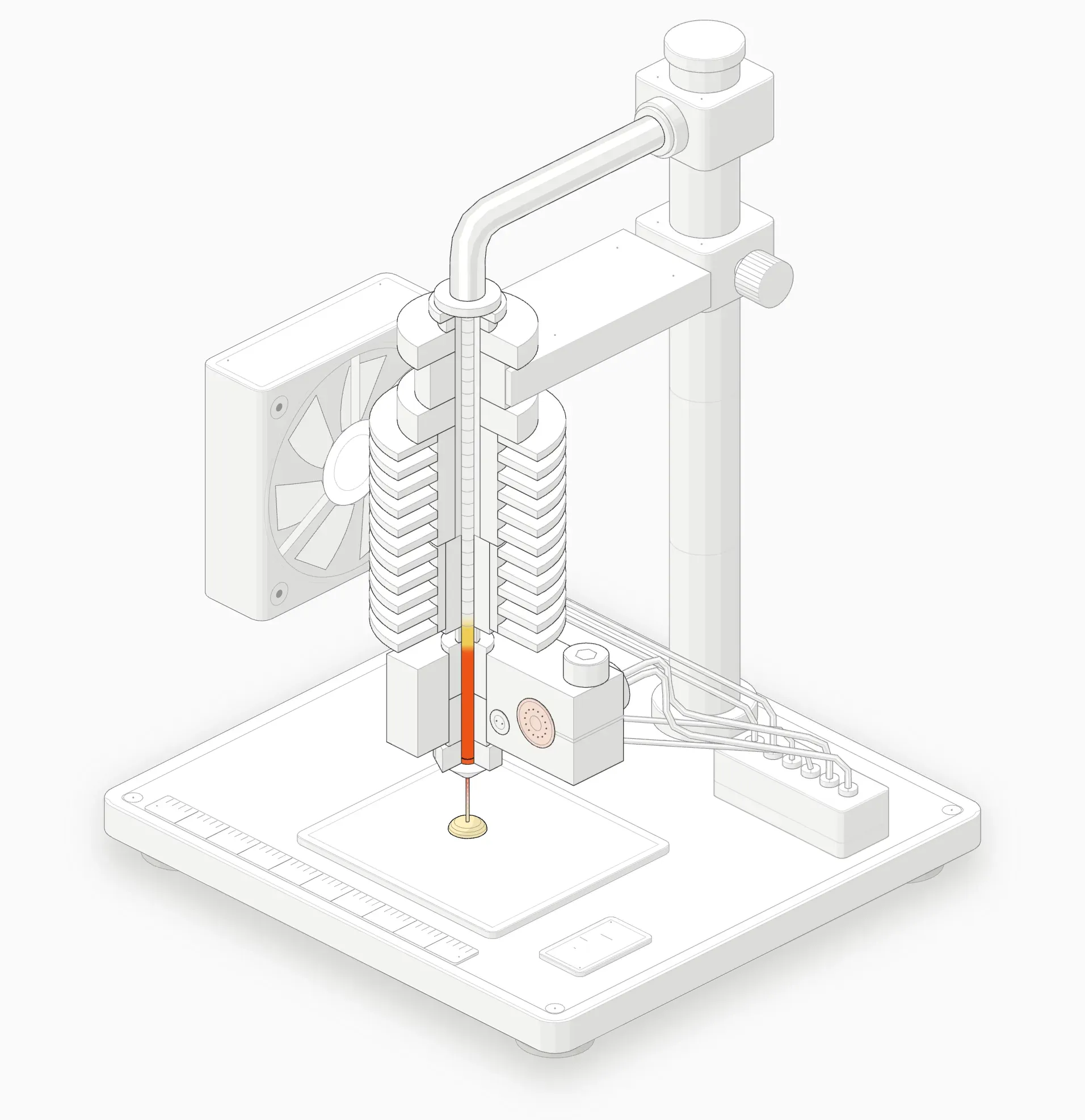 A V6-style hotend, cut away so you can see the filament inside.
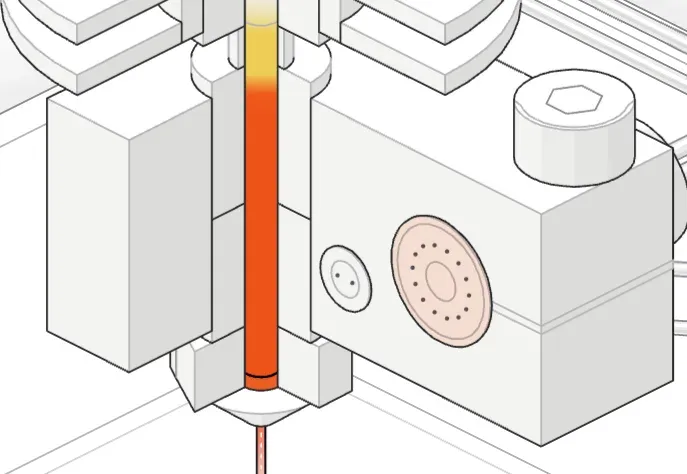 The heater block holds the heater cartridge and the thermistor.
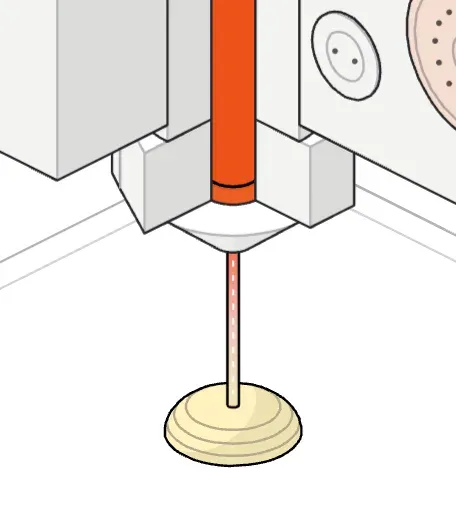 A brass 0.4 mm nozzle laying a thin strand.
Printability: how hard is each one?
PLA is the easiest filament there is. It prints on almost any bed surface, with the part-cooling fan at full speed, on an open printer in a normal room.
ABS asks for more on every front:
- A hotter nozzle, usually 230–260 °C. Hotends with a PTFE tube running down into the hot zone shouldn’t be run for long above about 240 °C, because the tube starts to break down. An all-metal hotend is the safer choice for ABS.22Your printer’s maximum temperature is usually listed in its specifications. If it says 240 °C or lower, print ABS at the bottom of its range, or choose a different material.
- A hotter bed, usually 90–110 °C, to keep the base of the part warm and stop it shrinking away from the bed.
- Little or no part cooling. The fan that gives PLA its crisp detail makes ABS layers cool too quickly, shrink and split. Most ABS profiles run it off, or at 0–30% for overhangs and bridges.
- Warm, still air around the part. That means an enclosure. Without one, any draught cools one side of the print faster than the other.
- Good first-layer adhesion. Textured PEI works well for ABS. Smooth PEI or glass may need glue stick for extra grip on large parts.
If your printer came with an ABS profile, start from that rather than editing a PLA profile by hand. The profile changes temperature, cooling and other settings together. Our guide to using a slicer shows where filament profiles live.
| Setting | PLA starting point | ABS starting point | Why |
|---|---|---|---|
| Nozzle temperature | 200–210 °C | 240–250 °C | ABS needs more heat to melt and to bond its layers |
| Bed temperature | 55–60 °C | 95–105 °C | Keeps ABS warm so the base doesn’t shrink and lift |
| Part cooling fan | 100% from layer 2–3 | 0–30%, overhangs only | Fast cooling makes ABS shrink unevenly and crack |
| Print speed | Printer default | Printer default or a little slower | Gives layers time to bond |
| Bed surface | PEI, glass, almost anything clean | Textured PEI, or glue stick on smooth surfaces | ABS shrinks hard and needs a strong grip |
| Brim | Rarely needed | 5–10 mm on parts with sharp corners | Holds corners down while the part cools |
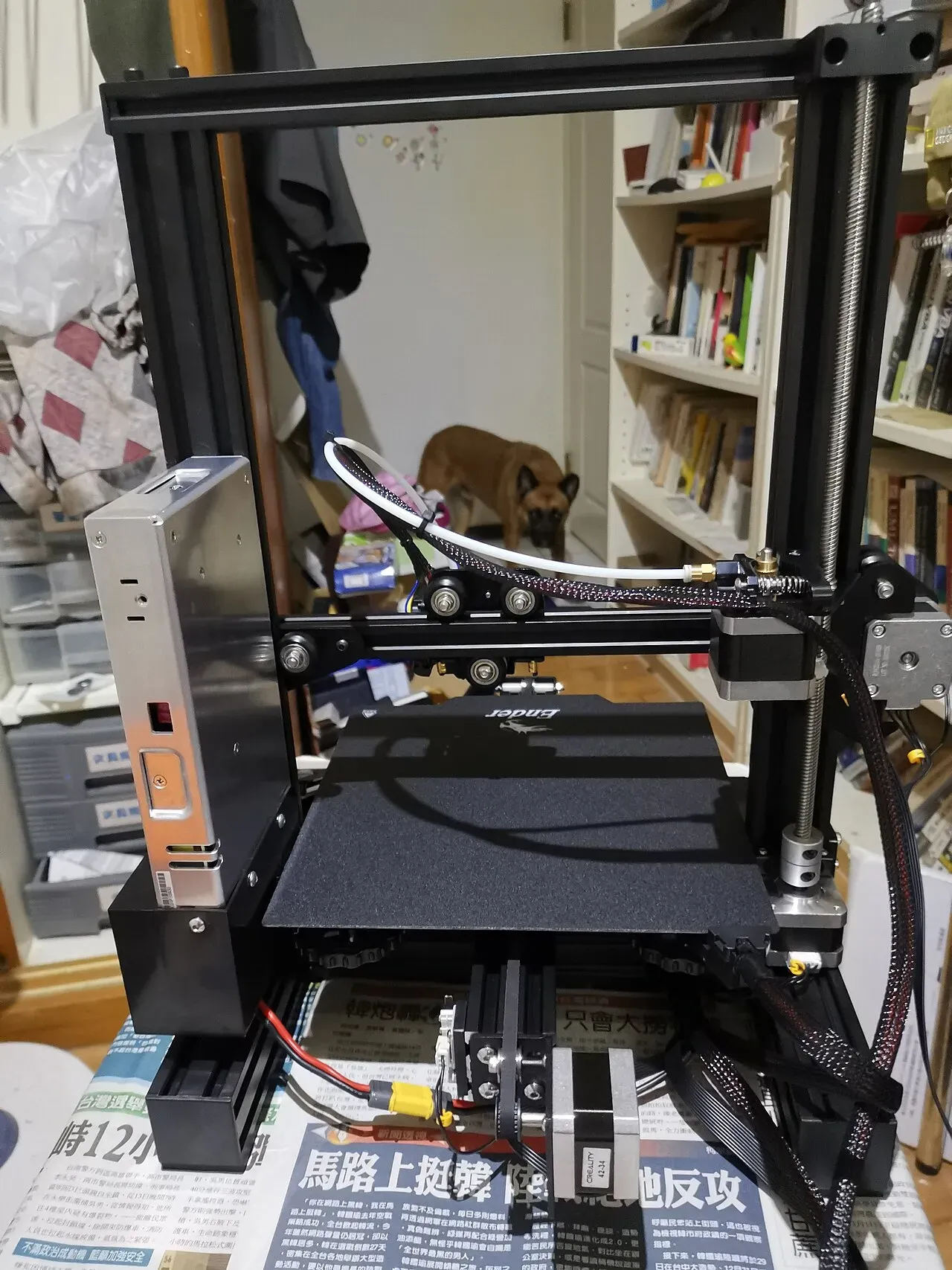 An assembled Ender 3: a classic bed-slinger.Photo: kenming Wang ·CC BY-SA 2.0 ·Wikimedia Commons
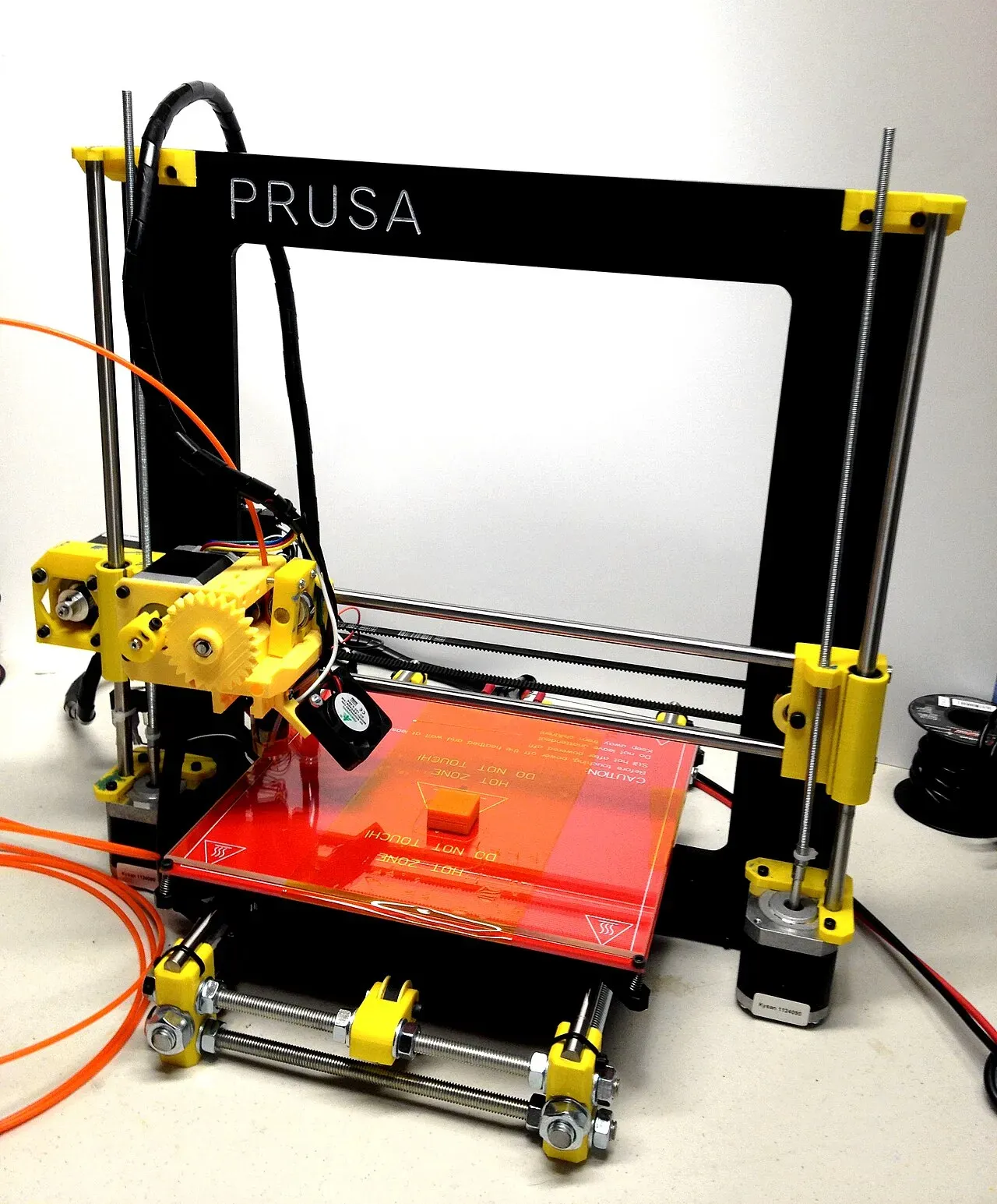 A Prusa i3, the design behind many beginner printers.Photo: John Abella ·CC BY 2.0 ·Wikimedia Commons
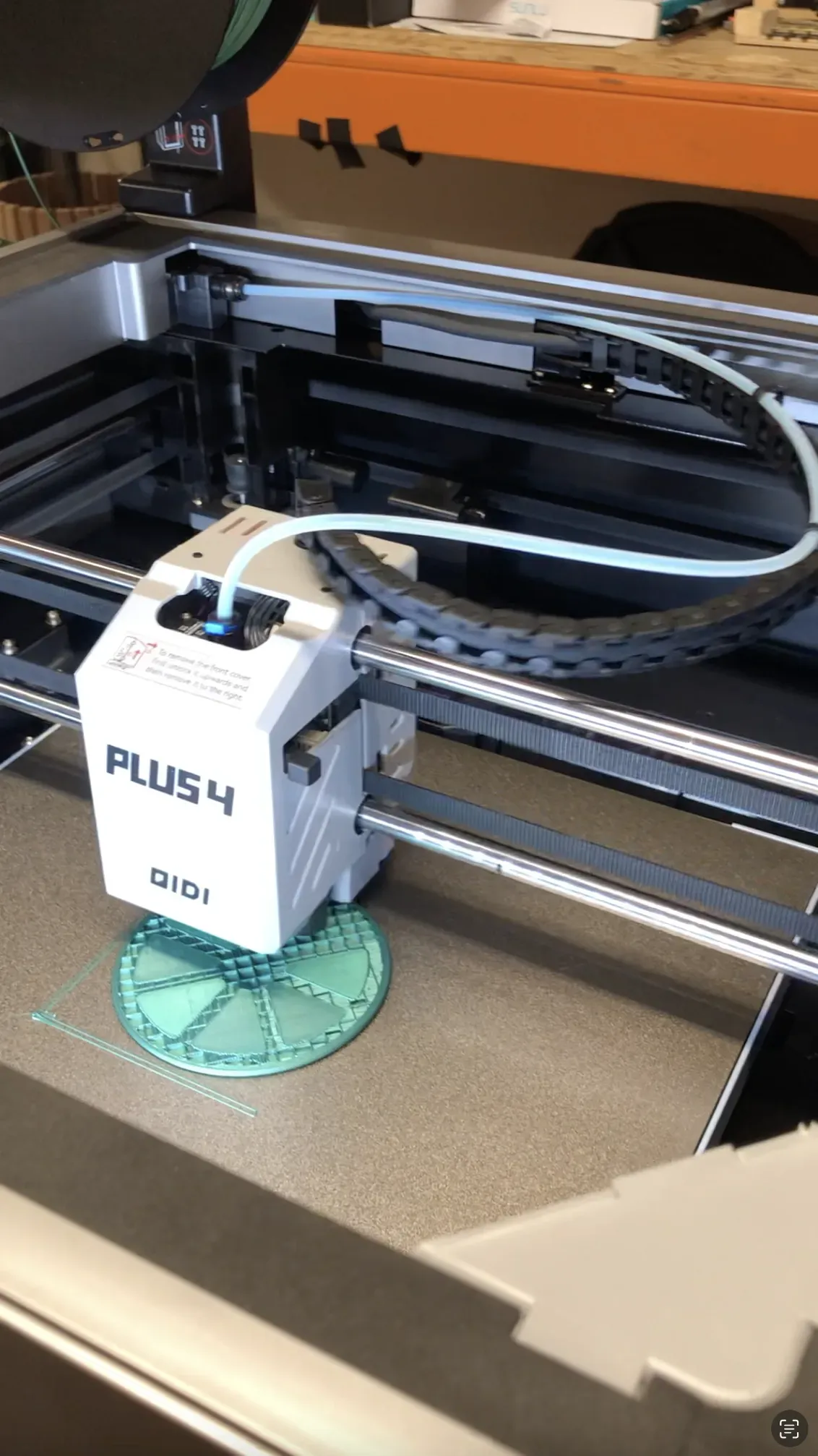 A CoreXY print head on a QIDI printer.Photo: Haroldbarlow8911 ·CC BY-SA 4.0 ·Wikimedia Commons
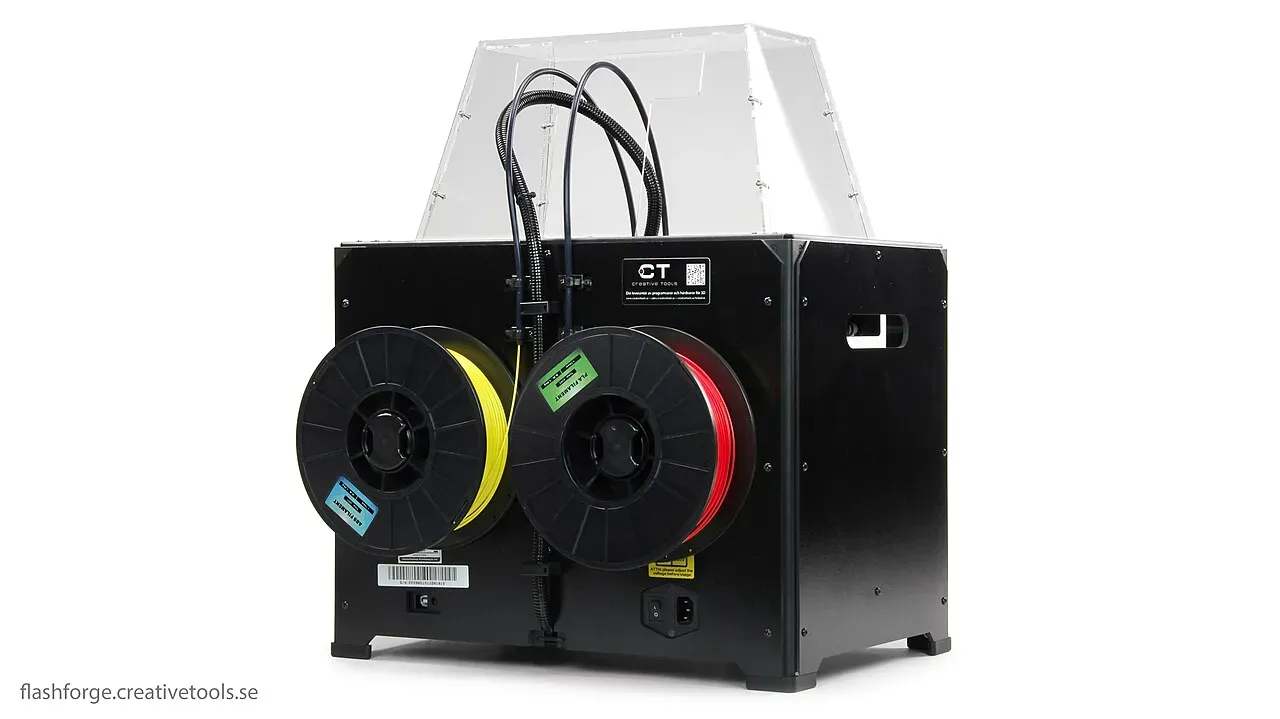 A boxed dual-extrusion printer.Photo: Creative Tools from Halmstad, Sweden ·CC BY 2.0 ·Wikimedia Commons
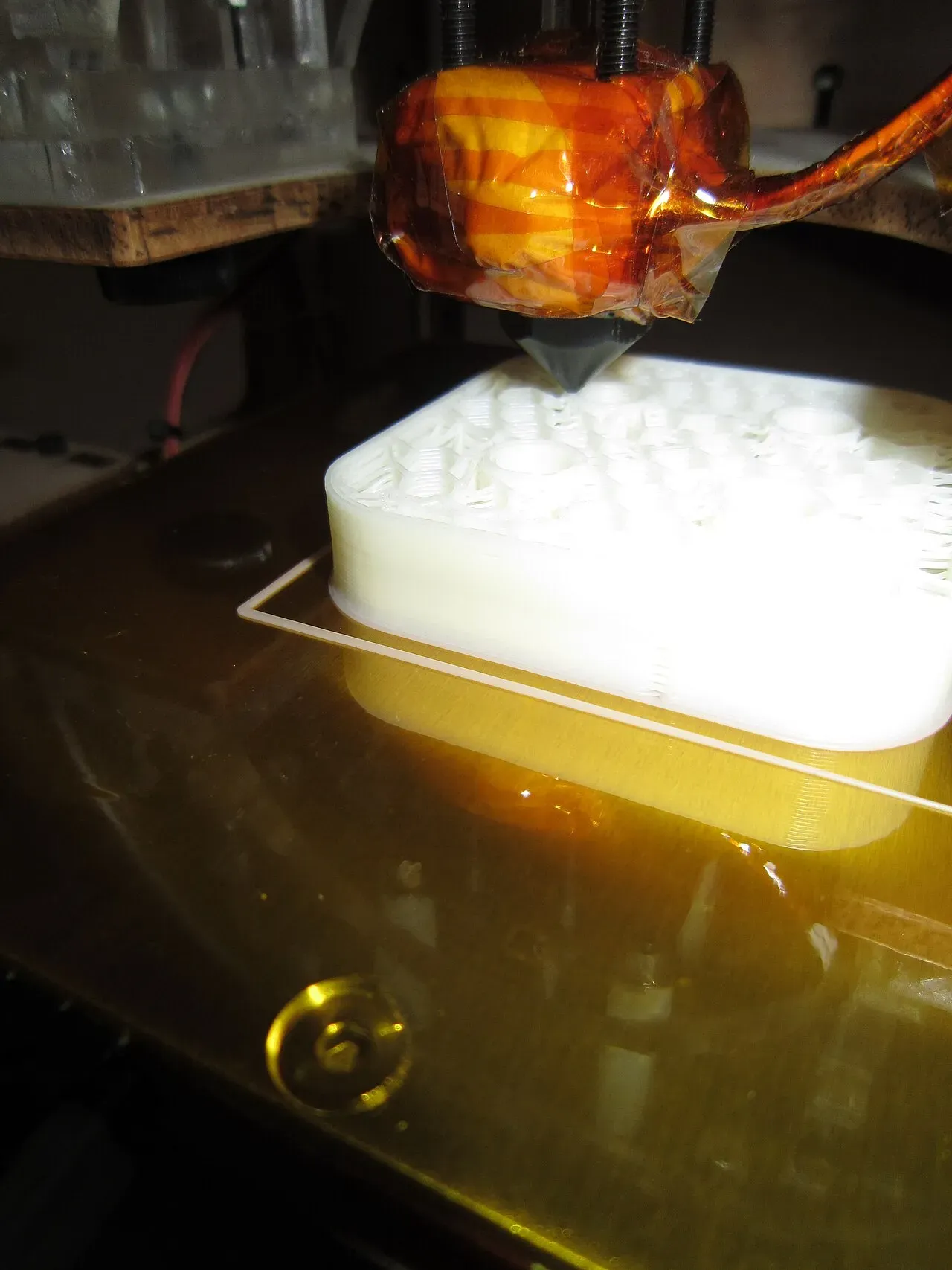 The first layers going down on a heated bed.Photo: syvwlch ·CC BY 2.0 ·Wikimedia Commons
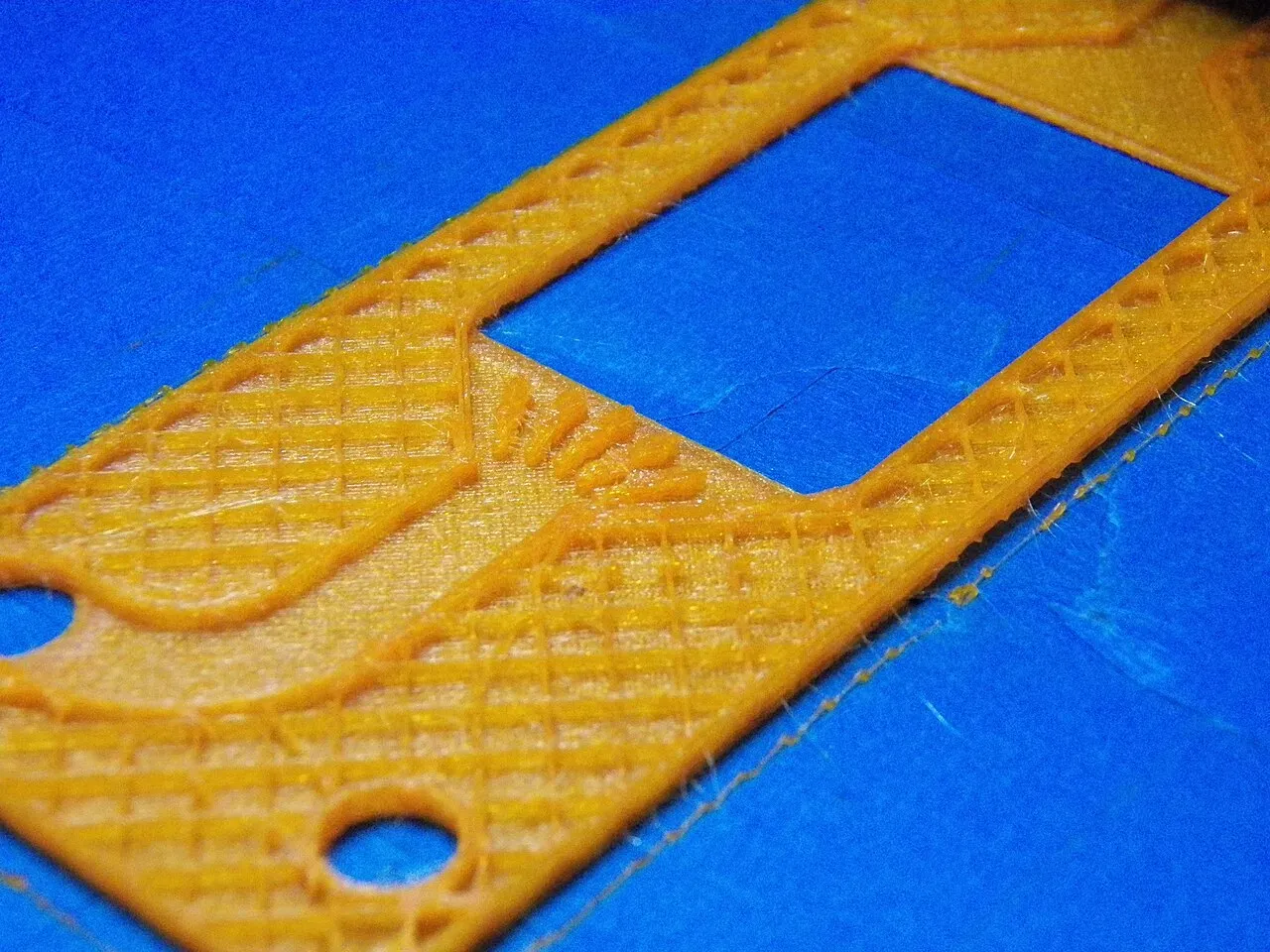 A first layer close up: lines pressed together on the bed.Photo: hdaniel ·CC BY-SA 2.0 ·Wikimedia Commons
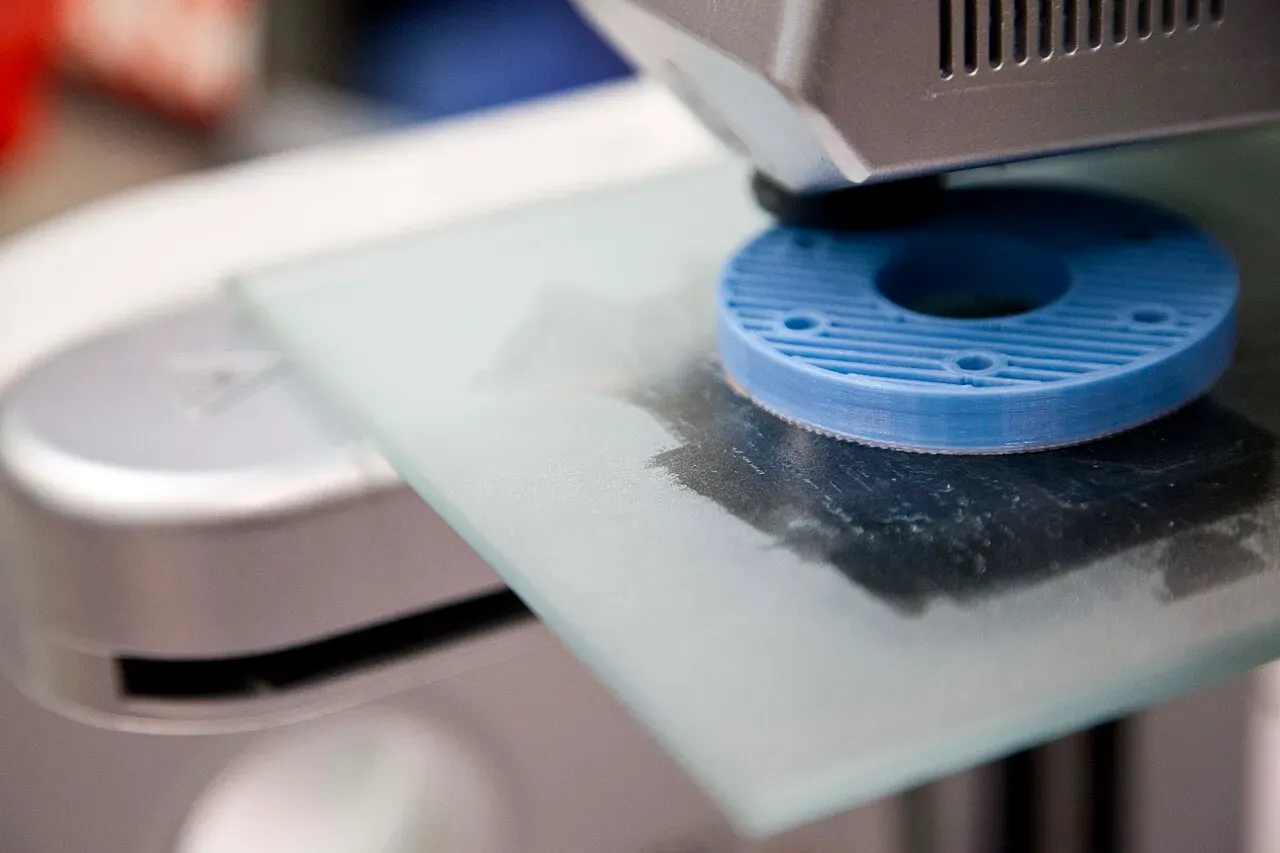 A print on a glass bed.Photo: ENERGY.GOV ·Public domain ·Wikimedia Commons
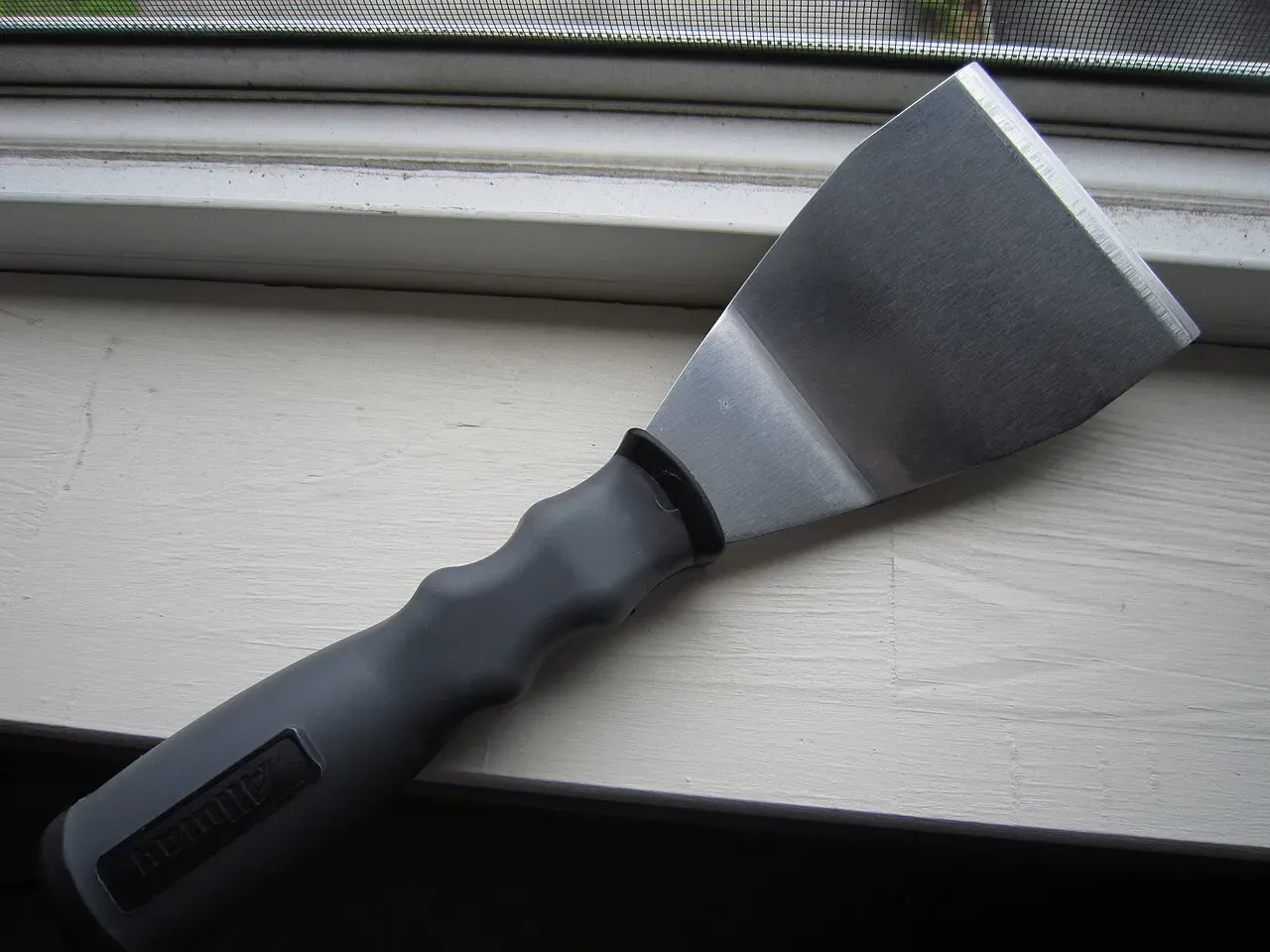 A scraper: lift prints off a rigid bed.Photo: syvwlch ·CC BY 2.0 ·Wikimedia Commons
Warping: ABS’s biggest problem
Every plastic shrinks a little as it cools. ABS is printed hotter and shrinks more than PLA, so as the upper layers cool they pull inward, and that pull lifts the corners of the part off the bed. On a large flat part, an ABS print can peel up at the corners, crack between layers, or come loose altogether.
PLA shrinks so little that warping is rare, and usually comes from a cold bed or a poor first layer rather than the material itself.
To keep ABS flat:
- Use an enclosure. It keeps the air around the part warm and still, so the whole print cools slowly and evenly.
- Keep the bed at 95–110 °C for the whole print.
- Add a brim of 5–10 mm on parts with sharp corners.
- Turn the part-cooling fan off, or keep it low.
- Keep draughts away: windows, fans, air conditioning and doors.
- Round sharp corners on parts you design, because square corners concentrate the pull.
Our full guide to fixing warping goes through each step, including bed preparation and slicer settings.
ABS · bed 100 °C · open air · corner lift 0.80 mm · warping
- M material: PLA or ABS (or click the controller screen)
- E enclosure on / off (or click the frame)
- F fan draft on / off (or click the fan)
- B brim on / off (or click the print)
- ↑ ↓ bed temperature ±5 °C (Shift ±10), 20–115 °C; or drag ↕
- Home reset: ABS, bed 100 °C, open air, no brim
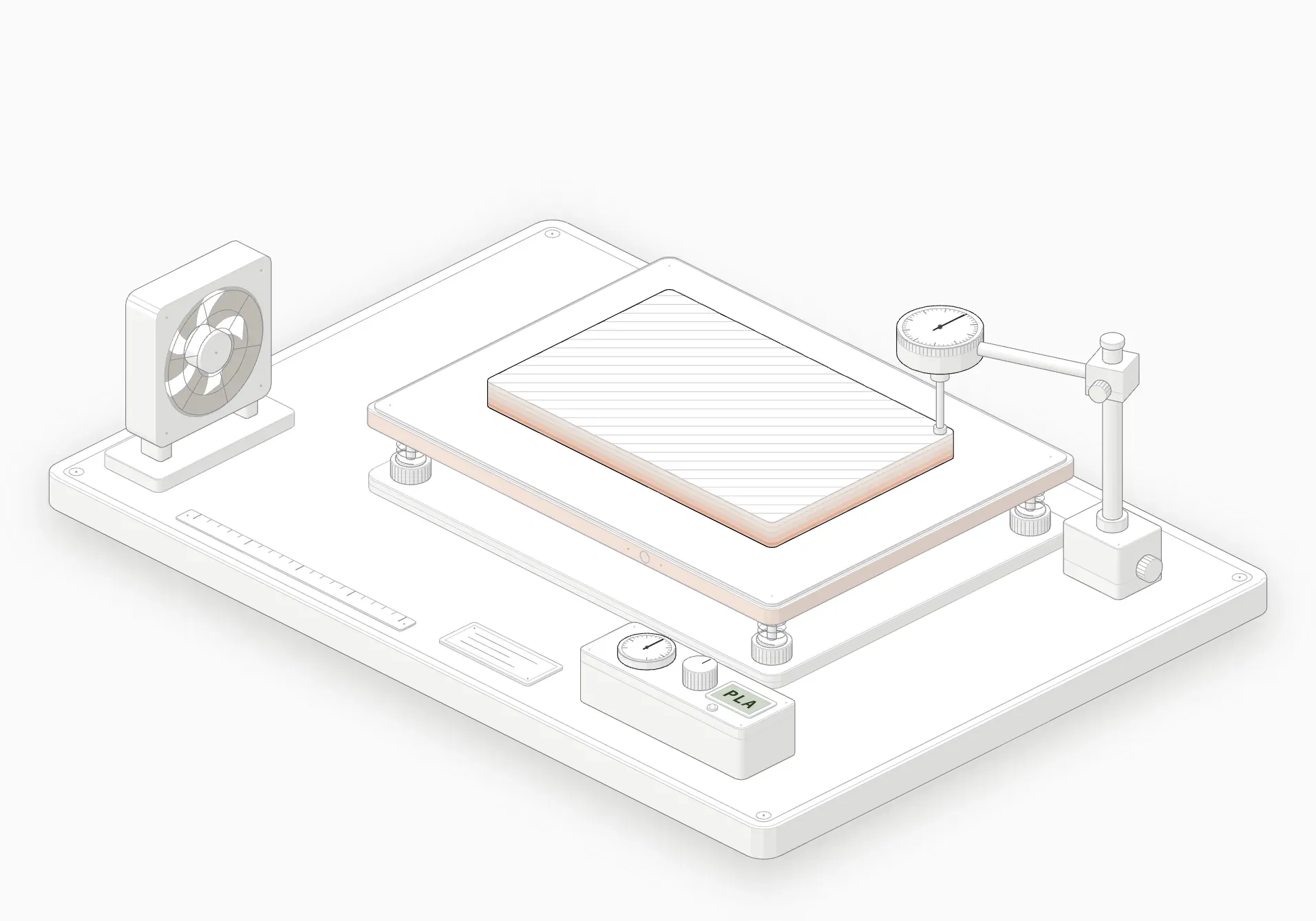 PLA, bed 60 °C: PLA · bed 60 °C · open air · corner lift 0.00 mm · flat.
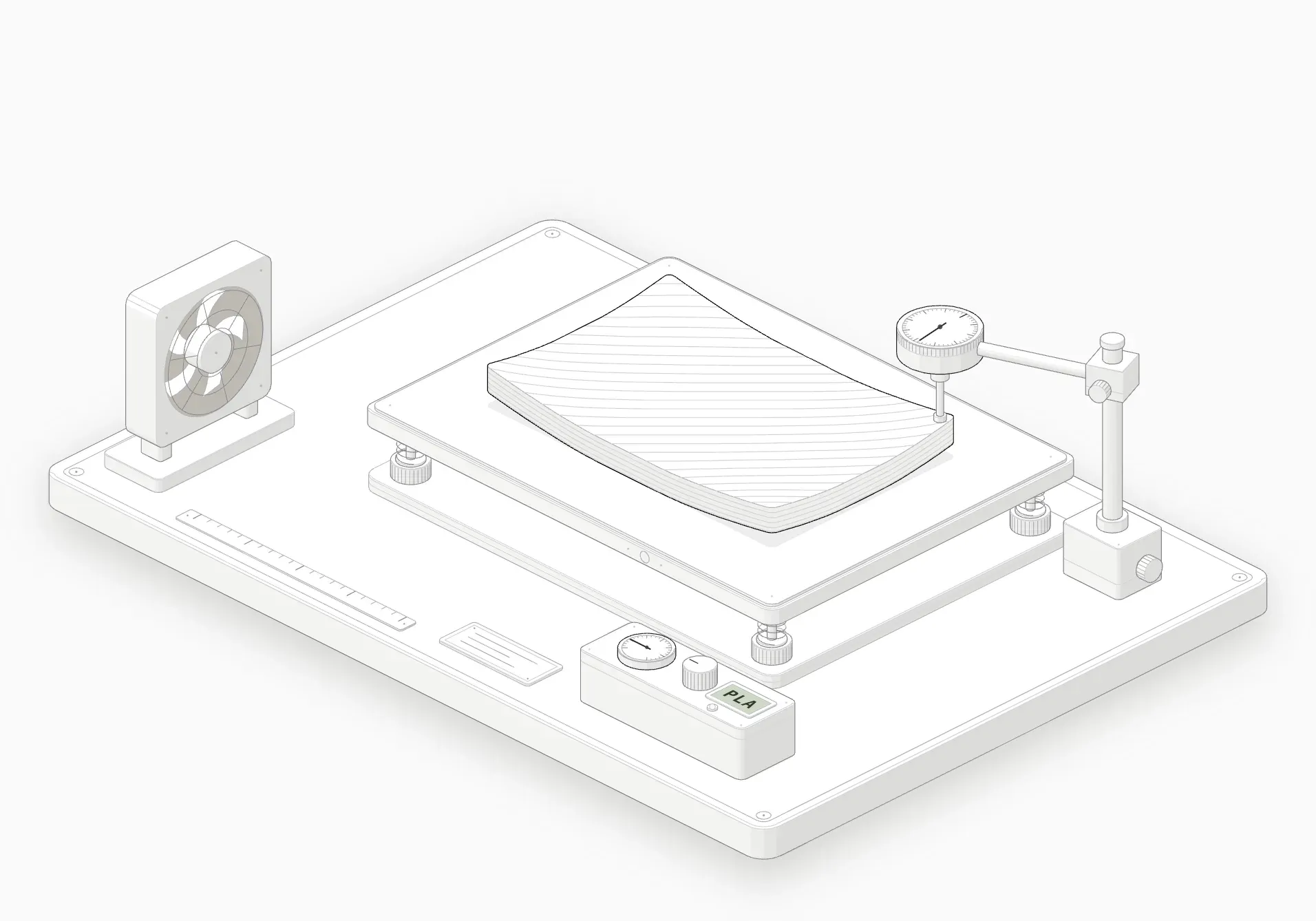 PLA on a cold bed: PLA · bed 20 °C · open air · corner lift 0.62 mm · warping.
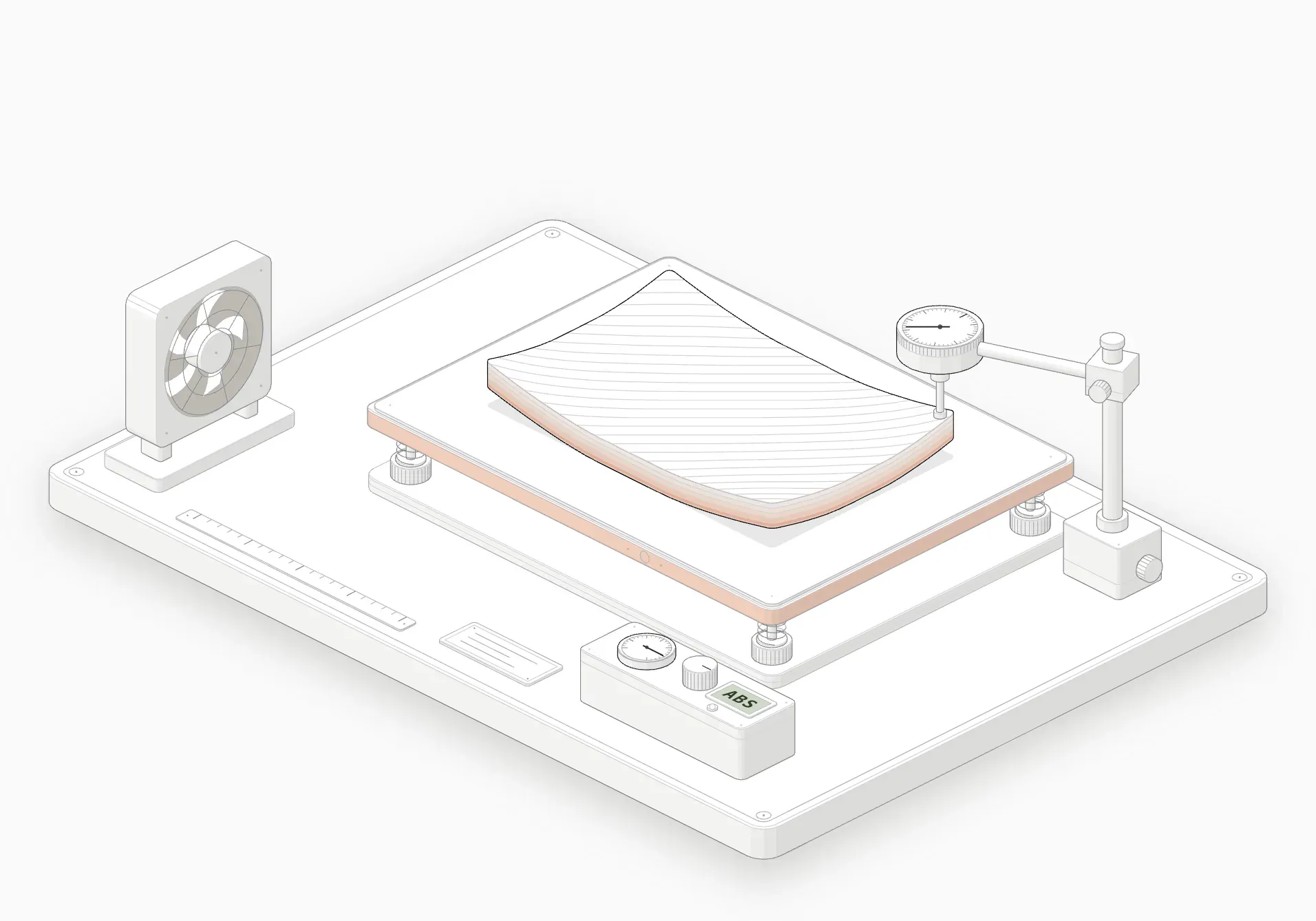 ABS, bed 100 °C, open air: ABS · bed 100 °C · open air · corner lift 0.80 mm · warping.
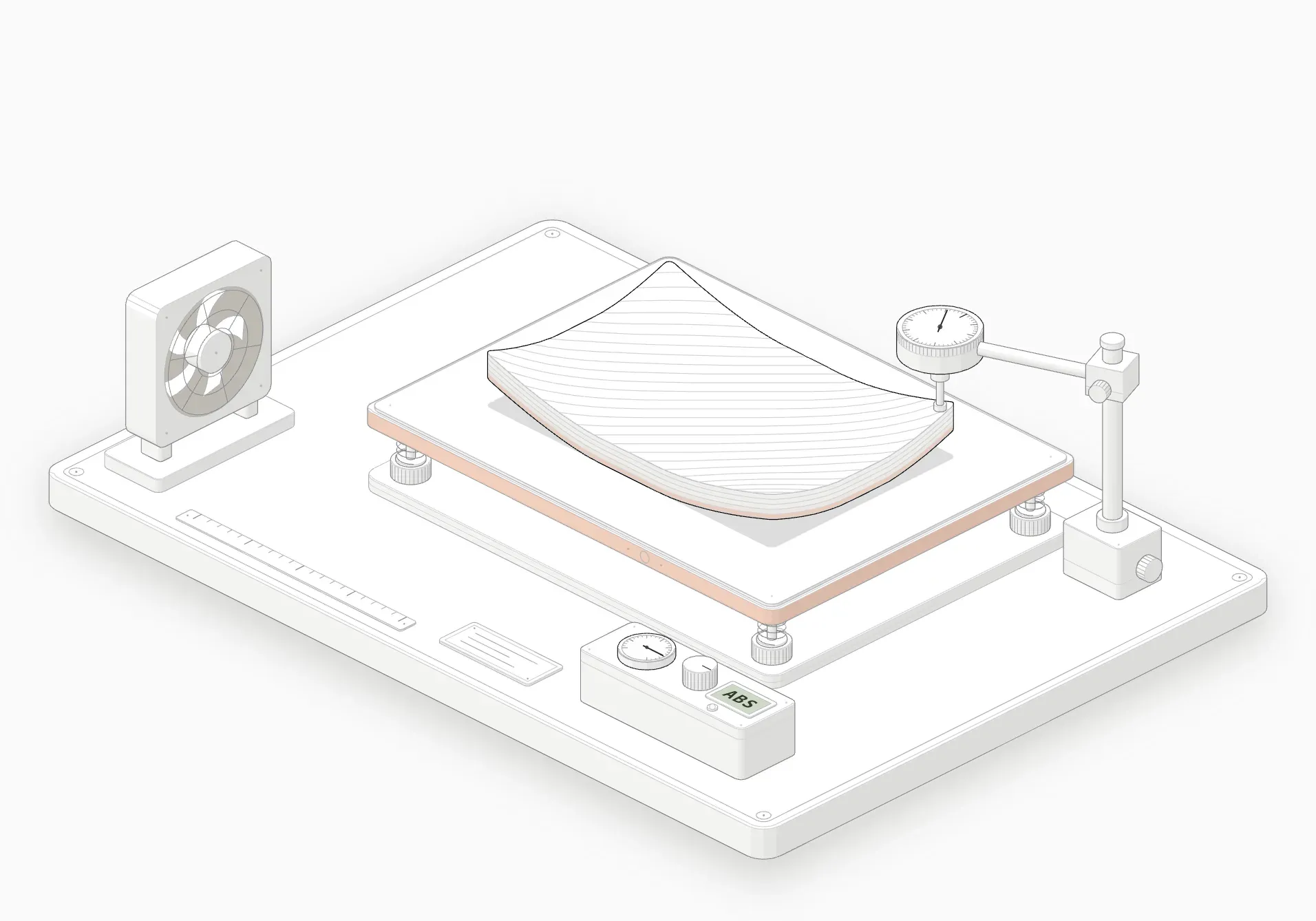 ABS in a draft: ABS · bed 100 °C · fan draft · corner lift 1.17 mm · warping.
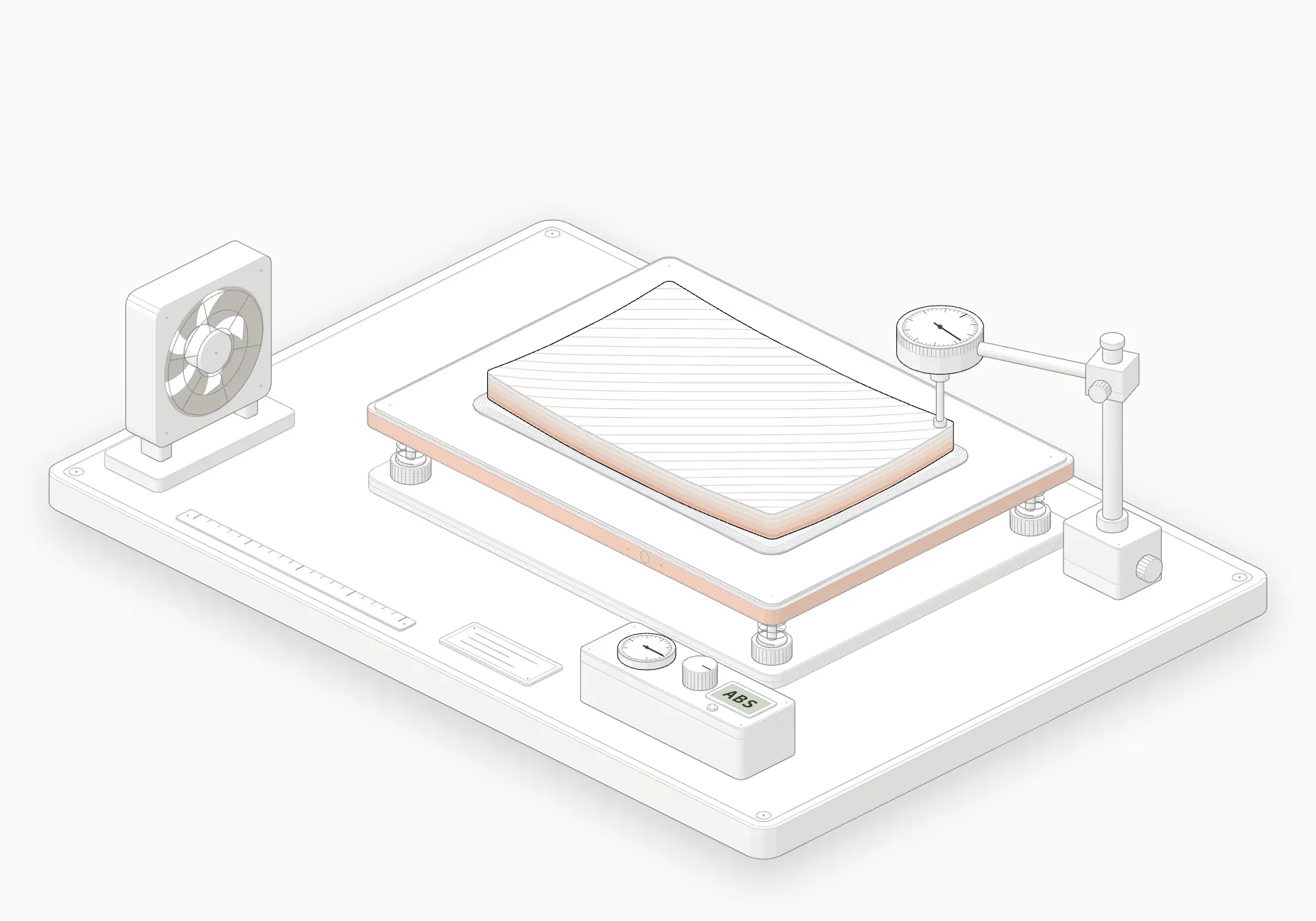 ABS with a brim: ABS · bed 100 °C · open air · brim · corner lift 0.35 mm · warping.
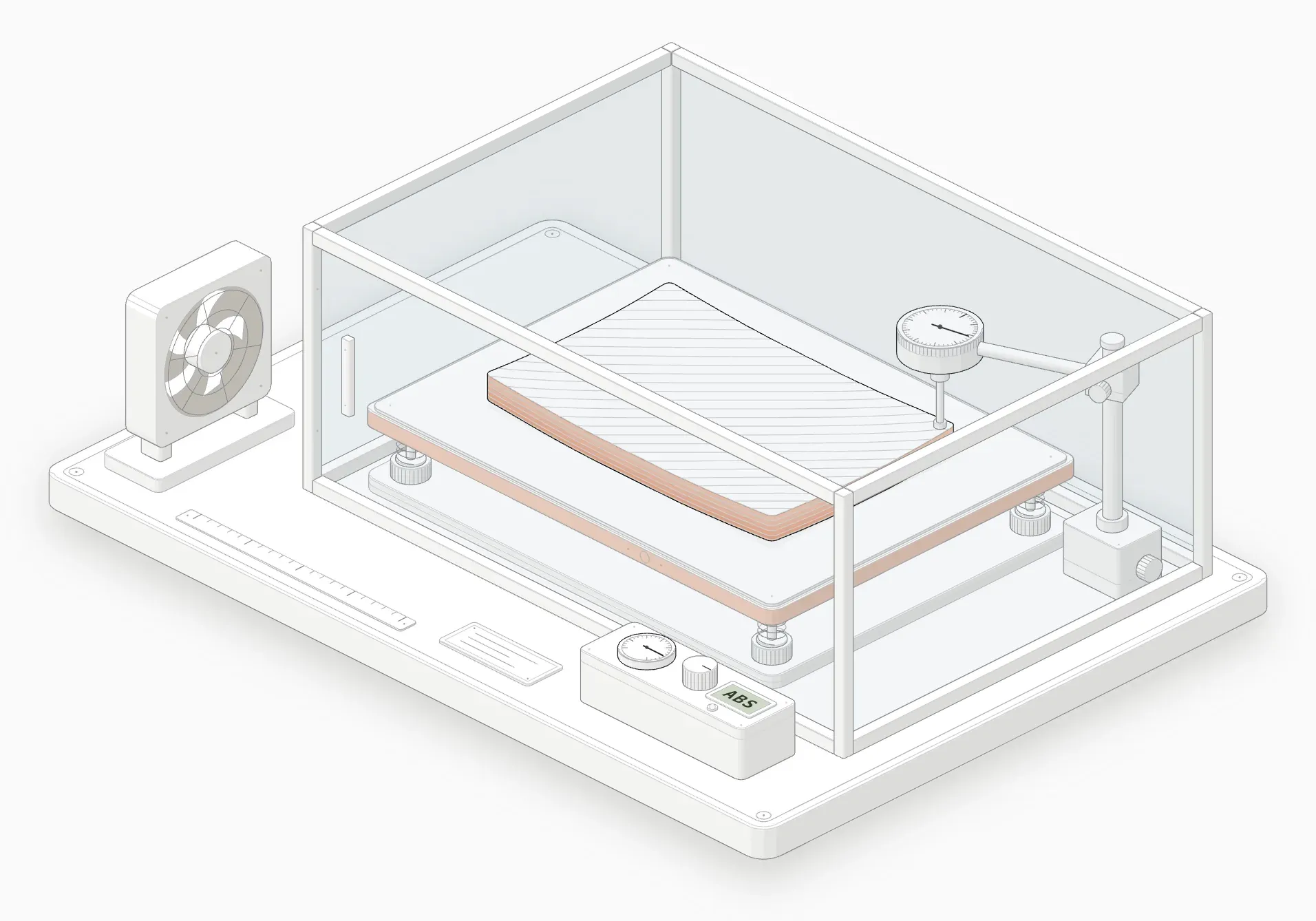 ABS in an enclosure: ABS · bed 100 °C · enclosed · corner lift 0.28 mm · slight lift.
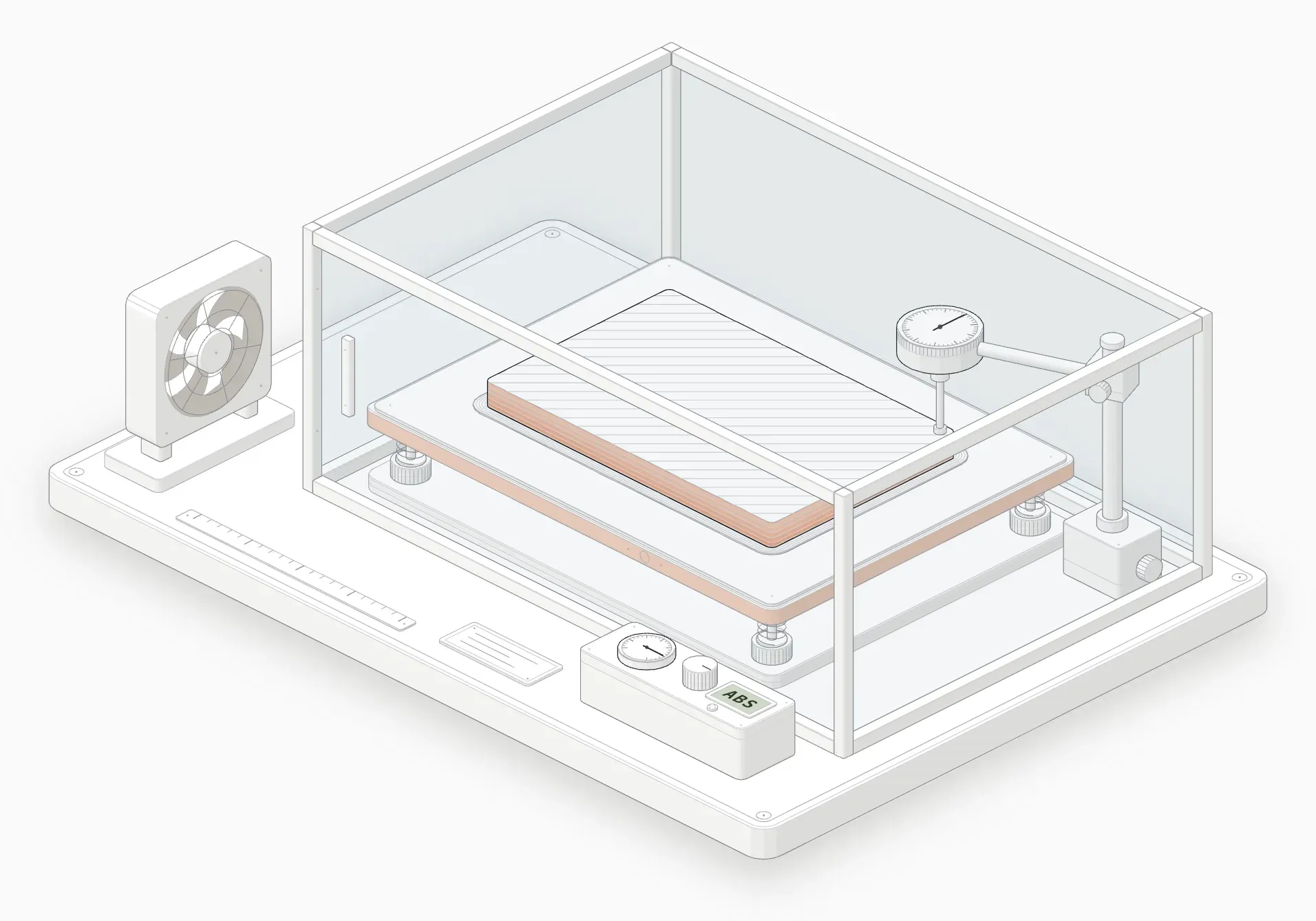 ABS enclosed, with a brim: ABS · bed 100 °C · enclosed · brim · corner lift 0.00 mm · flat.
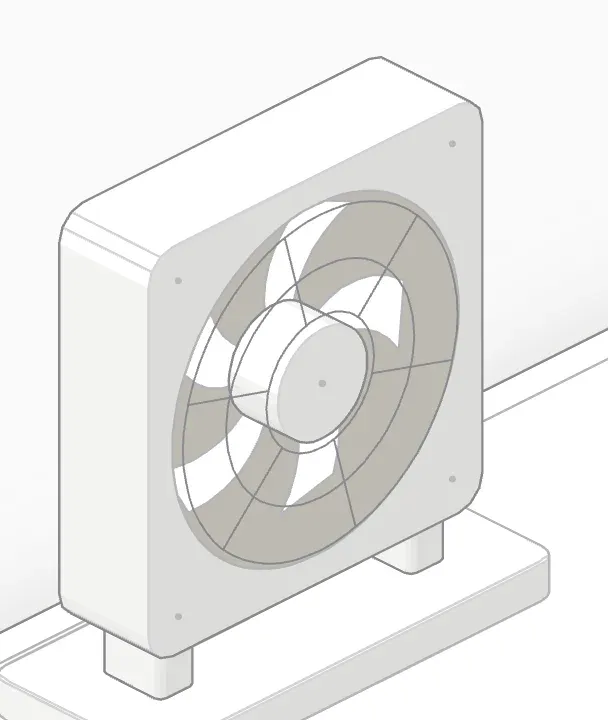 A draft cools the part from one side.
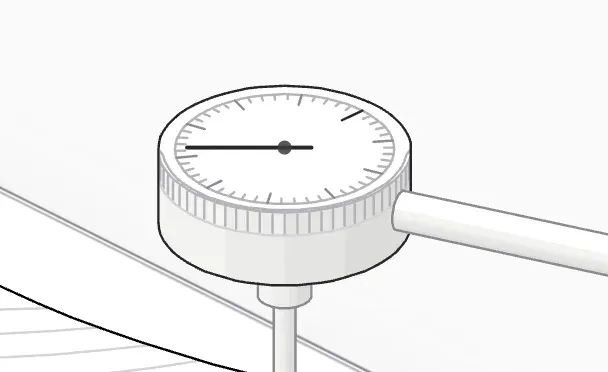 A dial gauge on the corner reads the lift: ABS · bed 100 °C · open air · corner lift 0.80 mm · warping.
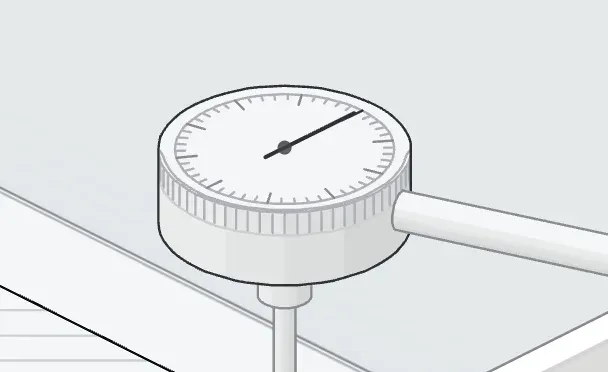 Enclosed with a brim, the gauge reads no lift: ABS · bed 100 °C · enclosed · brim · corner lift 0.00 mm · flat.
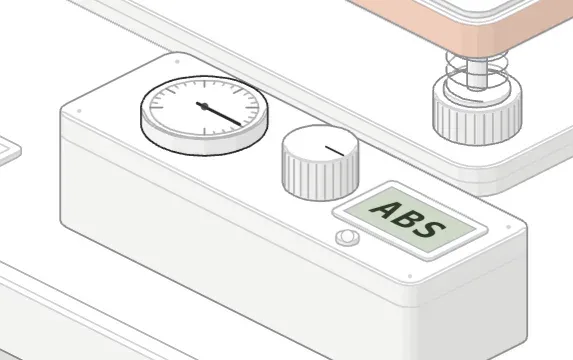 The bed controller: actual temperature, setpoint and material.
Fumes, ventilation and enclosures
This is the part of PLA vs ABS that matters most if your printer lives in your home.
All filaments release some fumes and fine particles when melted. PLA gives off a faint, slightly sweet smell, and it’s generally considered the lower-emission choice of the common filaments. ABS has a strong, sharp plastic smell, and it gives off more particles and styrene-based fumes. Many people find it causes headaches or irritation in a closed room.
You don’t need to panic about it, but you should plan for it:
- Don’t print ABS in a bedroom, a small office or any room people spend hours in with the door shut.
- Ventilate. A garage, workshop or room with an open window and an extractor is far better than a closed living space.
- Use an enclosure. It’s needed for warping anyway, and it holds the fumes in one place. The best enclosures have a carbon filter, or vent to the outside through a duct.
- Leave the enclosure closed for a while after the print finishes so the air inside clears through the filter before you open it.
- Keep pets and especially birds away. Birds are very sensitive to airborne fumes.
PLA doesn’t need any of this. An open printer in a normally ventilated room is fine, and in fact PLA often prints worse inside a hot, closed enclosure, because the heat softens the filament in the extruder and can cause clogs. If your printer is enclosed, it’s common to open the door or lid when printing PLA.
- An enclosure keeps heat in for ABS and ASA.Photo: -stk ·CC BY-SA 4.0 ·Wikimedia Commons
- An enclosed CoreXY printer on a home desk.Photo: Mortymore ·CC BY 2.0 ·Wikimedia Commons
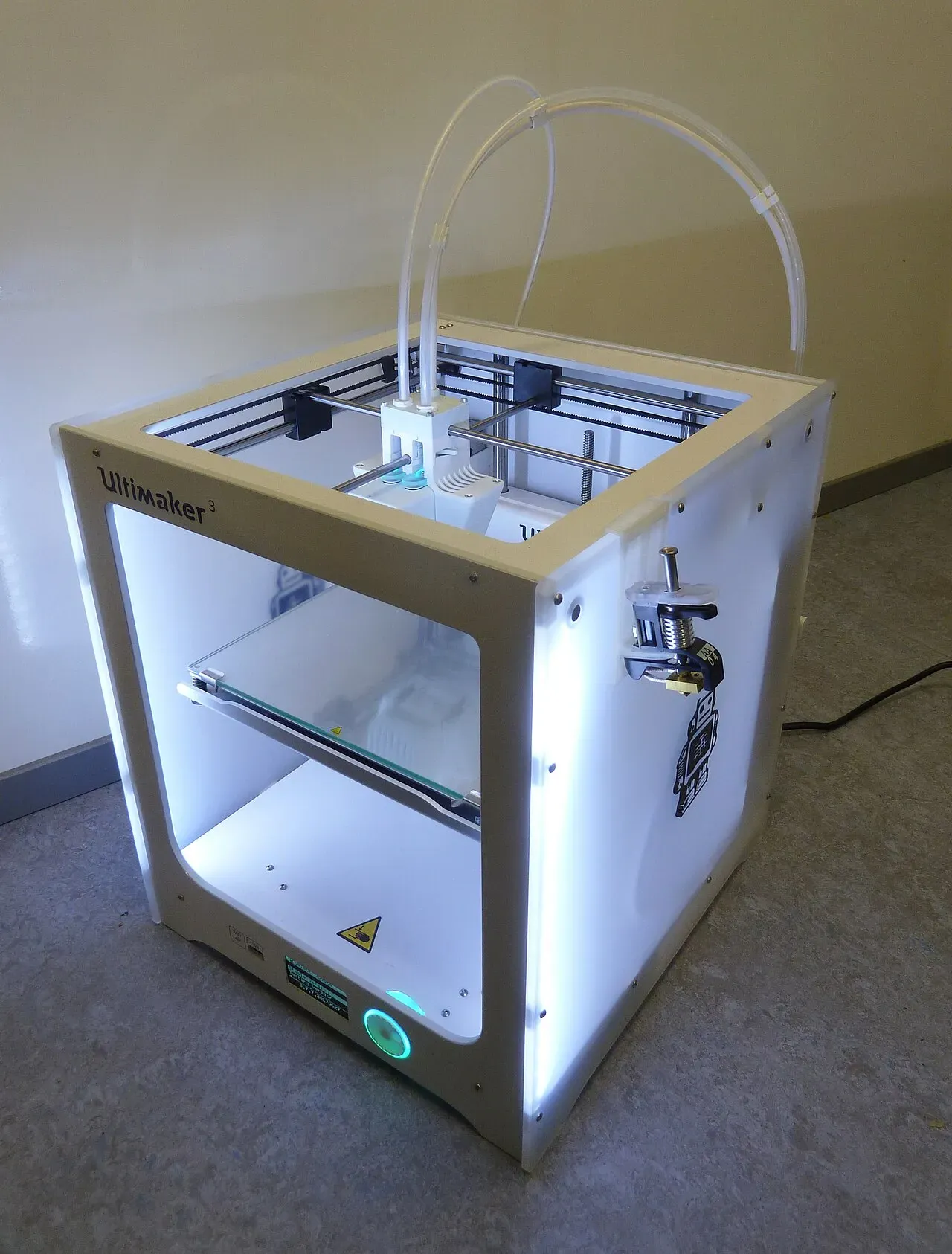 An Ultimaker 3, a boxed desktop printer.Photo: DirkvdM ·CC BY-SA 4.0 ·Wikimedia Commons
Post-processing: sanding, gluing and acetone smoothing
ABS is much nicer to work on after printing. It sands, drills, taps and cuts cleanly, and you can glue ABS parts together with ABS cement or with acetone, which softens both surfaces and welds them.
PLA can be sanded and painted too, but because it softens at a low temperature, the friction of sanding or drilling can melt it and gum up the paper or bit. Work slowly, sand wet, and keep tools cool. PLA glues well with cyanoacrylate (superglue) or epoxy, but acetone doesn’t dissolve it.
Acetone vapour smoothing (ABS only)
Acetone dissolves the surface of ABS. If you expose an ABS print to acetone vapour, the outer skin melts slightly and the layer lines flow together into a glossy, almost moulded finish. It doesn’t work on PLA.
The basic method is to place the part on a raised stand inside a closed container with a small amount of acetone on paper towels lining the walls, leave it at room temperature, and check it often. Thin details soften and round off, so small text and sharp edges will blur. Let the part dry and harden fully before handling it.
If you want smooth PLA, use filler primer and sanding, or a resin coating such as a two-part epoxy finish, instead.
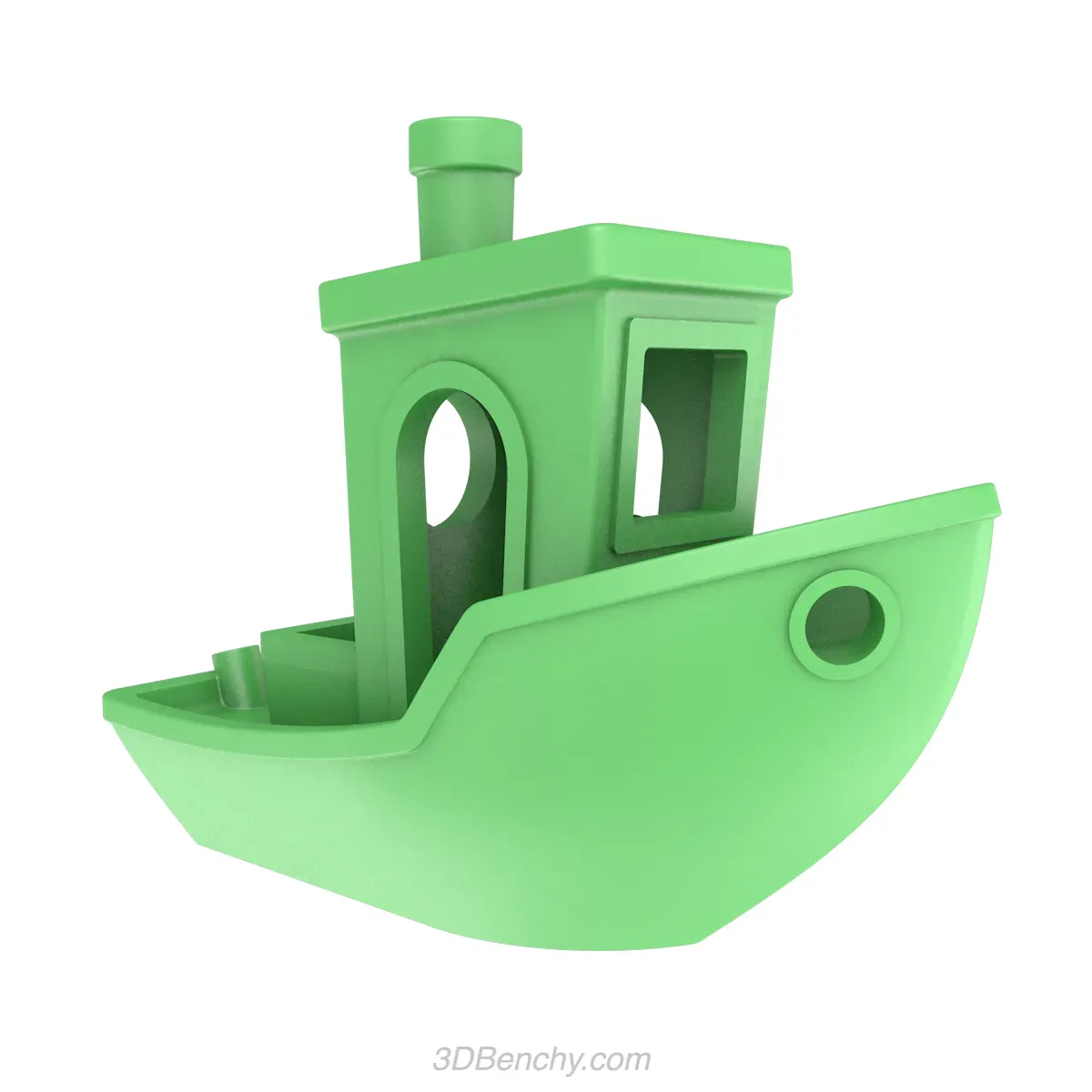 3DBenchy, the test model every printer is judged by.Photo: Creative Tools ·CC BY 2.0 ·Wikimedia Commons
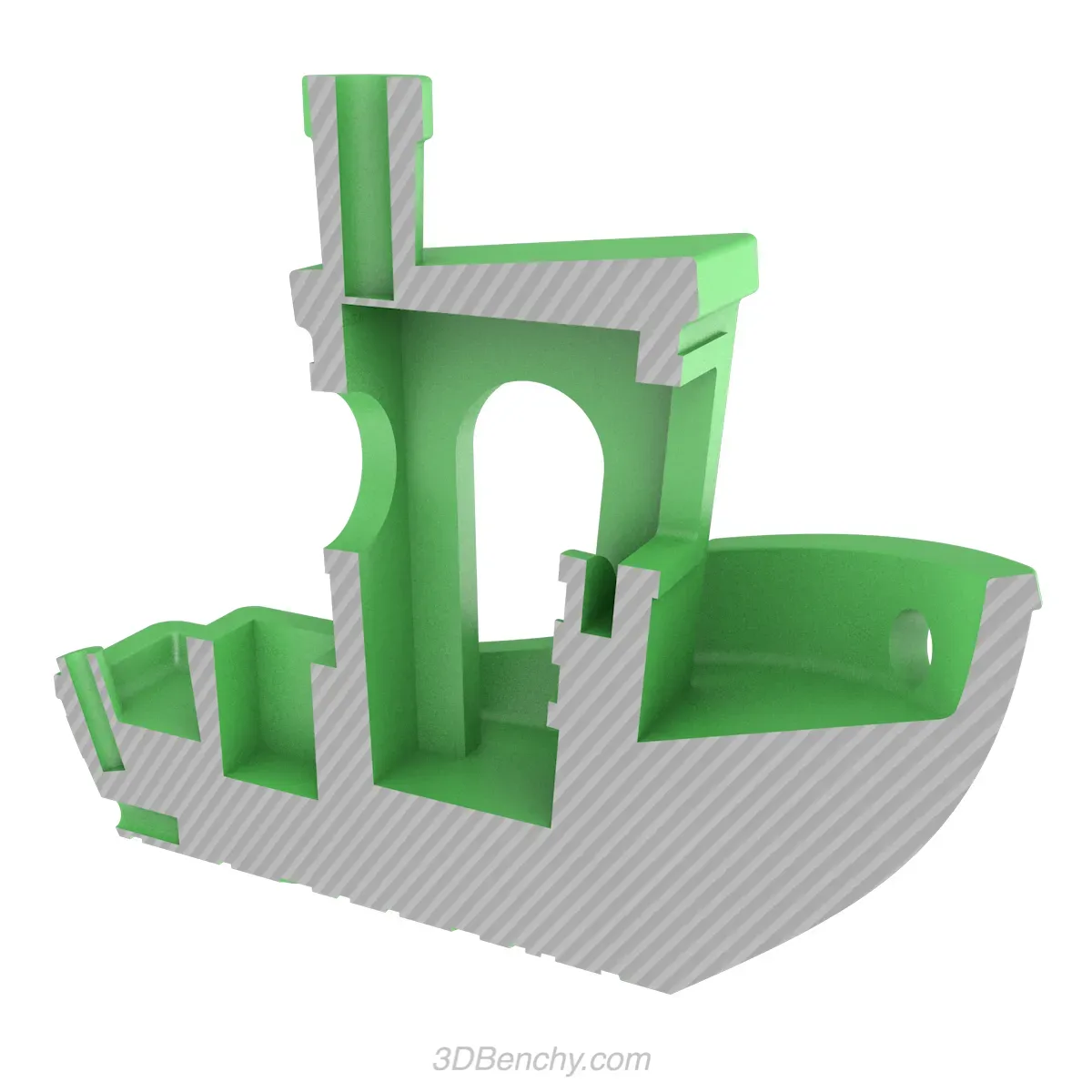 Benchy cut open: walls, infill and overhangs in one small boat.Photo: CreativeTools: https://www.thingiverse.com/Cr… ·CC0 ·Wikimedia Commons
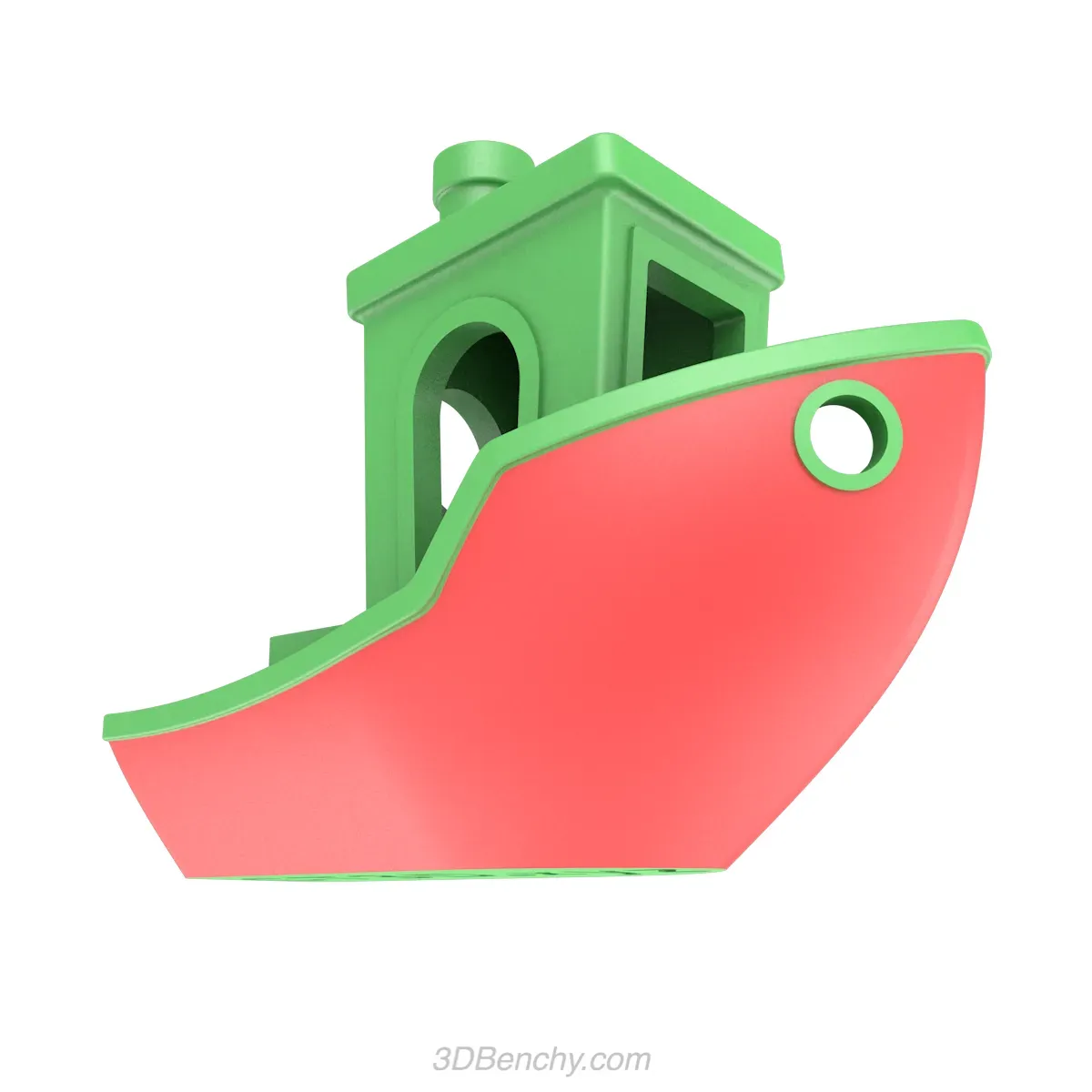 The hull is a curved overhang test.Photo: CreativeTools: https://www.thingiverse.com/Cr… ·CC0 ·Wikimedia Commons
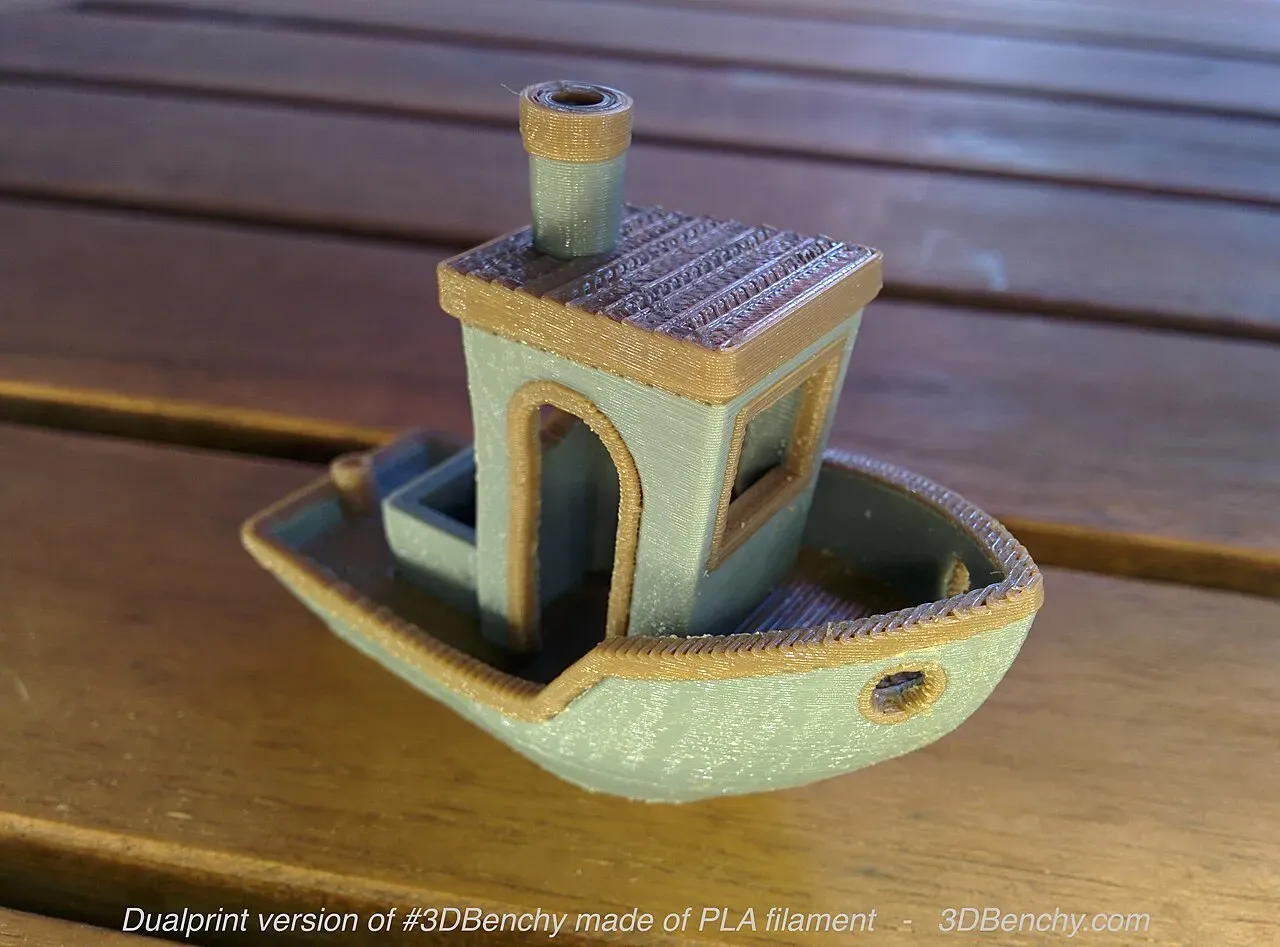 A two-colour Benchy.Photo: 3DBenchy ·CC BY 2.0 ·Wikimedia Commons
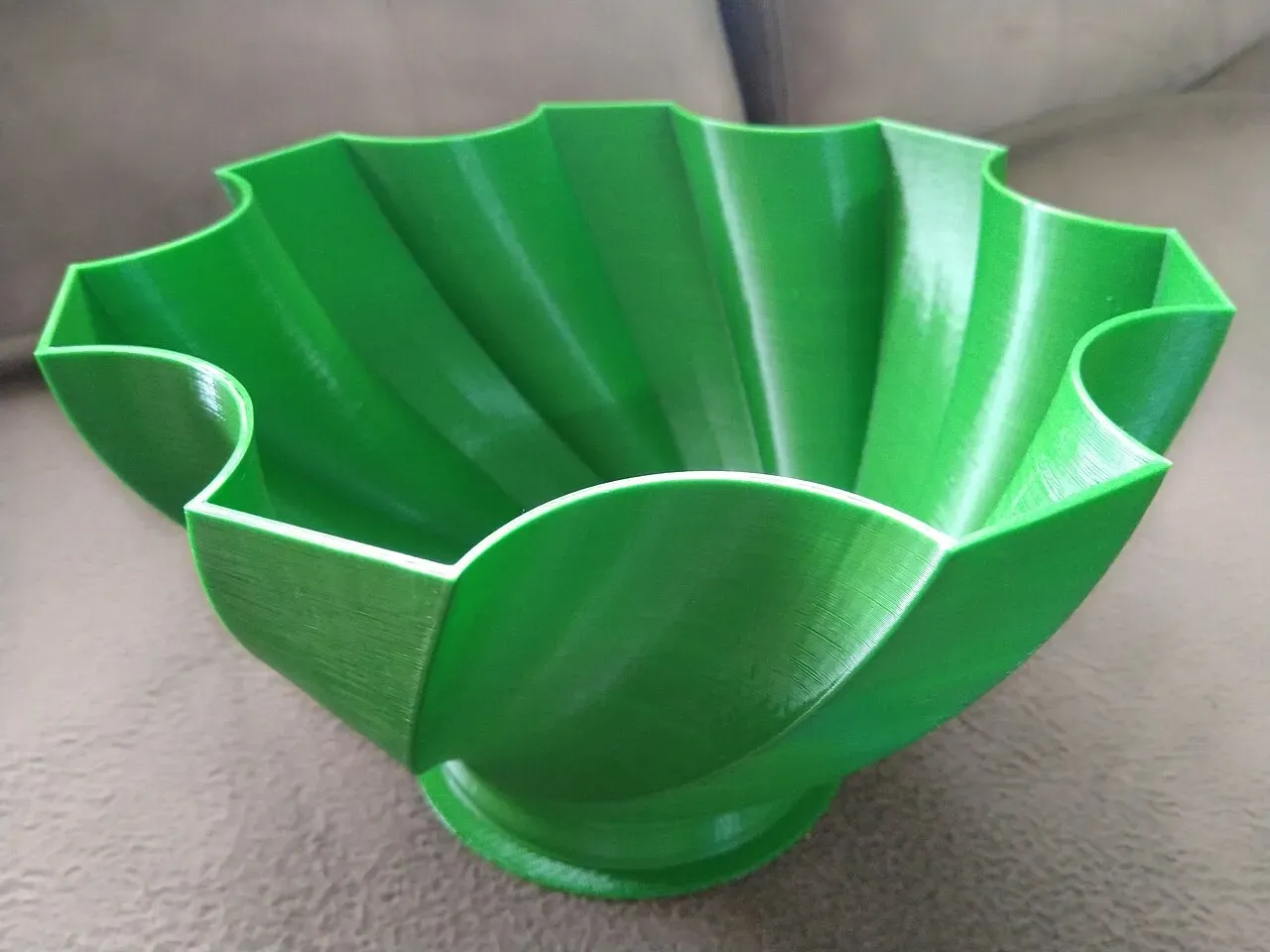 A printed bowl: walls only, no infill.Photo: Sumanbargavr ·CC BY-SA 4.0 ·Wikimedia Commons
- A twisted vase printed in a single wall.Photo: Sumanbargavr ·CC BY-SA 4.0 ·Wikimedia Commons
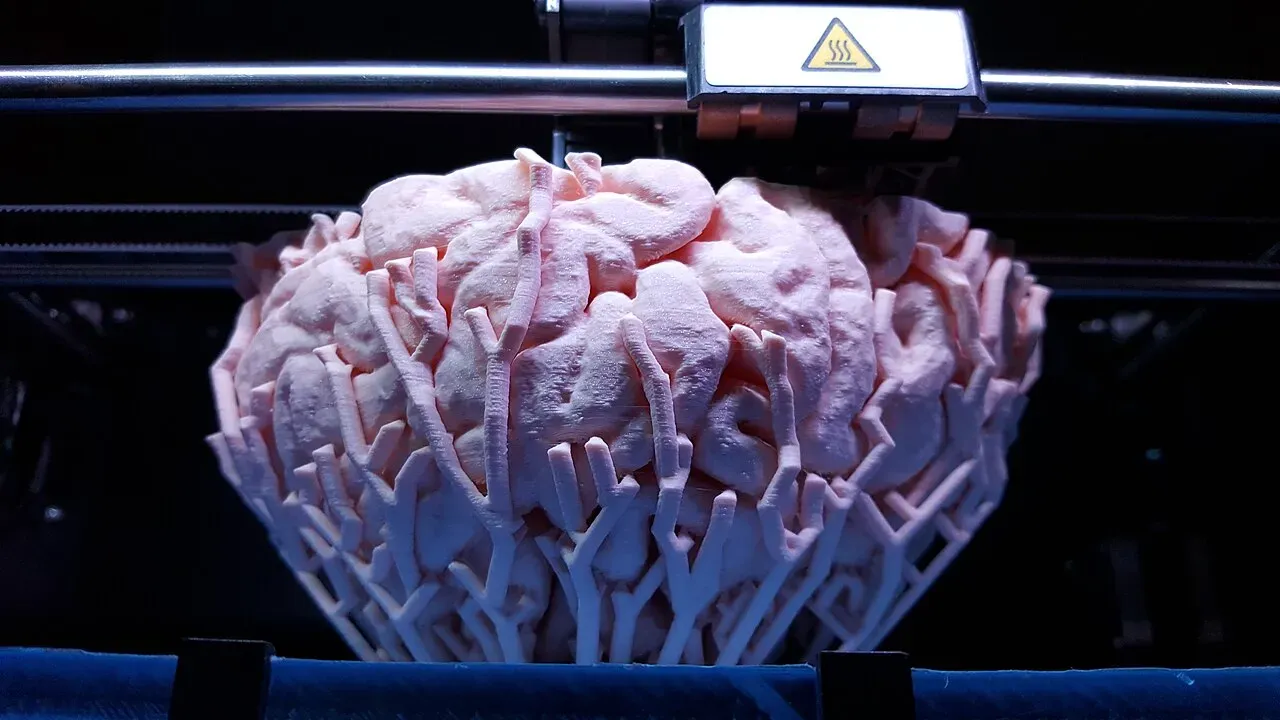 Supports hold up overhangs while the print grows.Photo: Nevit ·CC BY-SA 3.0 ·Wikimedia Commons
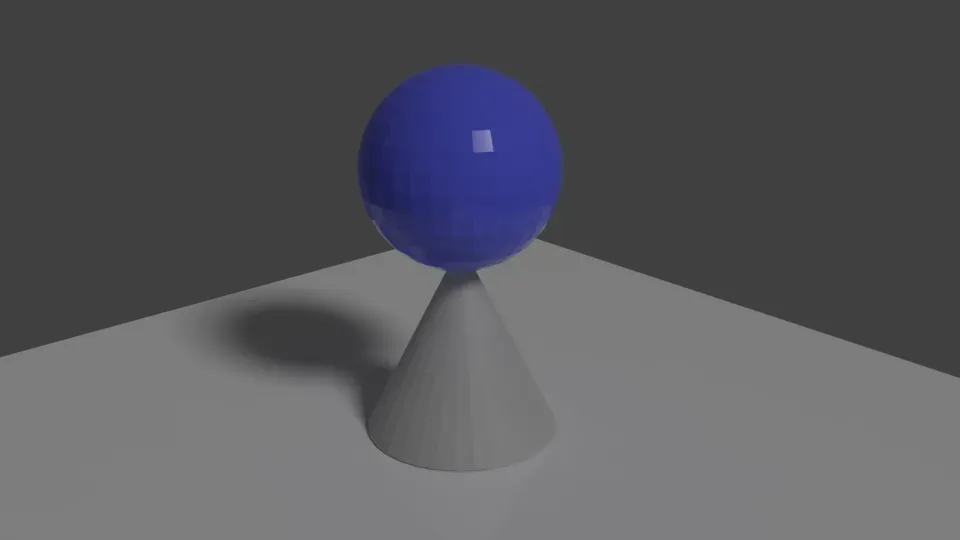 Why supports exist: a sphere needs something under it.Photo: Mr N ·CC BY-SA 4.0 ·Wikimedia Commons
Moisture and storage
Both filaments absorb moisture from the air over time. Neither is as fussy as nylon or PETG, but wet filament of either type pops and crackles in the nozzle, strings more and prints rougher surfaces. Store open spools in a sealed box or bag with desiccant, and dry them if they start printing badly. Our guide to drying filament gives drying temperatures for each, and it matters for PLA: dry it too hot and the spool softens and fuses together.
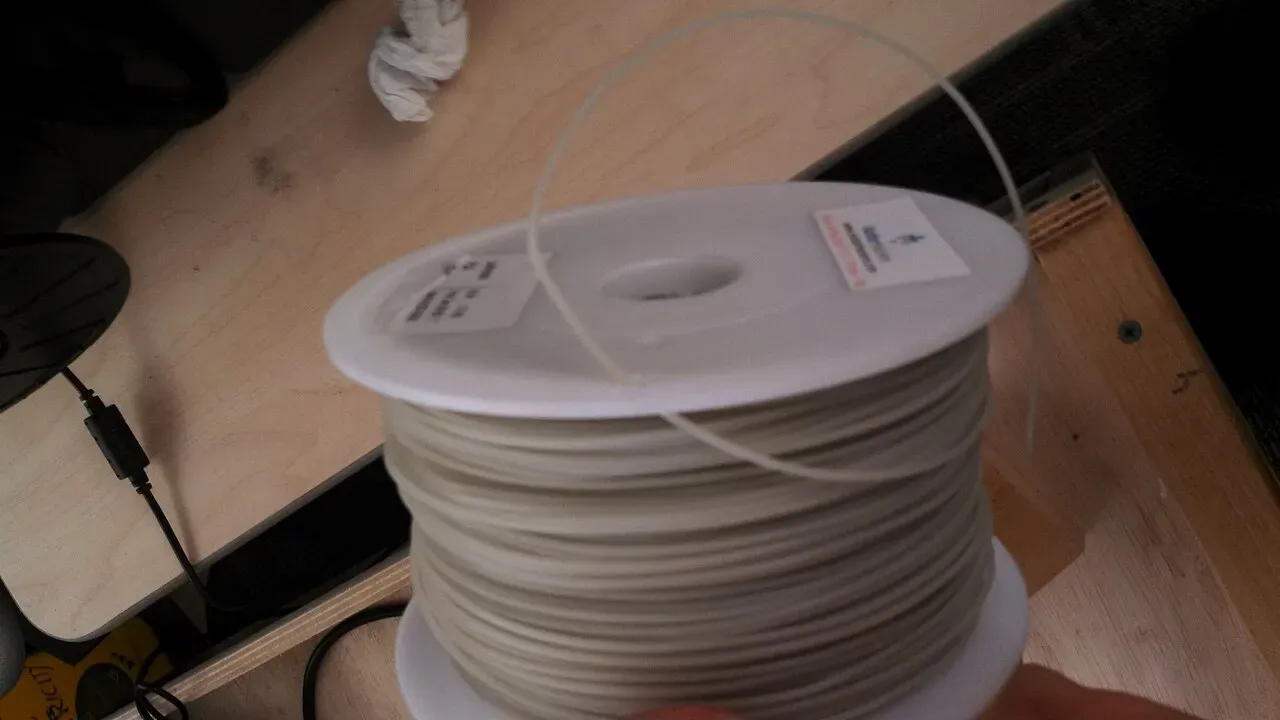 An open spool of PLA left out in the air.Photo: SuperBlobMonster ·CC BY-SA 3.0 ·Wikimedia Commons
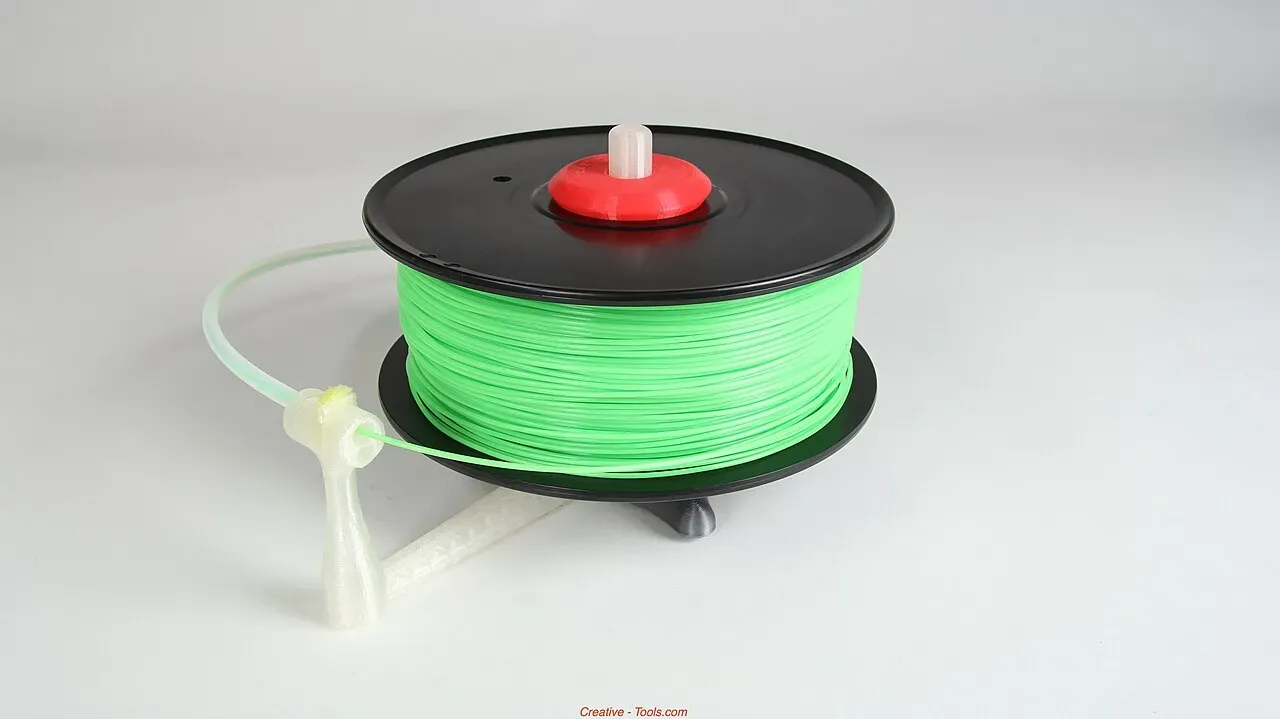 A simple spool holder lets the spool turn freely.Photo: Creative Tools ·CC BY 2.0 ·Wikimedia Commons
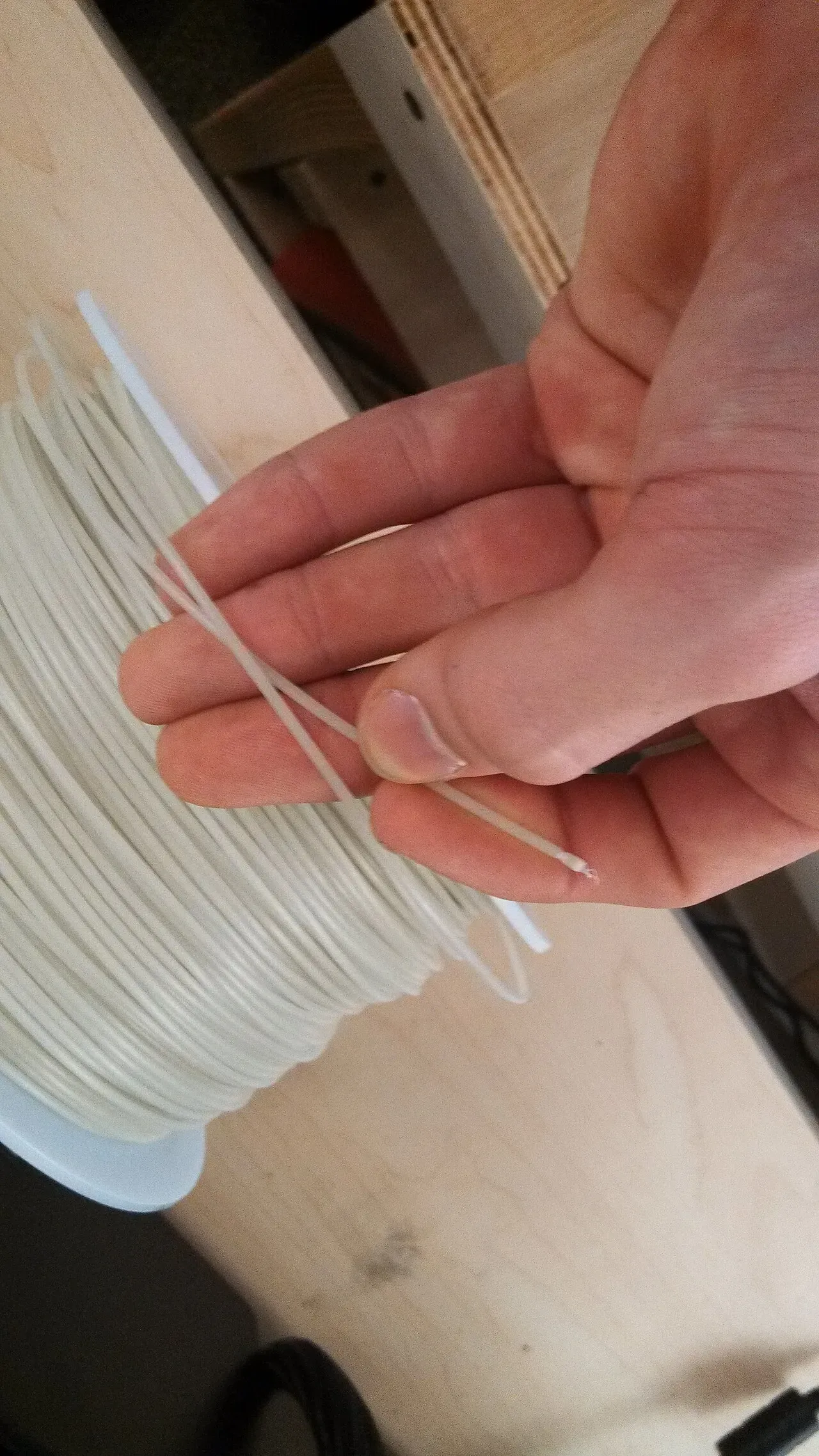 Crossed filament: a loop that can tangle and stop the extruder.Photo: SuperBlobMonster ·CC BY-SA 3.0 ·Wikimedia Commons
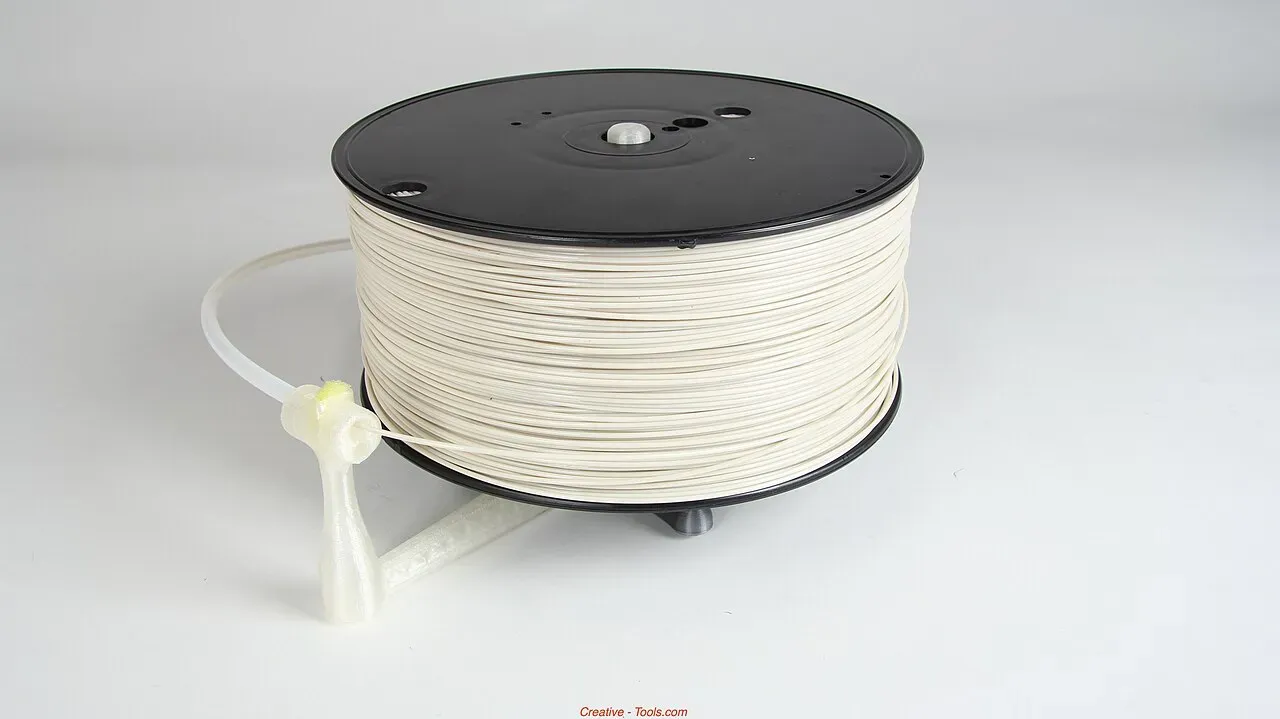 A spool of white filament.Photo: Creative Tools ·CC BY 2.0 ·Wikimedia Commons
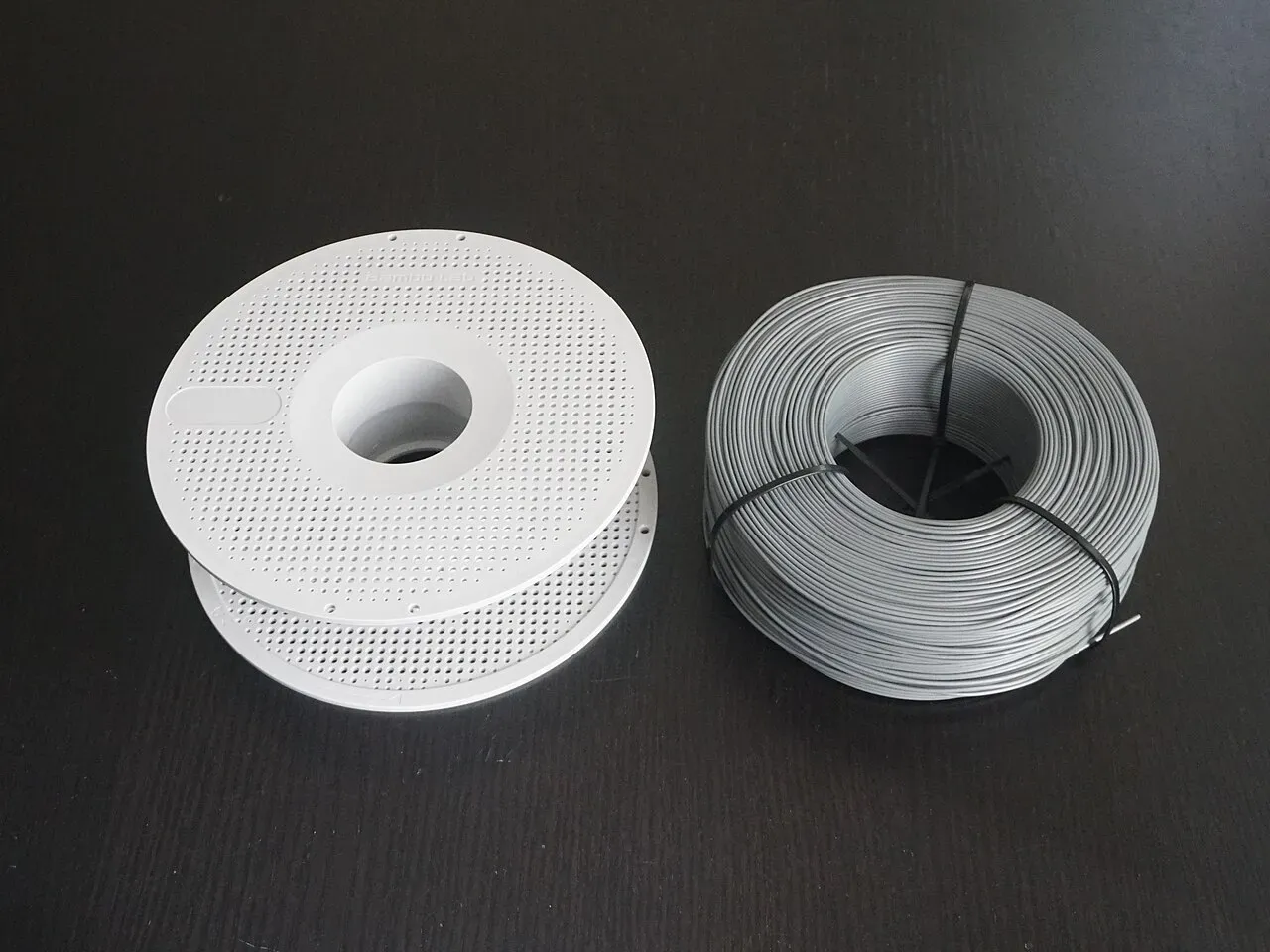 Refill filament: a coil and a reusable spool.Photo: Suit ·CC BY-SA 4.0 ·Wikimedia Commons
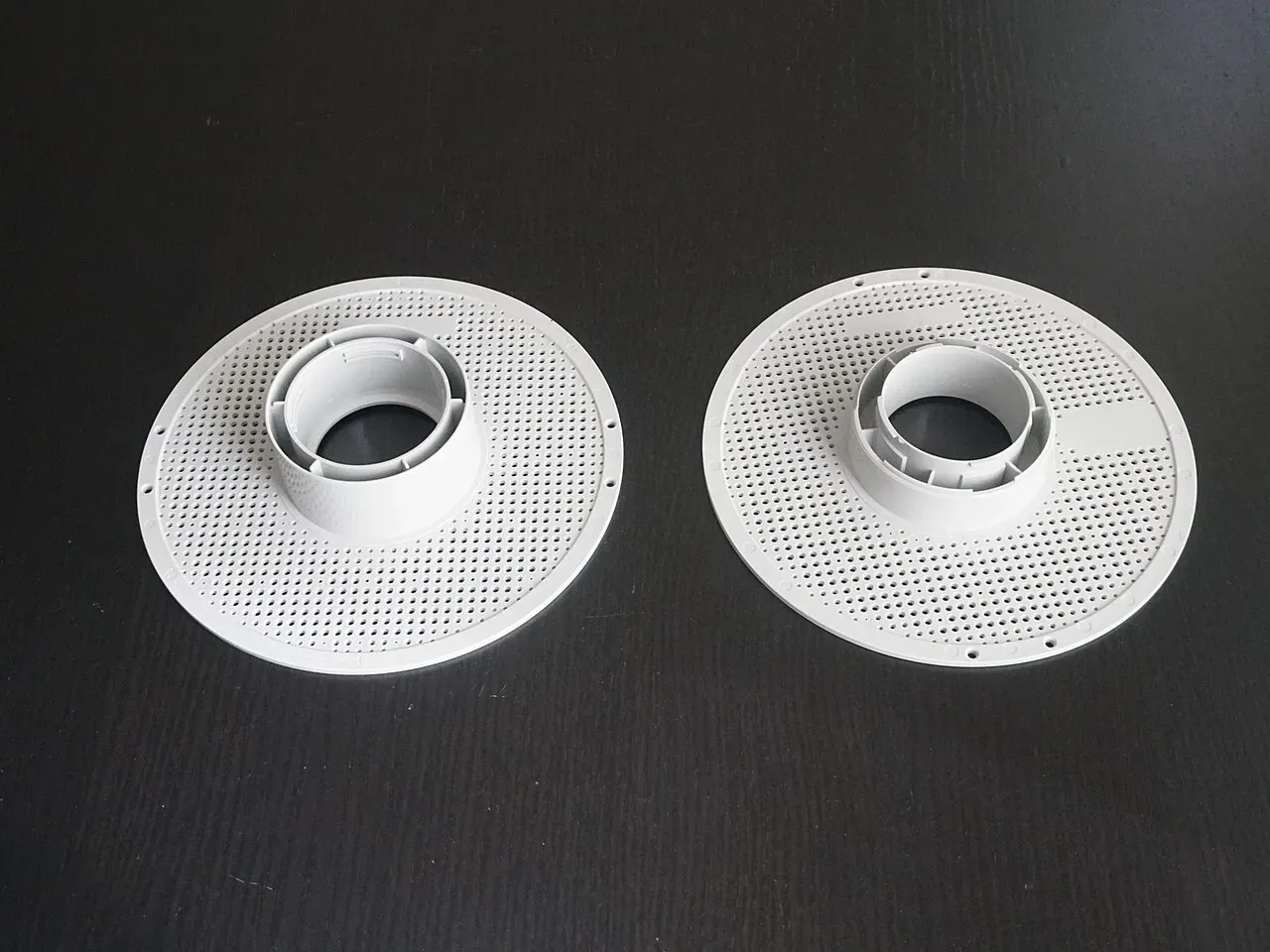 Open the reusable spool…Photo: Suit ·CC BY-SA 4.0 ·Wikimedia Commons
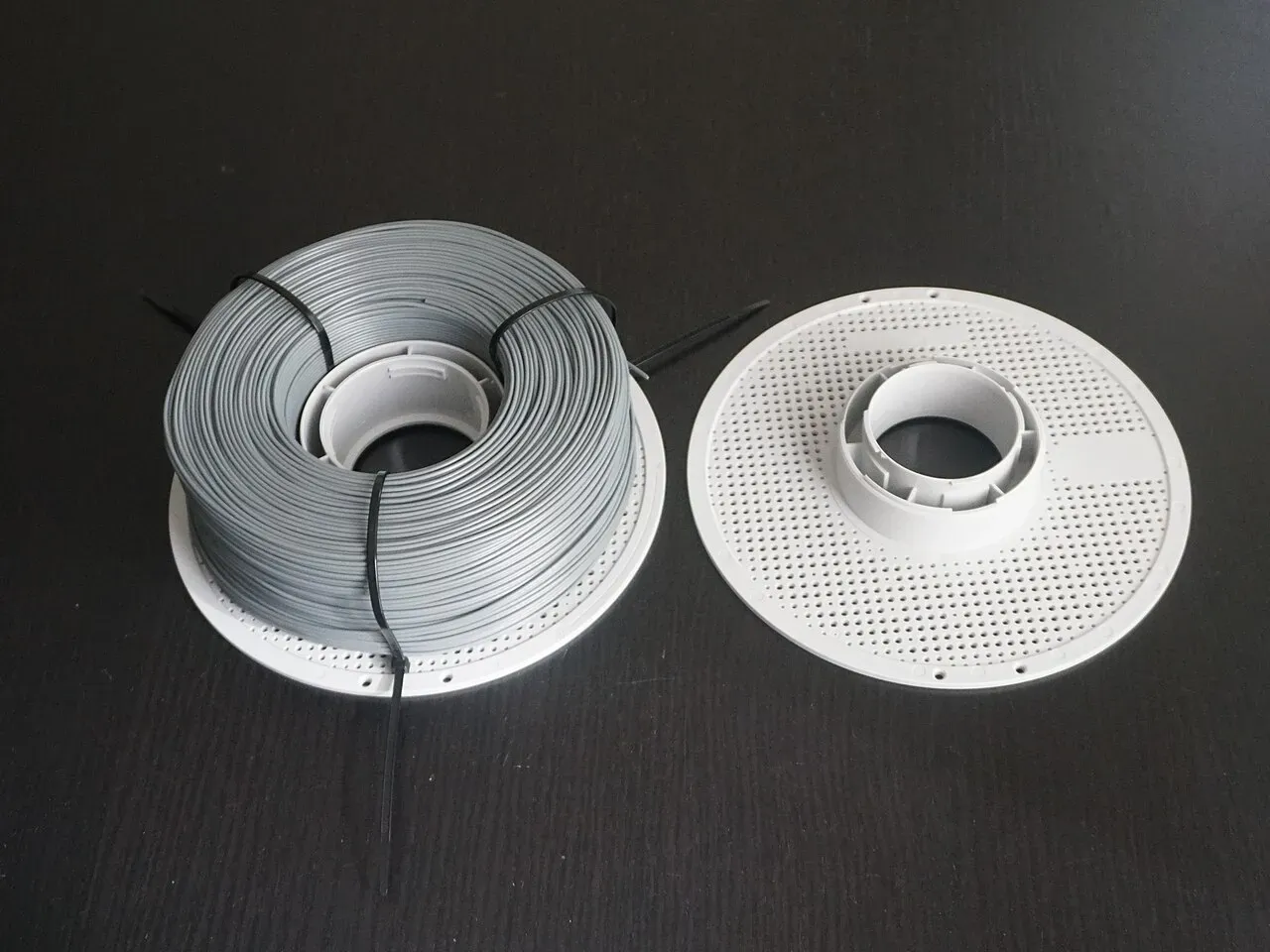 …drop the coil in…Photo: Suit ·CC BY-SA 4.0 ·Wikimedia Commons
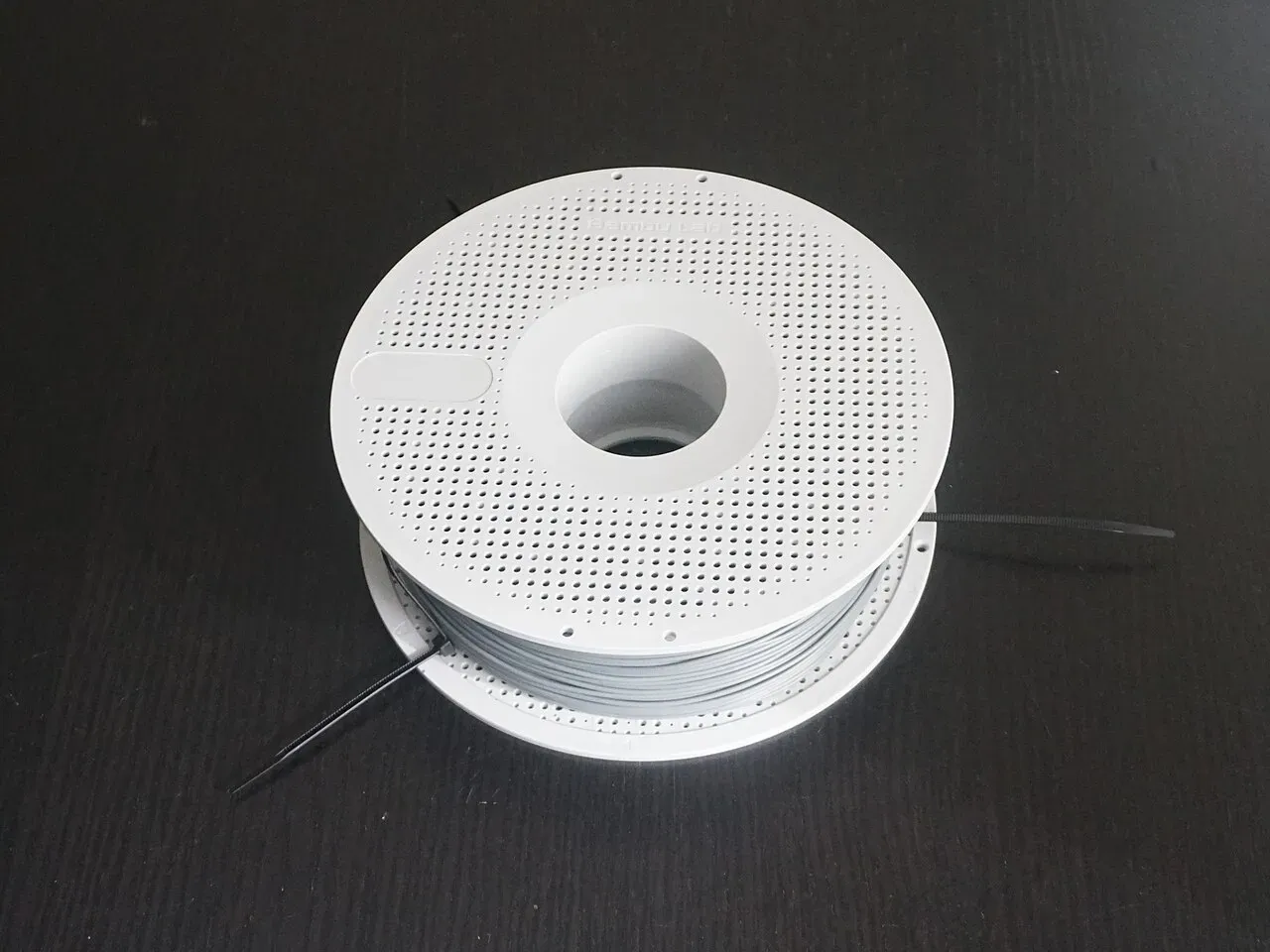 …and close it. Cut the ties last.Photo: Suit ·CC BY-SA 4.0 ·Wikimedia Commons
Cost
The filament itself costs about the same. Plain PLA and plain ABS are both among the cheapest spools you can buy, and prices overlap so much that brand matters more than material.
The real difference is everything around it. Printing ABS well usually means:
- An enclosure, if your printer doesn’t have one.
- A filter or vent for the fumes.
- An all-metal hotend if yours is limited to around 240 °C.
- More failed prints while you learn, especially on large flat parts.
- Higher power use, because the bed runs 40–50 °C hotter for the whole print.
If you already own an enclosed printer with a filter, ABS is a cheap and capable material. If you don’t, PLA is cheaper by a wide margin once you count the extras.
When to choose ASA or PETG instead
Many people reach for ABS because they’ve heard it’s “the strong one” or “the heat-resistant one”. Often a different material gets you there more easily.
Choose PETG if the part needs to be tough and handle moderate heat (up to about 80 °C), and you print on an open printer. PETG barely warps, needs no enclosure and smells much less than ABS. It strings more than PLA and can stick too hard to smooth beds, but it’s far easier than ABS. See our PLA vs PETG guide for how to print it.
Choose ASA if the part needs ABS-level heat resistance and will live outdoors. ASA prints much like ABS, with similar temperatures, warping and need for an enclosure, but it handles UV light far better, so it doesn’t yellow and turn brittle in the sun the way ABS does. Car exterior parts, garden fixtures and outdoor mounts are ASA jobs. It still gives off fumes, so the same ventilation rules apply.
Stick with ABS if you want acetone smoothing or acetone welding, if you need to match existing ABS parts, or if you already have an enclosed, filtered setup and it’s the cheapest spool on the shelf.
| You need… | Best choice | Why |
|---|---|---|
| Easy printing, indoor parts, best detail | PLA | Lowest effort, lowest warping, faint smell |
| Toughness and moderate heat, open printer | PETG | No enclosure, low warping |
| High heat, indoors, acetone smoothing | ABS | Softens around 95–105 °C; dissolves in acetone |
| High heat and sunlight, outdoors | ASA | ABS-like heat with much better UV resistance |
| Flexible, rubbery parts | TPU | Bends and springs back |
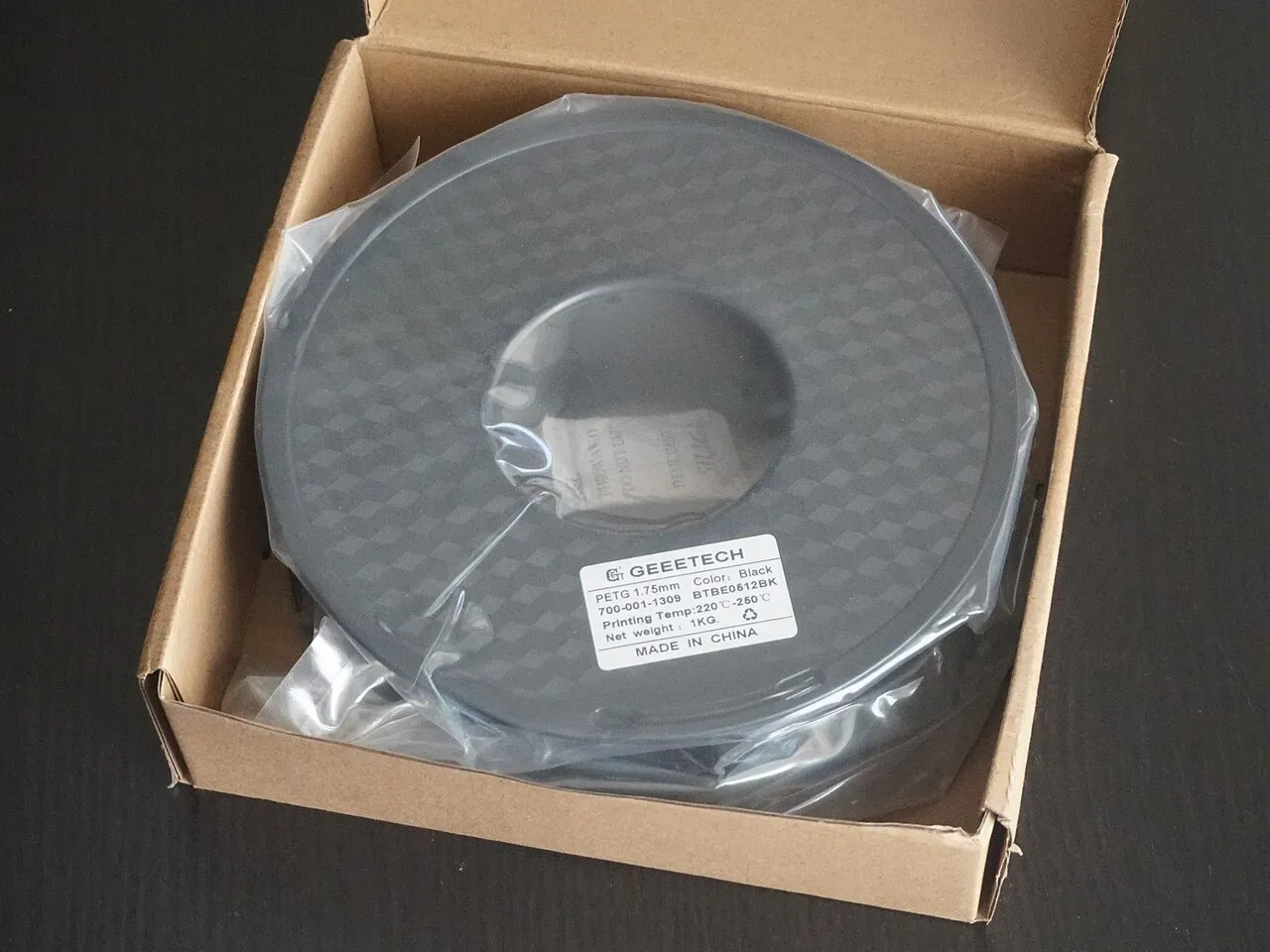 A 1 kg spool of PETG, sealed with desiccant.Photo: Suit ·CC BY-SA 4.0 ·Wikimedia Commons
- A spool of ABS.Photo: Tatár Lehel ·CC BY-SA 3.0 ·Wikimedia Commons
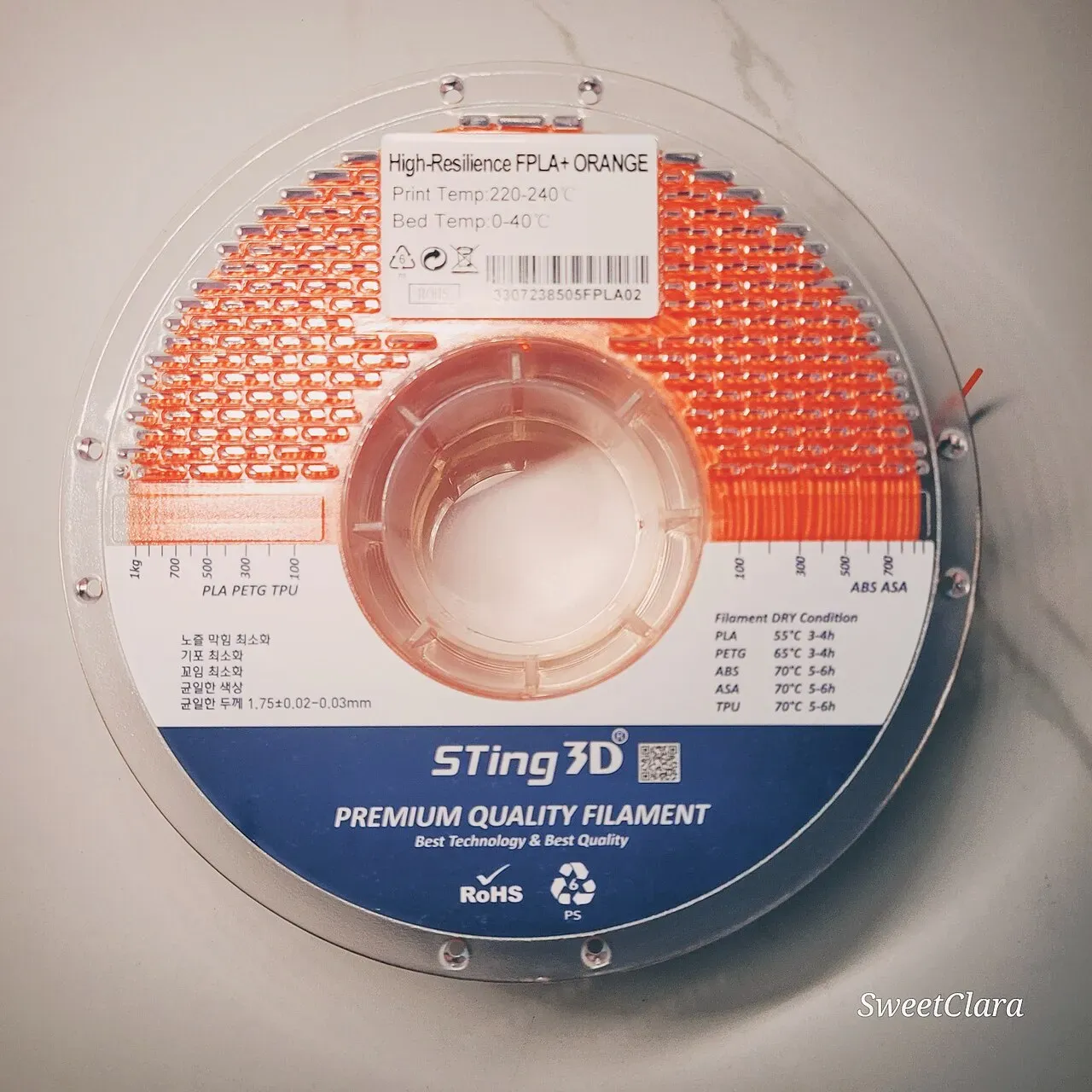 Flexible filament: label shows its print temperature.Photo: Sweetclara ·CC BY-SA 4.0 ·Wikimedia Commons
Common problems when switching from PLA to ABS
| Problem | Why | Fix |
|---|---|---|
| Corners lifting off the bed | ABS shrinks as it cools | Enclosure, bed at 95–110 °C, brim; see the warping guide |
| Cracks between layers, often on tall parts | Layers cooled too fast | Close the enclosure, turn the fan off, keep draughts away |
| First layer won’t stick | Bed too cool, dirty bed or wrong gap | Clean the bed, raise bed temperature, check the Z offset; see first layer not sticking |
| Weak, rough or under-filled walls | Nozzle too cold for ABS | Raise the nozzle temperature 5 °C at a time; see under-extrusion |
| Clicking extruder | Nozzle too cool or partly clogged | See extruder clicking and unclogging a nozzle |
| PLA jams after printing ABS | ABS left in the nozzle at PLA temperatures | Purge at ABS temperature before switching back |
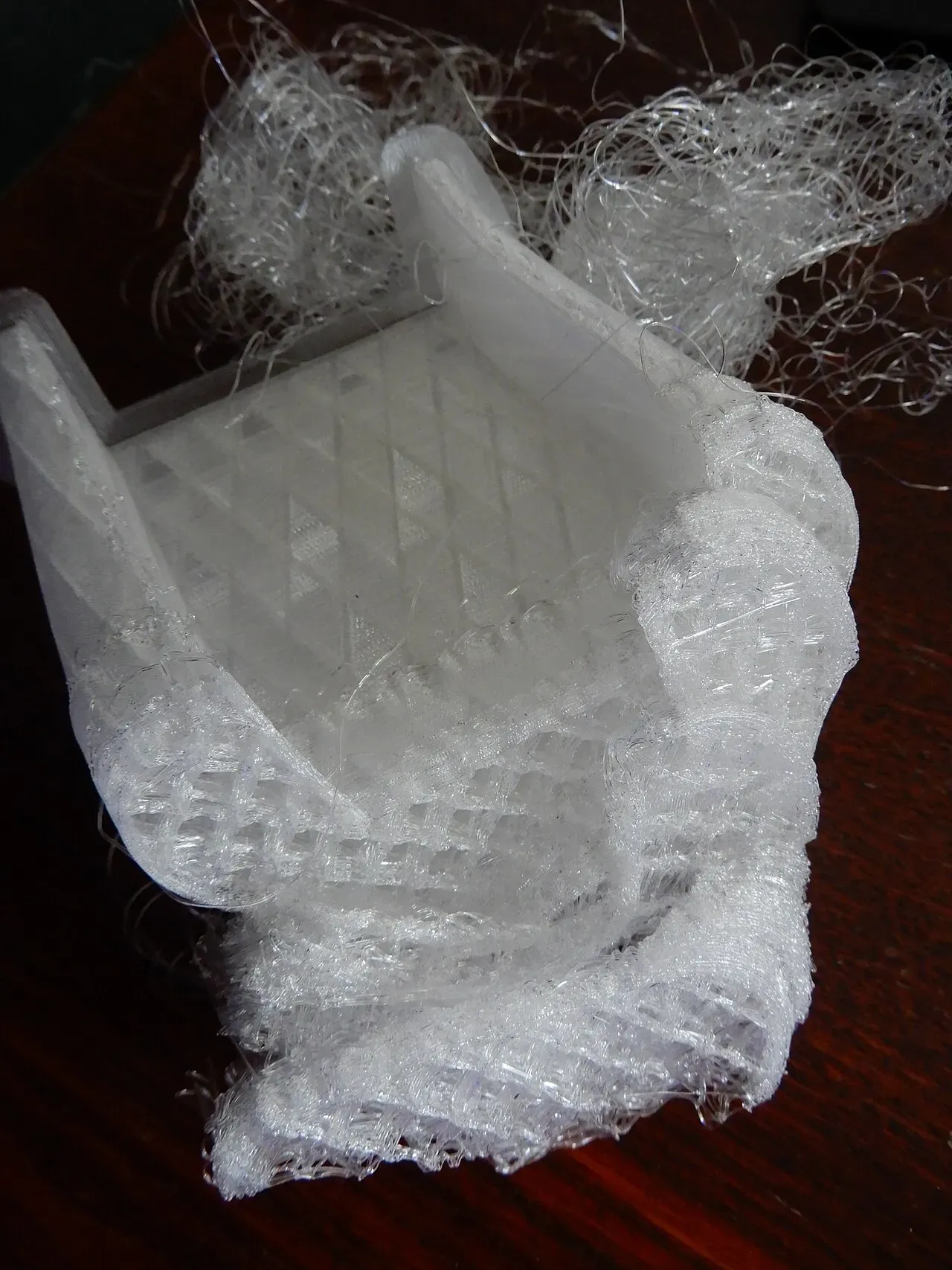 A print that broke loose partway through.Photo: EwkaC ·CC BY-SA 4.0 ·Wikimedia Commons
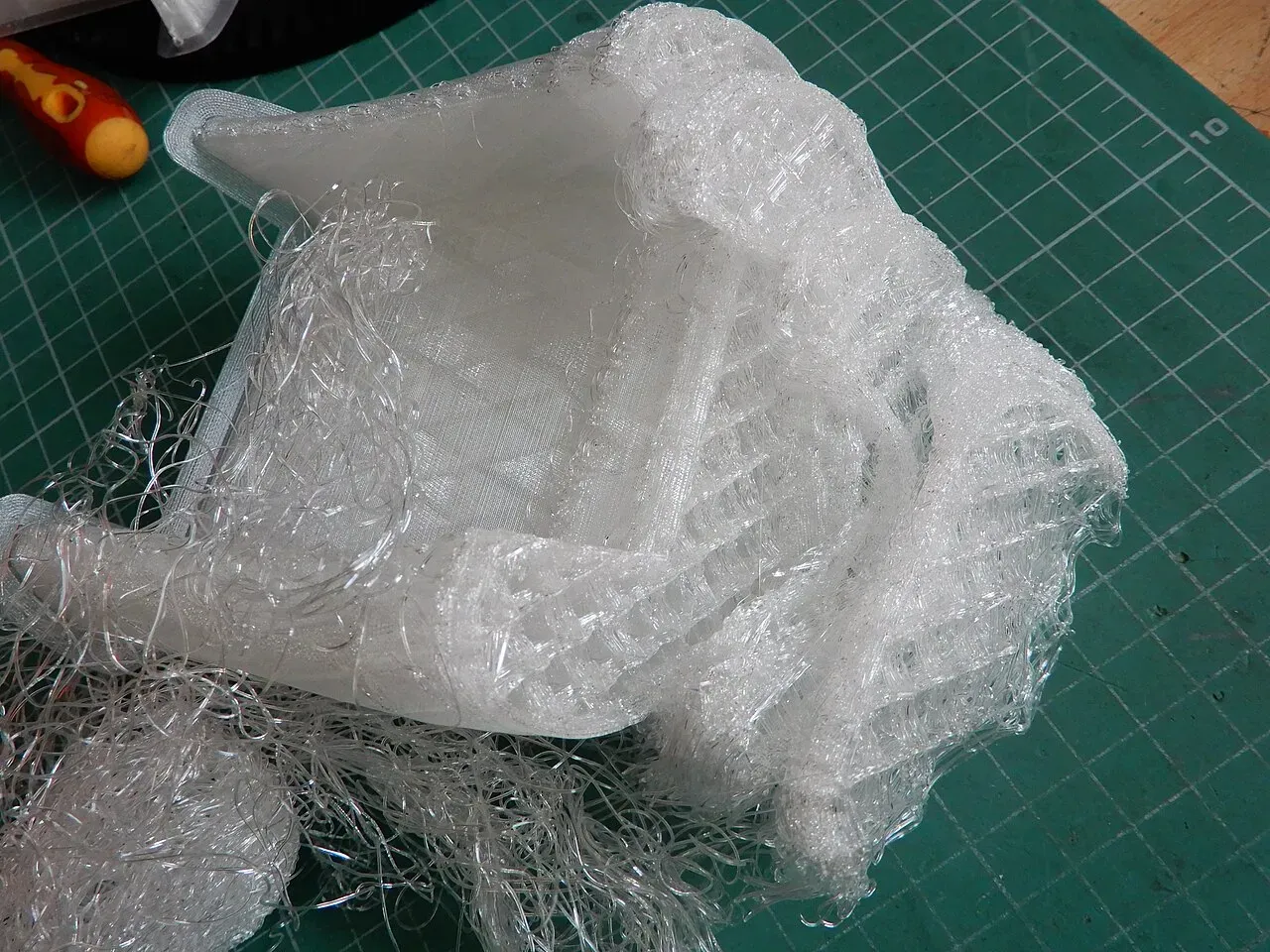 The same failure from the side: layers stop where the part moved.Photo: EwkaC ·CC BY-SA 4.0 ·Wikimedia Commons
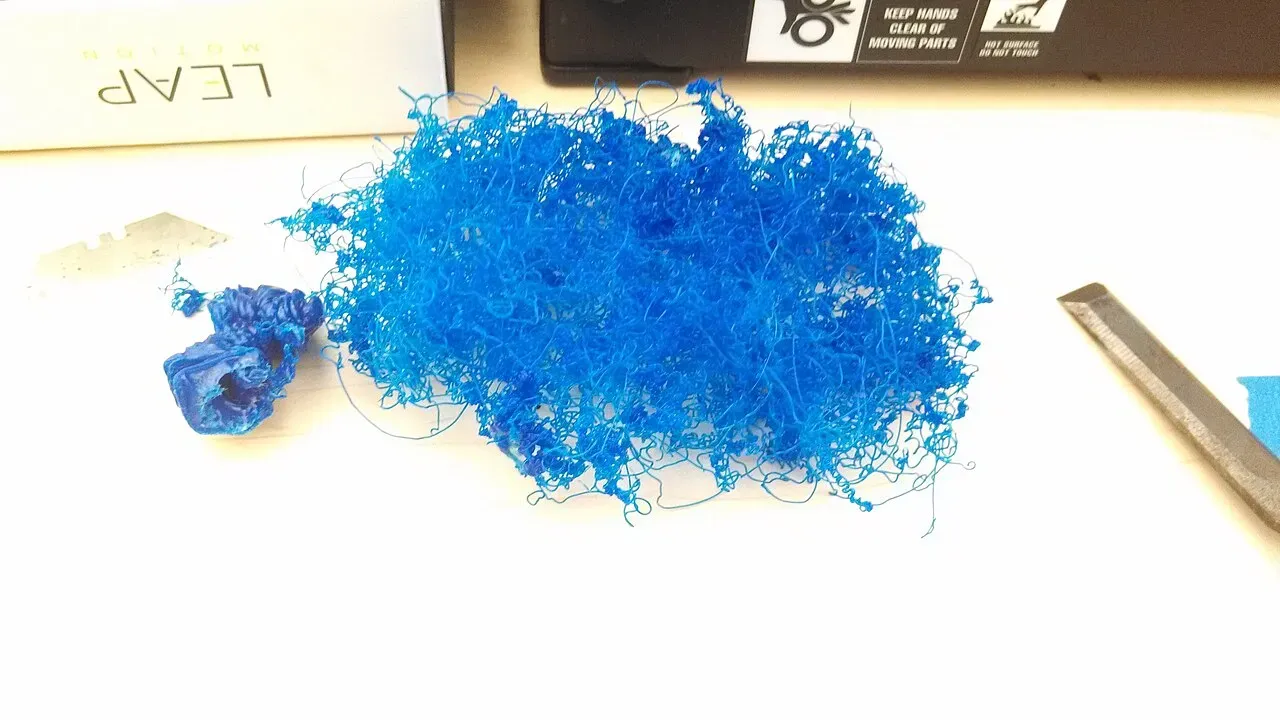 Spaghetti: the part came loose and the printer kept extruding into the air.Photo: SuperBlobMonster ·CC BY-SA 3.0 ·Wikimedia Commons
Finding the settings in your slicer
| What to change | OrcaSlicer / Bambu Studio | PrusaSlicer | Cura |
|---|---|---|---|
| Choose the filament profile | Filament list on the main screen | Filament drop-down in the right panel | Material drop-down next to the printer |
| Nozzle temperature | Filament settings → Nozzle temperature | Filament Settings → Filament → Temperature | Material → Printing Temperature |
| Bed temperature | Filament settings → Bed temperature (per plate type) | Filament Settings → Filament → Bed | Material → Build Plate Temperature |
| Part cooling fan | Filament settings → Cooling | Filament Settings → Cooling | Cooling → Fan Speed |
| Brim | Process → Others → Brim | Print Settings → Skirt and brim | Build Plate Adhesion → Build Plate Adhesion Type |
Menu names move between slicer versions. If you can’t find a setting, type its name into the slicer’s settings search box. If you’re tuning temperature for a new spool of either material, a temperature tower finds the best value quickly.
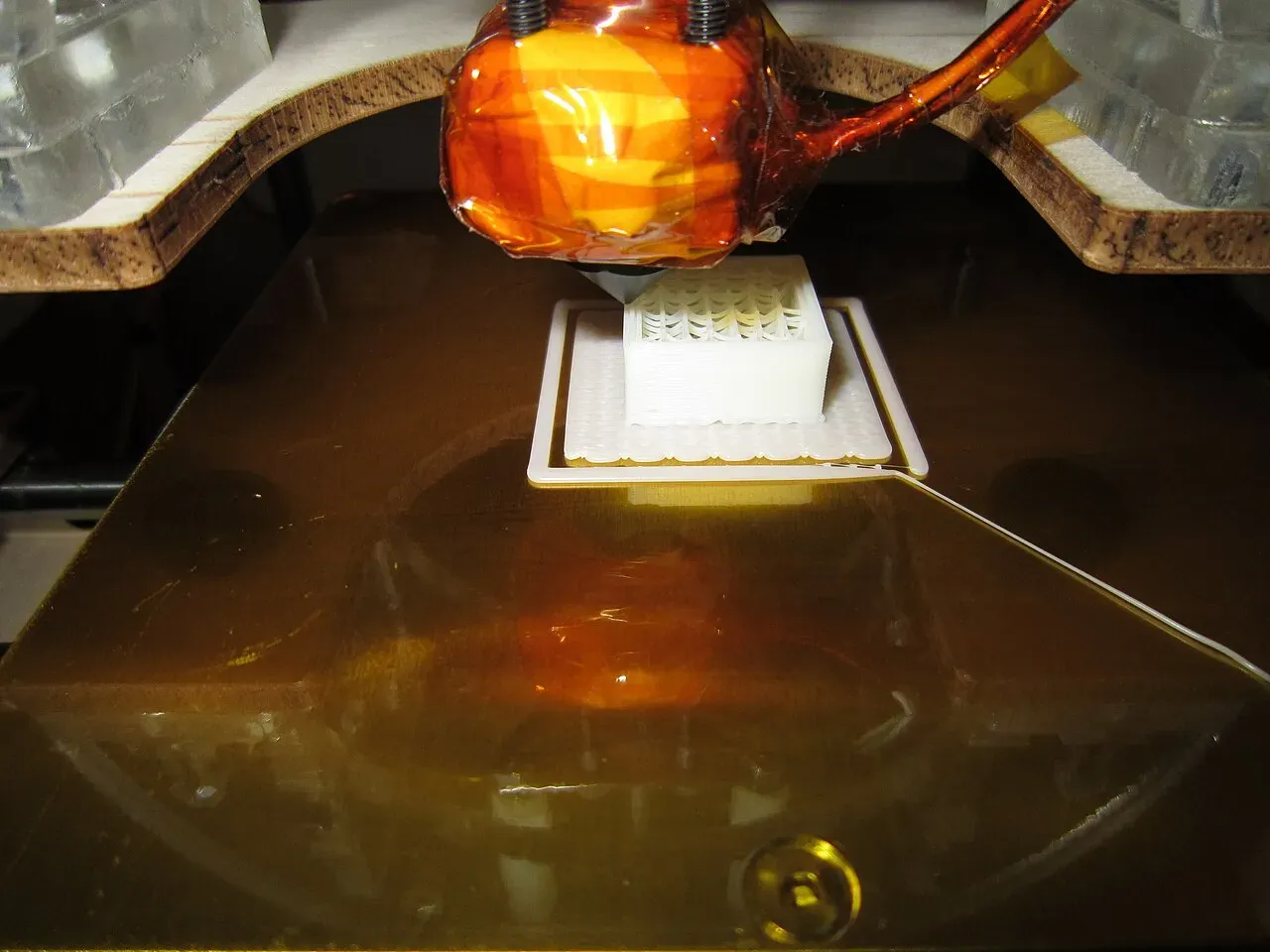 A 20 mm calibration cube, often the first print.Photo: syvwlch ·CC BY 2.0 ·Wikimedia Commons
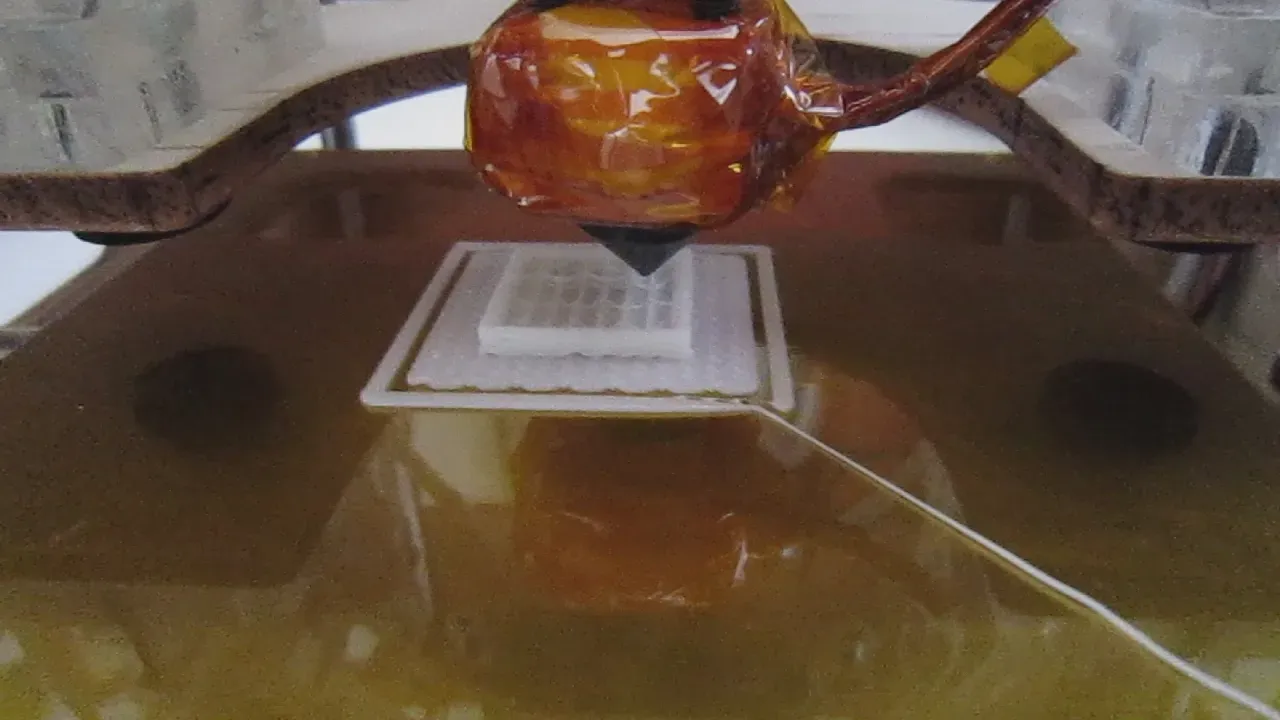 The calibration cube a few layers in.Photo: syvwlch ·CC BY 2.0 ·Wikimedia Commons
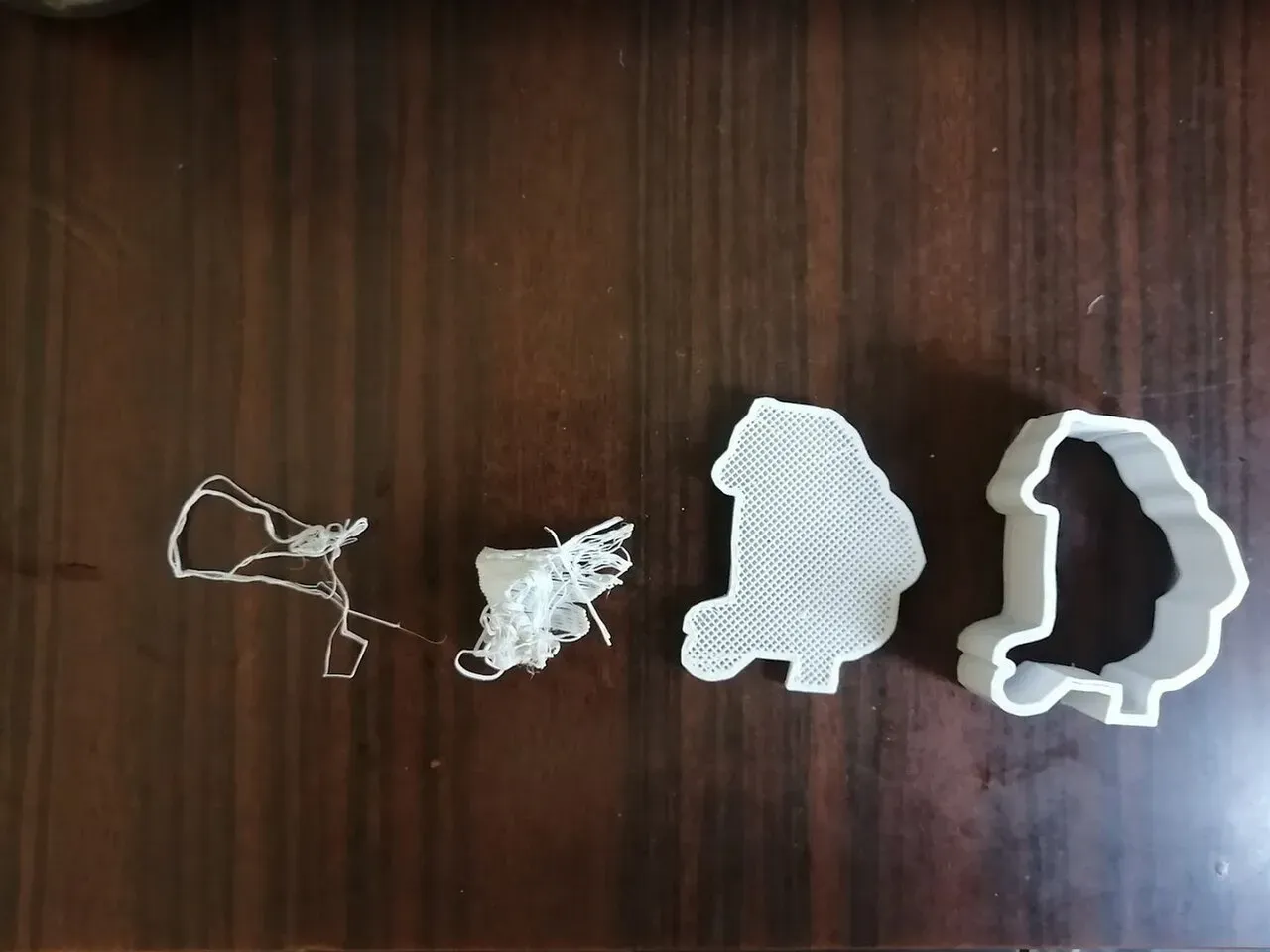 Test prints on the way from failure to a clean part.Photo: Dbsnp ·CC BY-SA 4.0 ·Wikimedia Commons
FAQ
Is ABS stronger than PLA?
It depends on what you mean. PLA is stiffer and bends less under a steady load at room temperature. ABS is tougher: it absorbs impacts and flexes before breaking, where PLA snaps. ABS also keeps its strength at temperatures where PLA goes soft.
Is ABS harder to print than PLA?
Yes. ABS needs a hotter nozzle and bed, little or no cooling, and ideally an enclosure to stop it warping and cracking. PLA prints on almost any printer with default settings.
Can I print ABS without an enclosure?
Small parts can work in a warm room with no draughts, a hot bed and a brim. Large or tall parts usually warp or crack without one. You also lose the enclosure’s job of containing fumes, so ventilation matters even more.
Are ABS fumes dangerous?
ABS gives off more fumes and fine particles than PLA, and the smell can cause headaches or irritation. Print it in a well-ventilated space, ideally in a filtered or vented enclosure, and not in rooms where people sleep or spend long periods.
Is PLA or ABS better for car parts?
ABS, or better ASA. PLA softens around 55–60 °C, and a closed car in summer can get hotter than that. ASA handles the same heat as ABS and copes with sunlight better, so it’s the usual choice for parts exposed to the sun.
Can you acetone smooth PLA?
No. Acetone doesn’t dissolve PLA, so vapour smoothing only works on ABS (and ASA). For smooth PLA, use filler primer and sanding, or a coating.
Which is cheaper, PLA or ABS?
The filament costs about the same. ABS costs more overall once you add an enclosure, filtering, possibly an all-metal hotend, and more failed prints while you learn.
Should a beginner use ABS?
Start with PLA. Learn your printer, the first layer and your slicer first, then move to PETG when you need toughness or heat resistance. Try ABS or ASA once you have an enclosure and a good place to vent fumes.
Related guides
New to printing? Start with the complete beginner’s guide, then see our filament guide for every common material. If you’re torn between PLA and the other easy option, read PLA vs PETG. For ABS’s biggest headache, see how to fix warping, and keep any spool printing cleanly with how to dry filament.
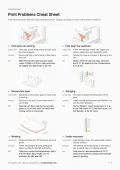
Free: the Print Problems Cheat Sheet
12 common print faults on two printable pages: what each looks like, why it happens and the fix. Plus one new guide a week.
Free: the Print Problems Cheat Sheet
12 common print faults on two printable pages: what each looks like, why it happens and the fix. Plus one new guide a week.