Nozzle School
How to Dry Filament: Temperatures, Times and Dry Storage
How to tell if your filament is wet, how to dry PLA, PETG, ABS, TPU and nylon at safe temperatures, and how to store spools so they stay dry.
To dry filament, heat the spool in a filament dryer or food dehydrator below the plastic’s softening point, typically 45–50 °C for PLA, 60–65 °C for PETG and 70–80 °C for nylon, for 4 to 12 hours depending on the material. Then store it in a sealed bag or box with desiccant so it doesn’t soak the moisture back up.
This guide covers how to tell your filament is wet (and how to tell that apart from other faults), the temperature and time for each common material, which drying methods are safe, and how to keep spools dry afterwards. It works for any FDM printer and any brand of filament.
Quick checklist
- Check for the signs: popping or hissing at the nozzle, tiny bubbles, sudden stringing, rough or weak prints, or PLA that snaps when you bend it.
- Read the spool label and use the maker’s drying temperature if it gives one.
- Dry below the softening point: PLA 45–50 °C, PETG 60–65 °C, ABS/ASA 60–80 °C, TPU 50–65 °C, nylon 70–80 °C.
- Give it time: 4–6 hours for most materials, 8–12 hours for nylon or a very wet spool.
- Use a filament dryer or dehydrator. Only use an oven if you have checked it holds a low temperature, and never leave it unattended.
- Store it sealed with fresh desiccant, and put a hygrometer in the box so you know when the desiccant needs drying.
- Print moisture-hungry materials (nylon, TPU, PETG) straight from a dryer box.
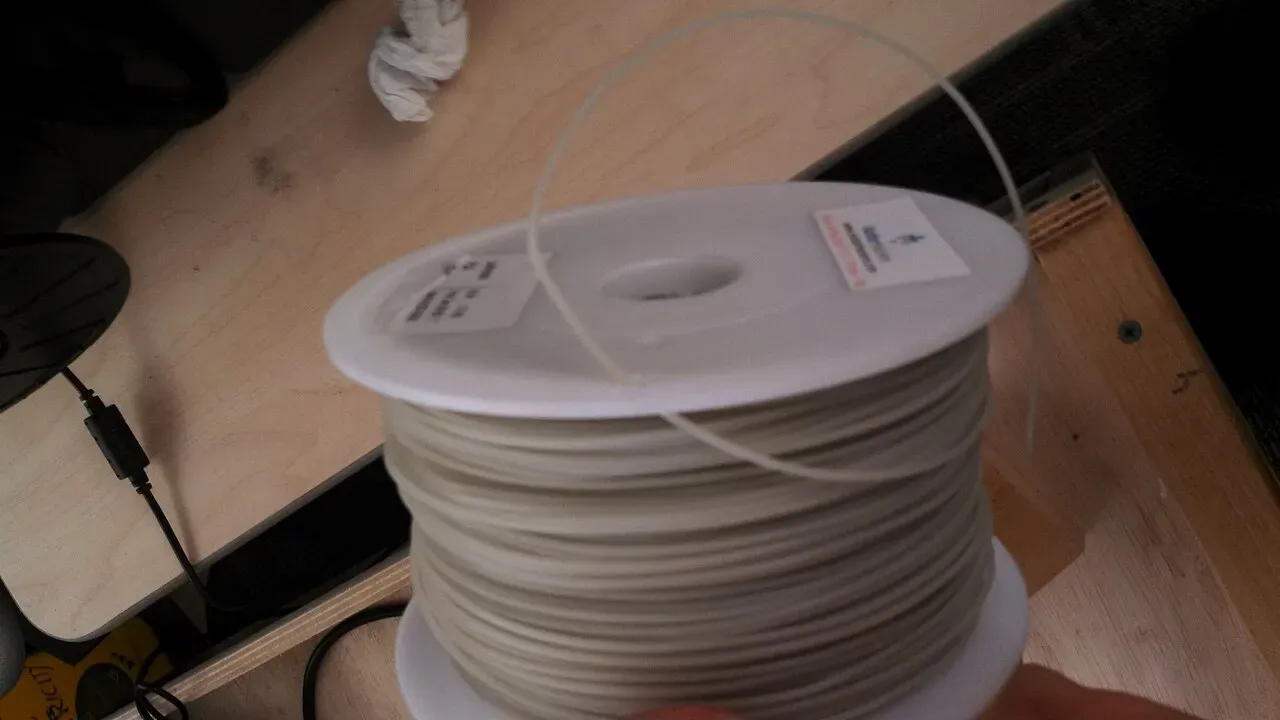 An open spool of PLA left out in the air.Photo: SuperBlobMonster ·CC BY-SA 3.0 ·Wikimedia Commons
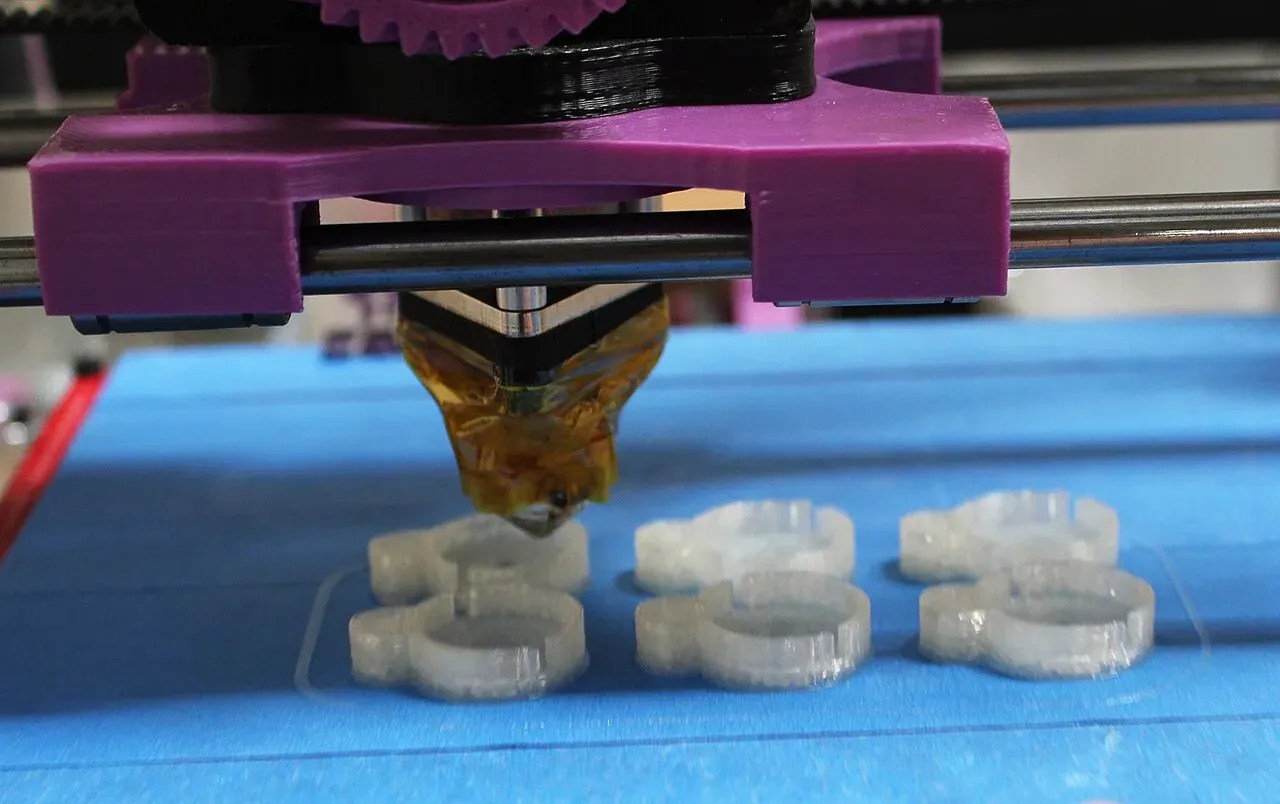 A print head at work over a plate of small parts.Photo: Neon Tommy ·CC BY-SA 2.0 ·Wikimedia Commons
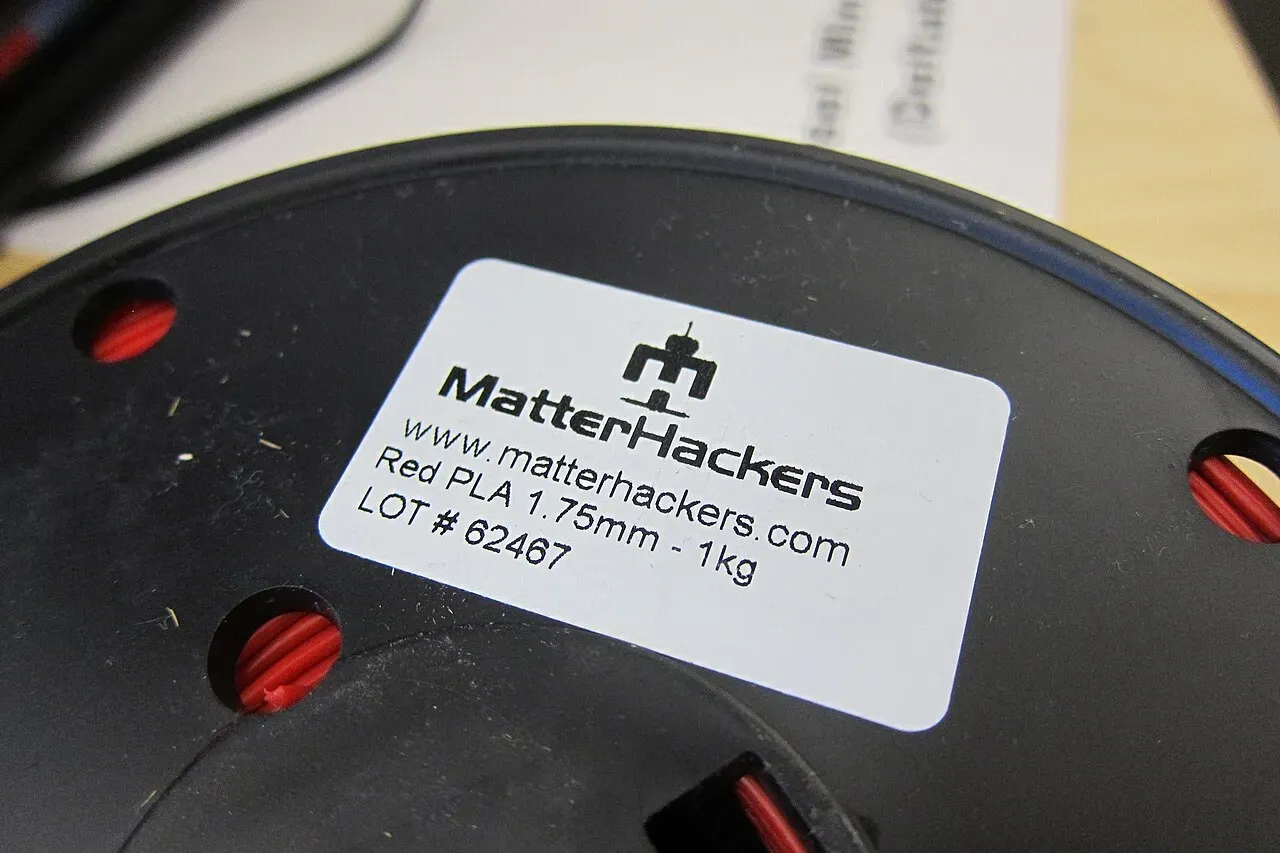 Read the label: material, 1.75 mm diameter, 1 kg.Photo: John Abella from Outside Philadelphia, USA ·CC BY 2.0 ·Wikimedia Commons
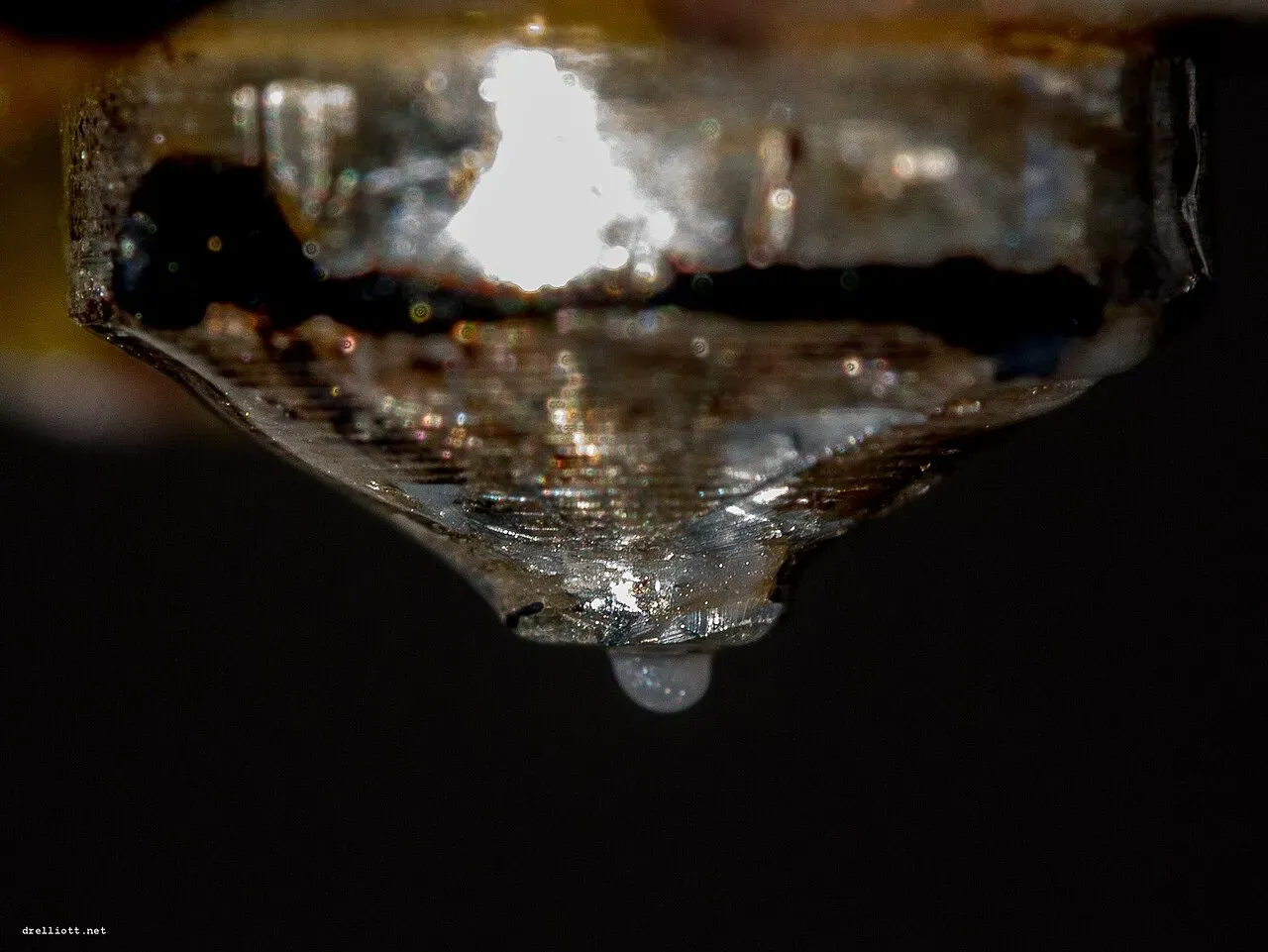 Ooze: a drop of molten plastic forming at the nozzle.Photo: David Elliott from UK ·CC BY 2.0 ·Wikimedia Commons
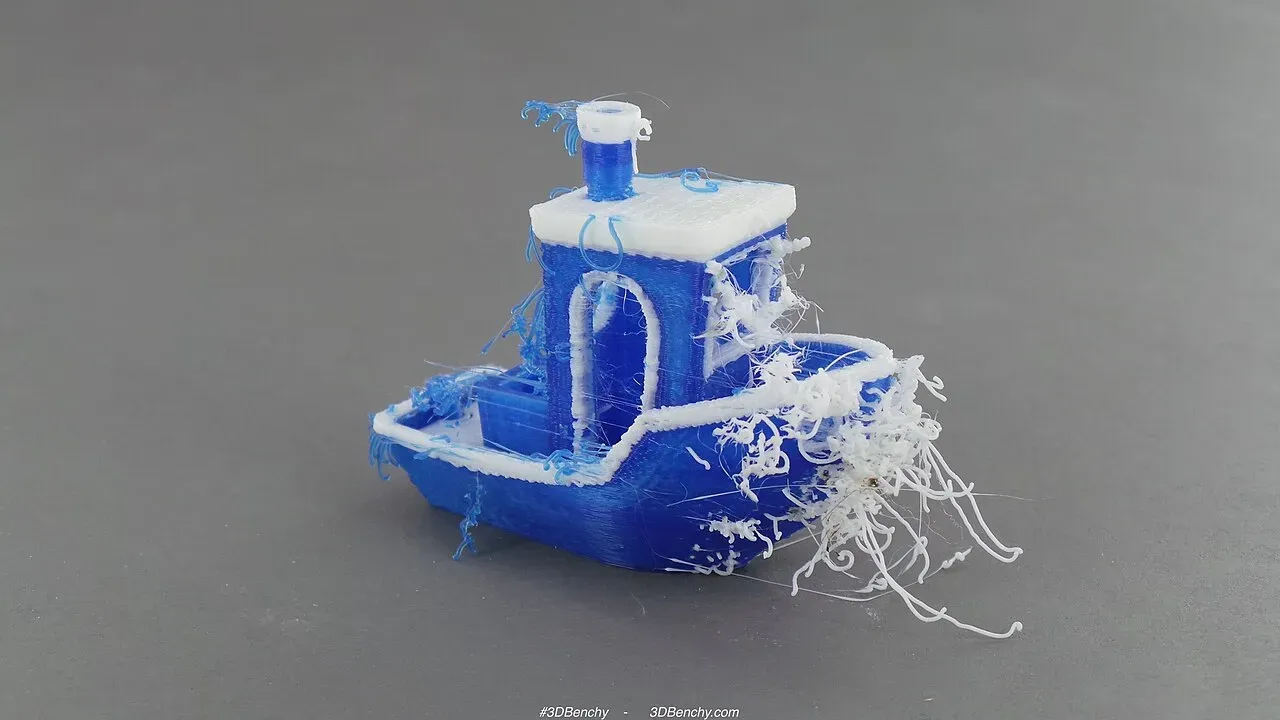 Stringing on a two-colour Benchy, where travel moves cross open air.Photo: 3DBenchy ·CC BY 2.0 ·Wikimedia Commons
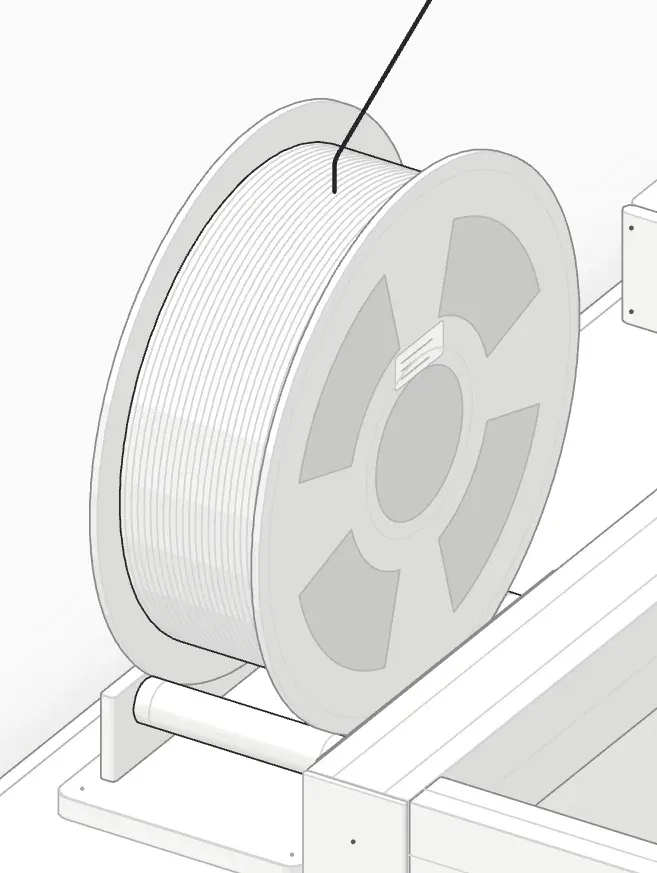 A 1 kg spool of 1.75 mm filament on a roller stand.
Why filament gets wet
Most 3D printing plastics are hygroscopic: they slowly absorb water vapour from the air, the way a dry sponge would. The water doesn’t sit on the surface; it soaks into the plastic itself, so you can’t wipe it off and you usually can’t see it.
How fast a spool gets wet depends on the material and on how humid your room is. Roughly from thirstiest to least:
- Nylon: absorbs moisture fastest of the common filaments. An open spool can print badly after a short time in a humid room.
- TPU and PETG: sensitive. Expect problems after an open spool has sat out for a while, especially in summer or in a damp room.
- ABS and ASA: moderate.
- PLA: slowest, but it still gets wet over weeks or months.11That’s why new spools come vacuum-sealed with a desiccant packet. The clock starts when you open the bag.
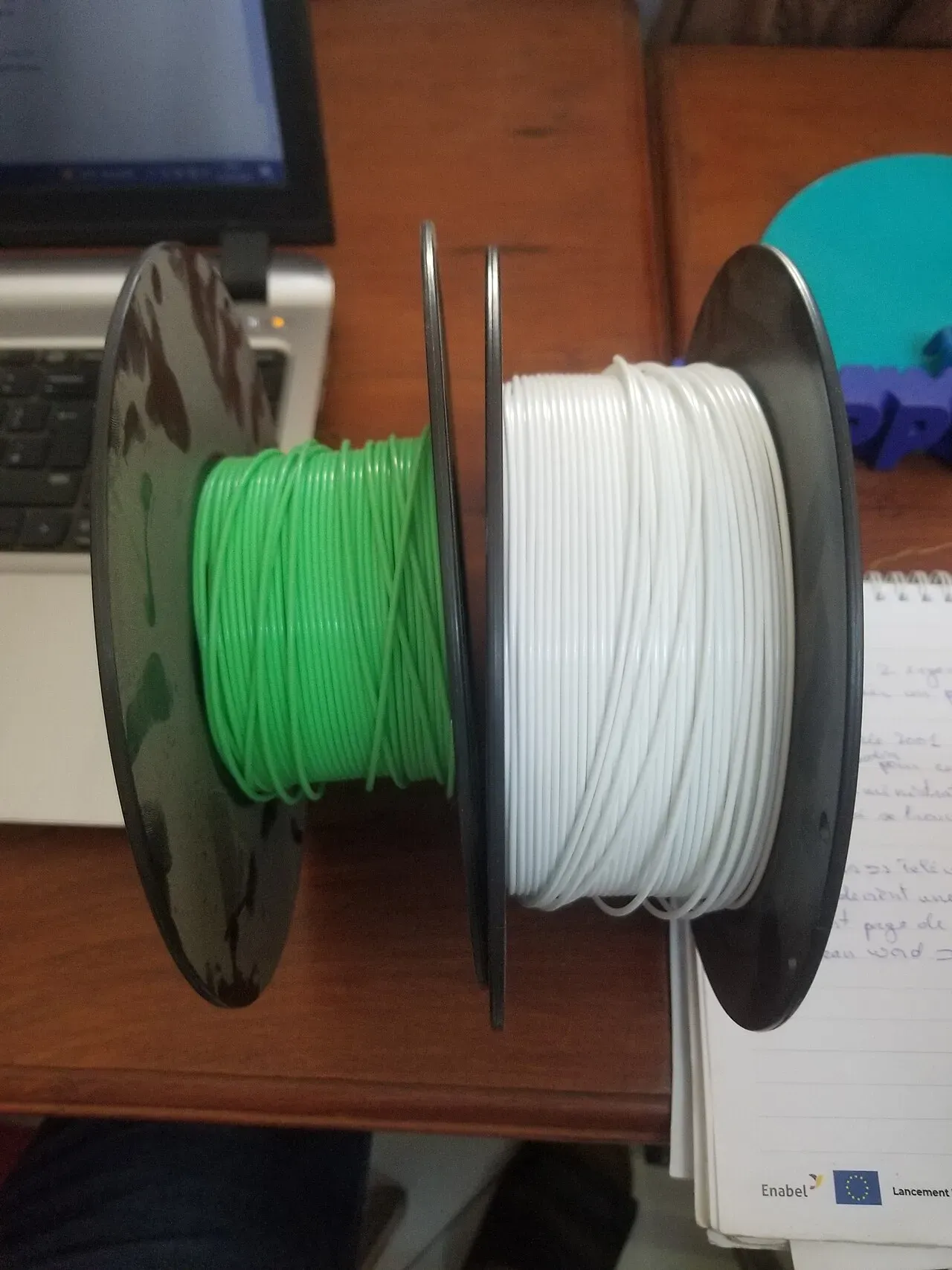 PLA: the beginner's filament.Photo: Richardspa ·CC0 ·Wikimedia Commons
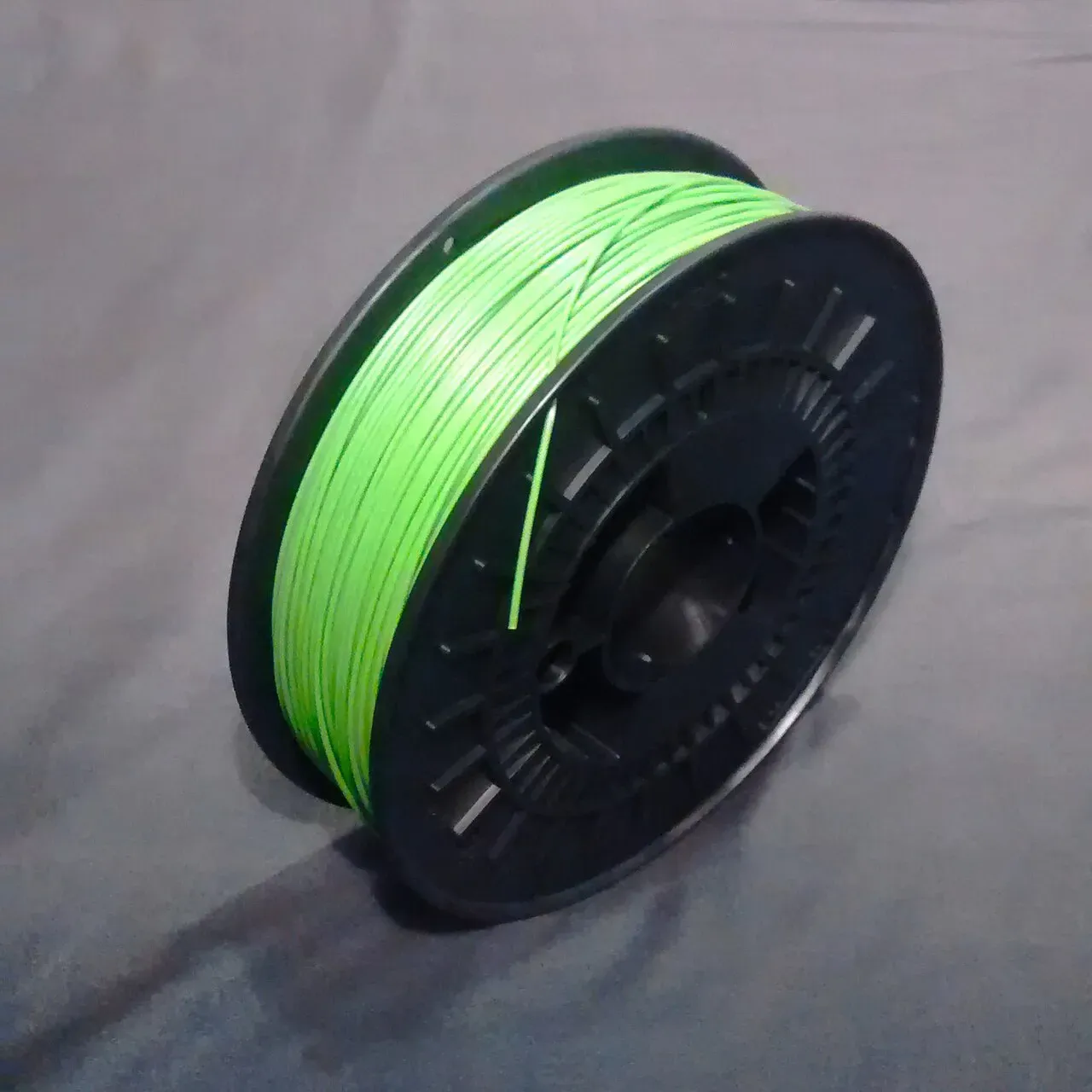 A spool of ABS.Photo: Tatár Lehel ·CC BY-SA 3.0 ·Wikimedia Commons
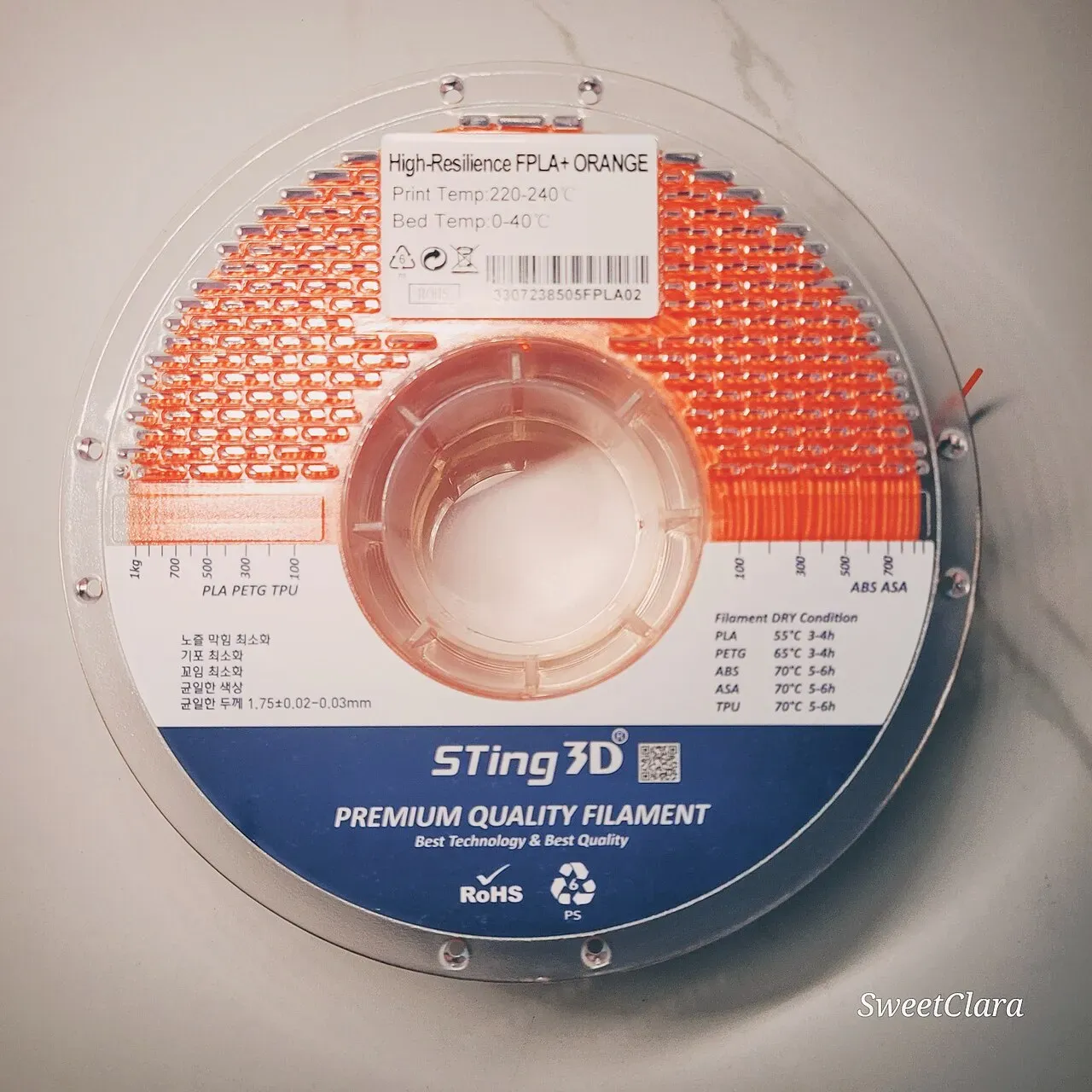 Flexible filament: label shows its print temperature.Photo: Sweetclara ·CC BY-SA 4.0 ·Wikimedia Commons
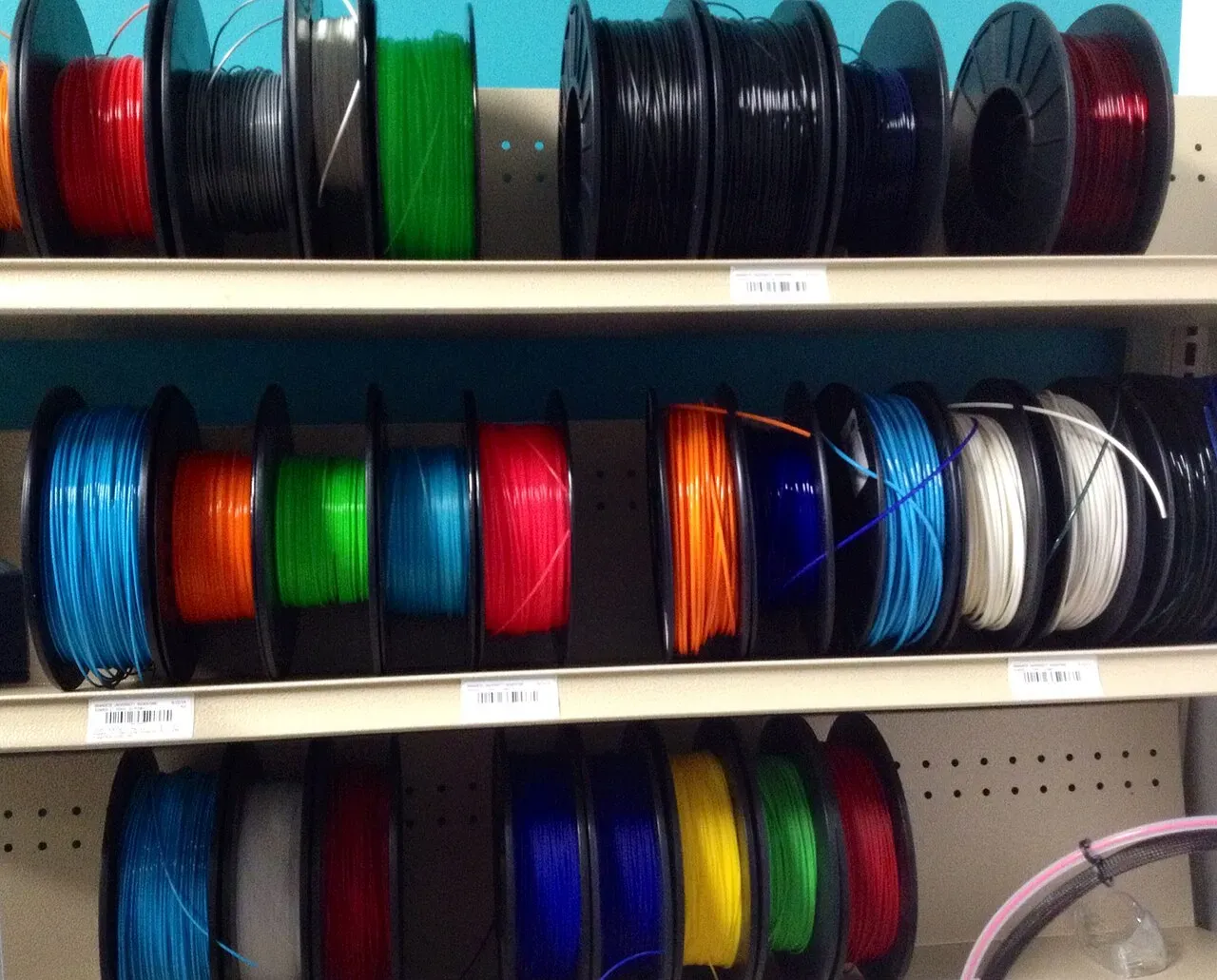 Filament comes in almost every colour.Photo: westonhighschool library ·CC BY-SA 2.0 ·Wikimedia Commons
Signs of wet filament
Wet filament rarely shows on the spool. It shows in the nozzle and in the print.
Popping, crackling or hissing
The clearest sign. As wet filament reaches the hot nozzle, the water inside it boils into steam and escapes in small bursts. You hear it as a faint crackle, pop or hiss while the printer extrudes, a bit like a frying pan. Dry filament extrudes silently.
Bubbles and steam at the nozzle
Heat the nozzle to printing temperature and push out some filament by hand or with the printer’s extrude command. Wet filament leaves the nozzle with tiny bubbles in the strand, a rough or frothy look, and sometimes a wisp of visible vapour. Dry filament comes out as a smooth, glossy, even strand.
Sudden stringing and ooze
Steam in the hotend pushes extra plastic out of the nozzle when it should be idle, so the nozzle oozes and leaves strings on travel moves. If a spool that used to print cleanly suddenly strings, moisture is the most likely cause. Our stringing guide covers the other causes once the spool is dry.
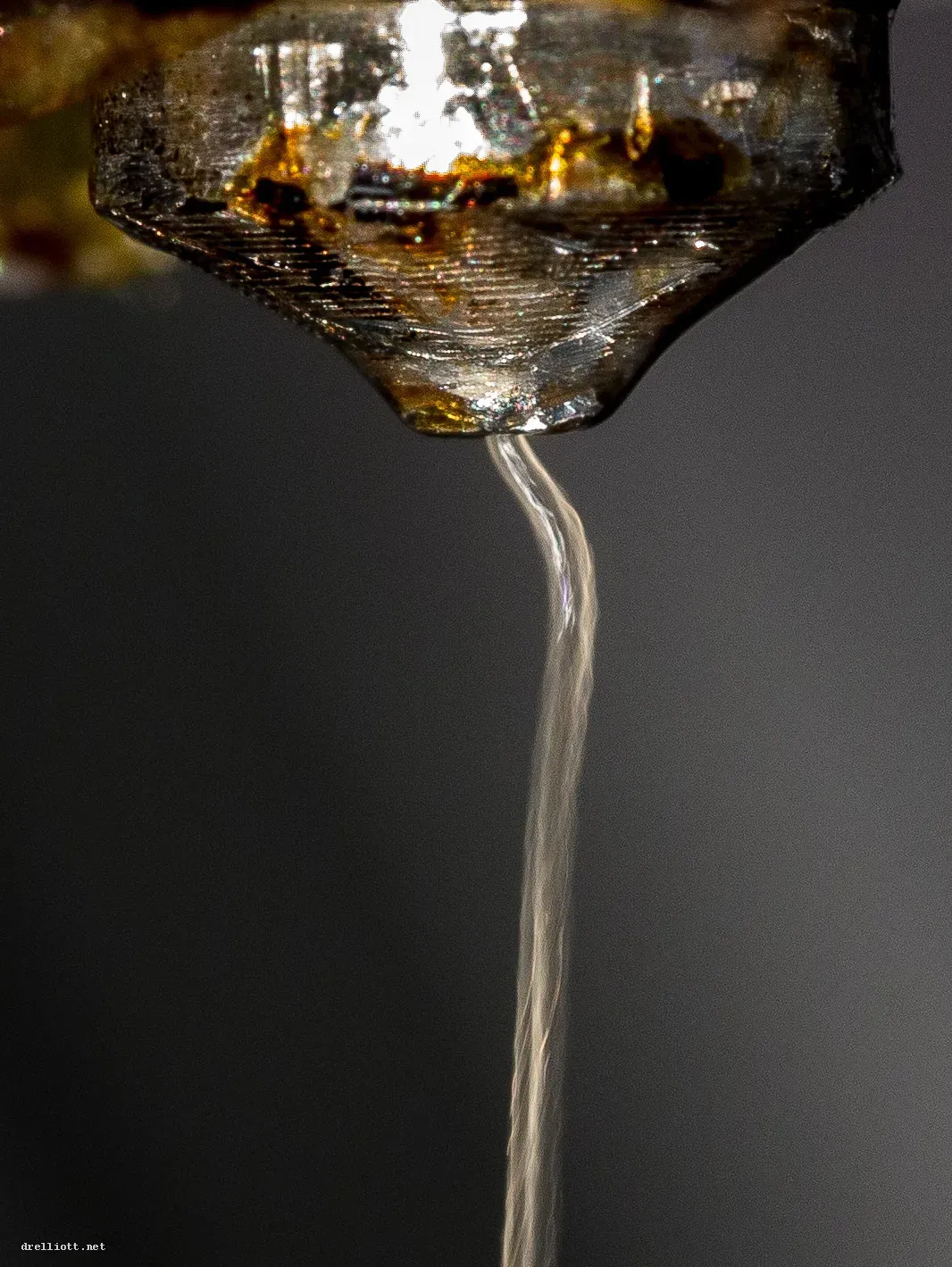 Molten plastic leaving the nozzle.Photo: David Elliott from UK ·CC BY 2.0 ·Wikimedia Commons
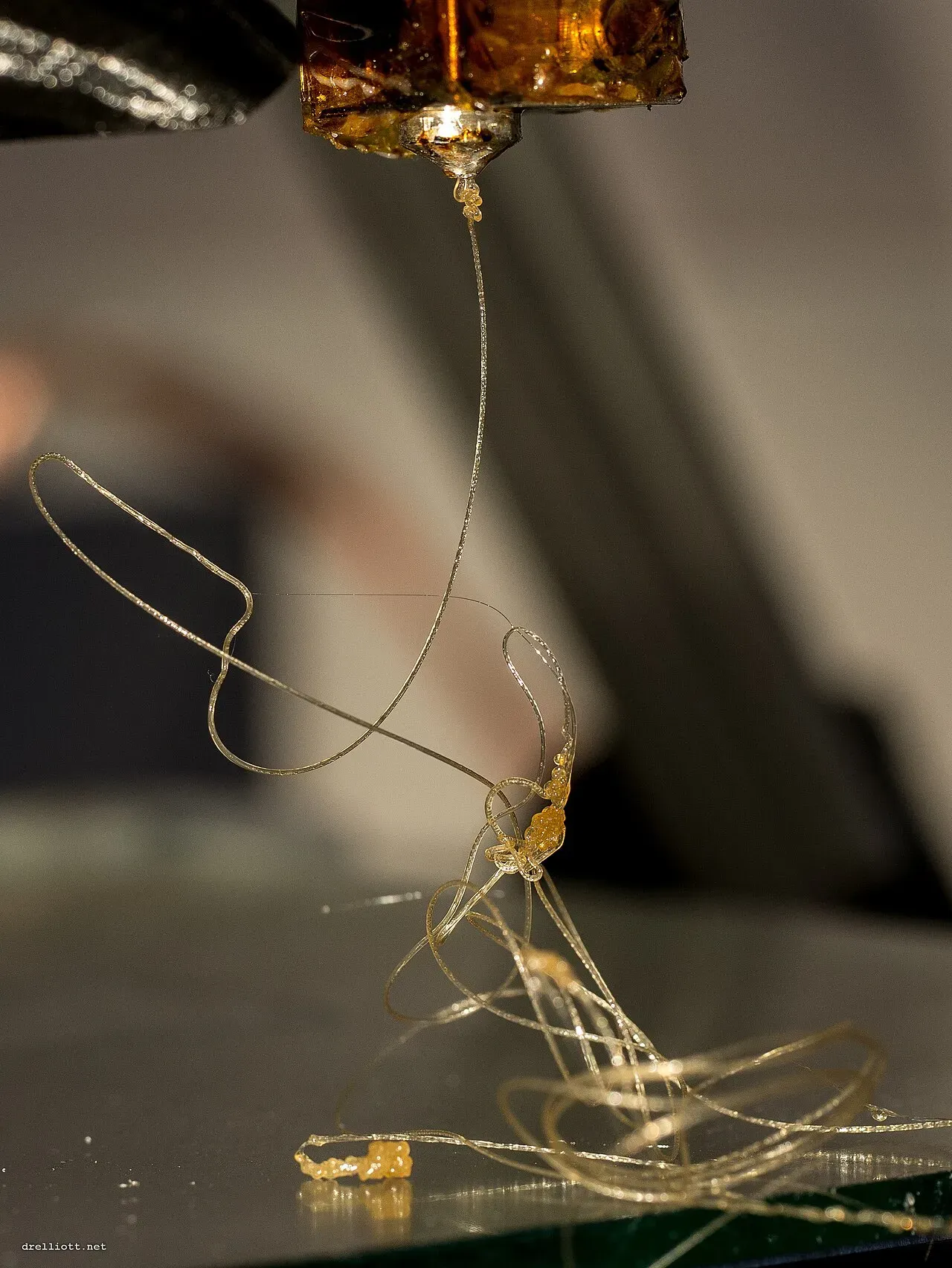 A thin strand pulled from the nozzle: where strings begin.Photo: David Elliott from UK ·CC BY 2.0 ·Wikimedia Commons
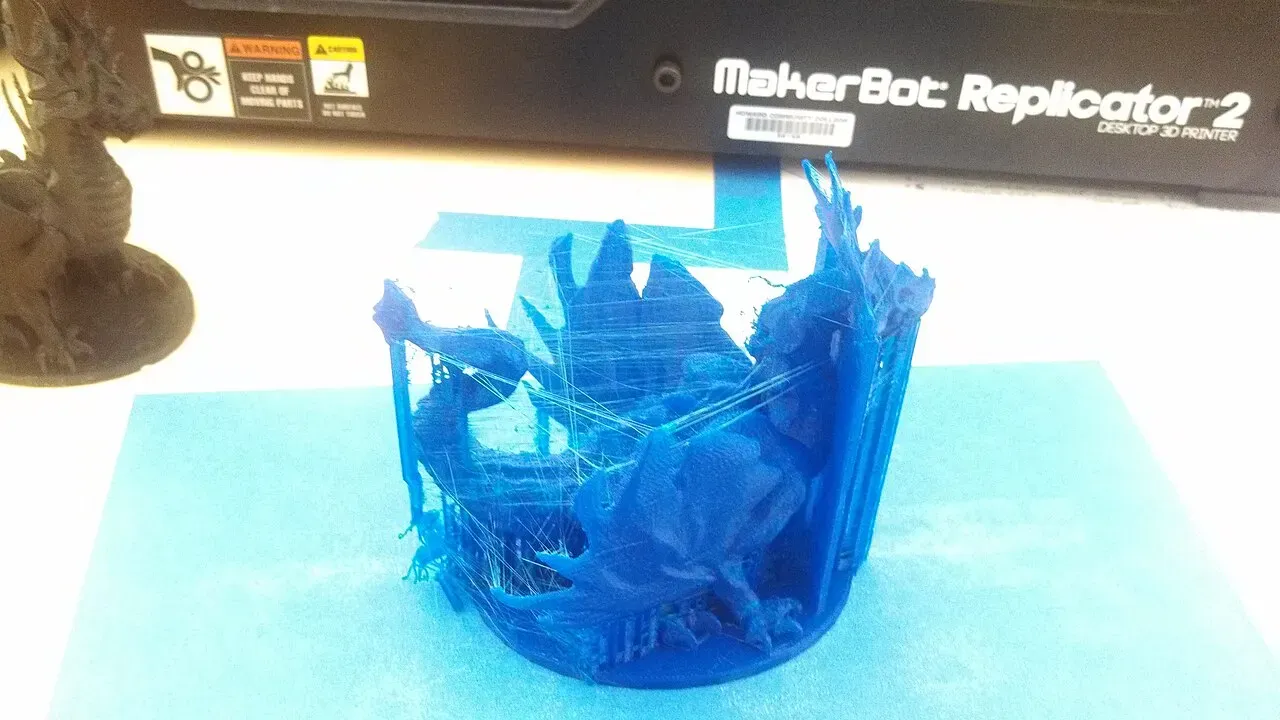 Heavy stringing across a detailed print.Photo: SuperBlobMonster ·CC BY-SA 3.0 ·Wikimedia Commons
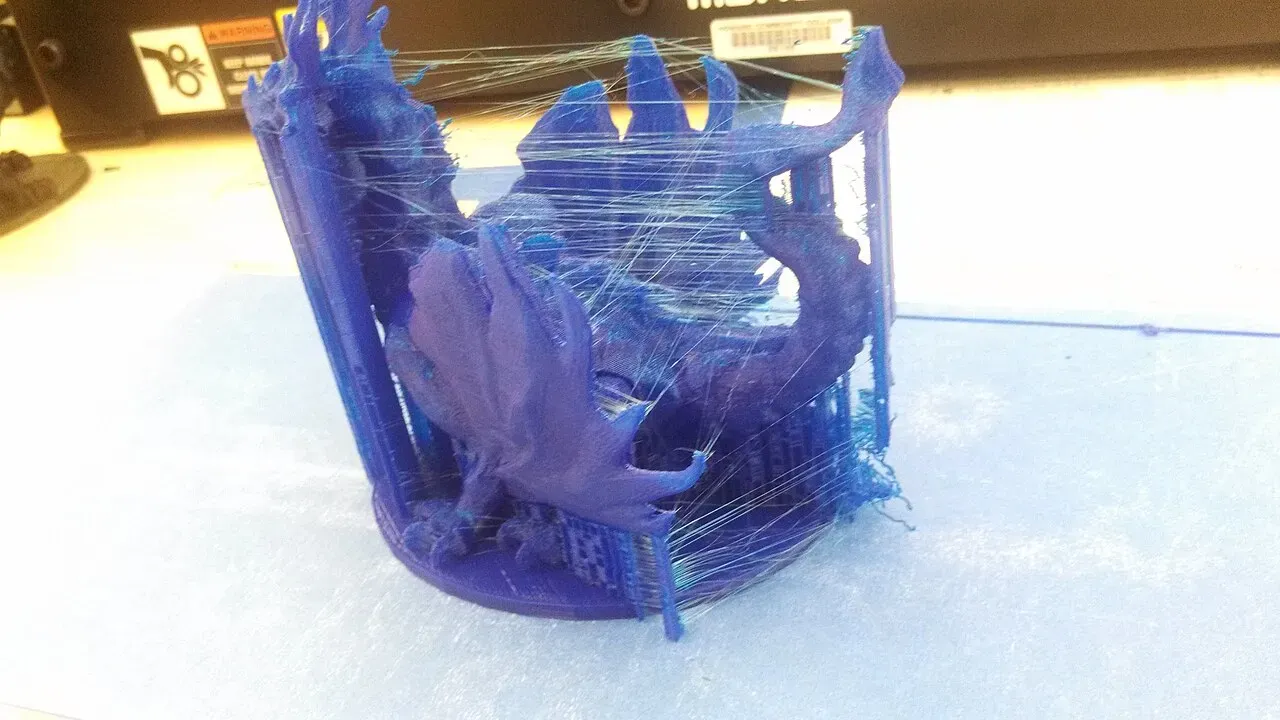 Close up: strings stretched between every travel move.Photo: SuperBlobMonster ·CC BY-SA 3.0 ·Wikimedia Commons
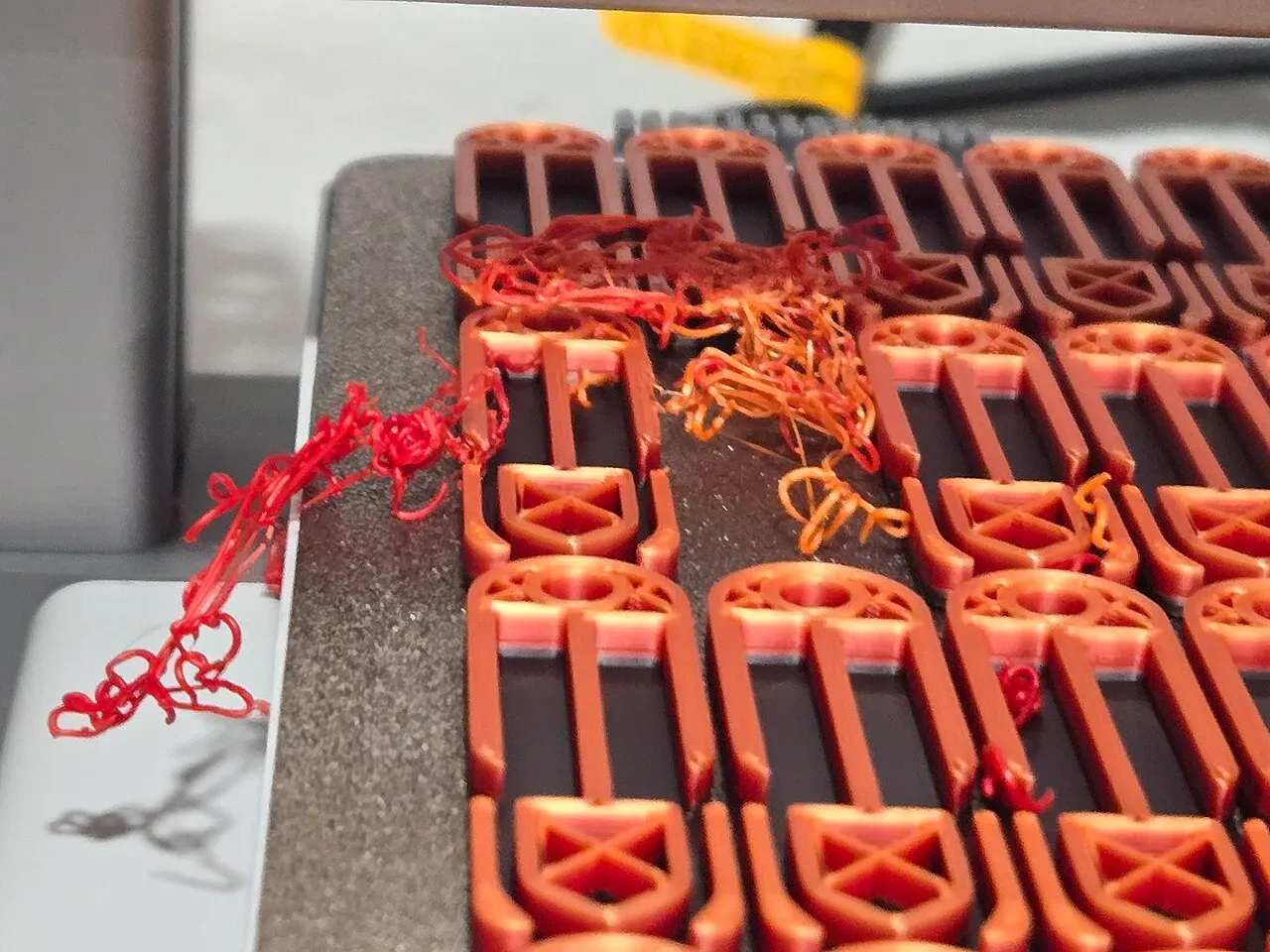 Strings and blobs across a full plate of parts.Photo: Quinn Daedal ·CC BY-SA 4.0 ·Wikimedia Commons
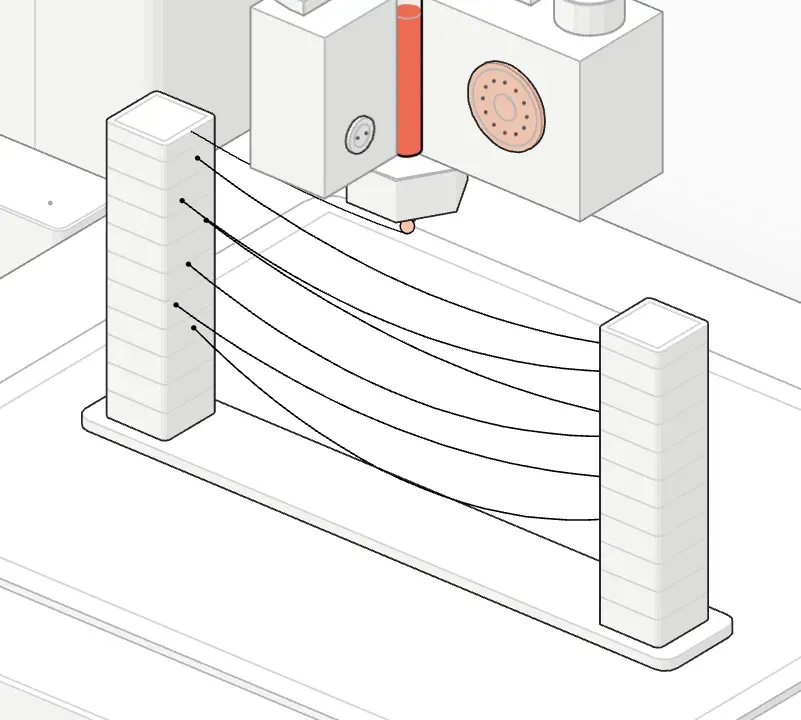 No retraction: many strings.
Rough, fuzzy or blotchy surfaces
Bursting steam leaves small pits, blobs and a matte, fuzzy texture on surfaces that should be smooth. Glossy filaments such as PETG and silk PLA lose their shine. Extrusion also gets uneven, so walls can look slightly patchy.
Weak, brittle prints
Steam bubbles leave tiny voids inside each line, and wet plastic doesn’t bond as well between layers. Prints can split along layer lines or break under less force than they should. Moisture can also break down some plastics’ molecules while they’re molten, which weakens the part further.22This breakdown is called hydrolysis. Nylon and PETG are the materials it is usually mentioned for, which is one reason makers stress drying them before printing.
PLA that snaps on the spool
Fresh PLA bends quite a long way before it breaks. PLA that has been sitting out often turns brittle and snaps when you bend it, or breaks on its own in the feed path between the spool and the extruder. Moisture is widely blamed for this, though age and the tight curl of the filament near the spool’s core also play a part, so drying doesn’t always bring brittle PLA back.
Is it wet filament or something else?
Several faults look like wet filament. These checks help tell them apart:
| What you see | Points to wet filament | Points to something else |
|---|---|---|
| Stringing | Started suddenly on a spool that used to print fine; comes with popping | Same on every spool, even fresh ones: nozzle too hot or retraction too short |
| Popping or crackling | Almost always moisture | A loose part rattling sounds different: steady and tied to movement |
| Rough, bubbly lines | Bubbles in a strand pushed out into the air | Smooth strand in the air but rough on the part: over-extrusion or a worn nozzle |
| Gaps and thin walls | Uneven, with popping | Even gaps, no popping: a partial clog or an extruder that clicks |
| Weak layers | With popping or bubbles | Without them: nozzle too cool or too much part cooling |
| Filament snapping | PLA left out for weeks | Snaps only in one spot: a kink or a crossed loop on the spool |
The simplest test is to swap in a fresh, sealed spool of the same material. If the problem goes away, dry the old spool.33If you have a kitchen scale, weigh the spool before and after drying. A spool that gets lighter has given off water.
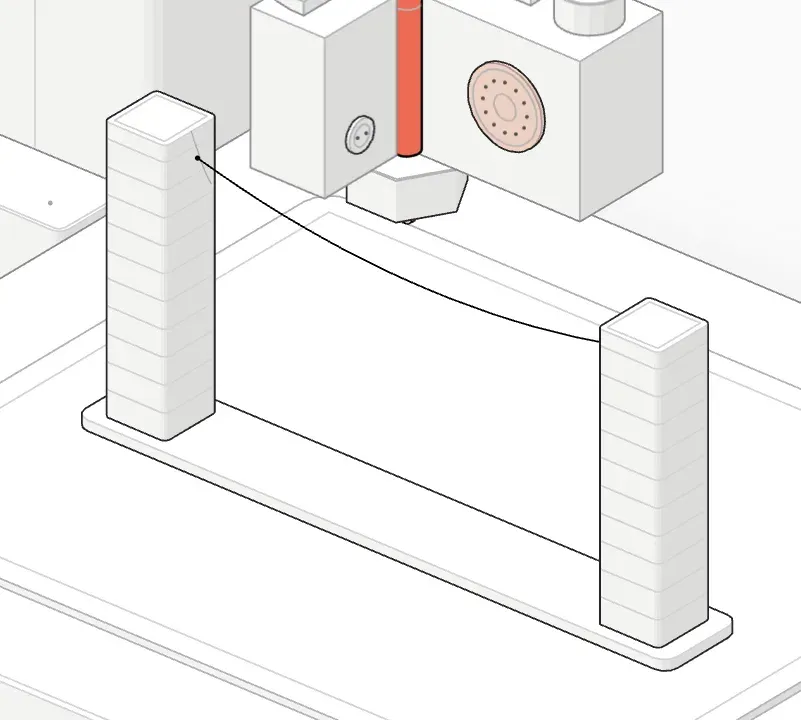 195 °C, 0.8 mm retraction: few strings.
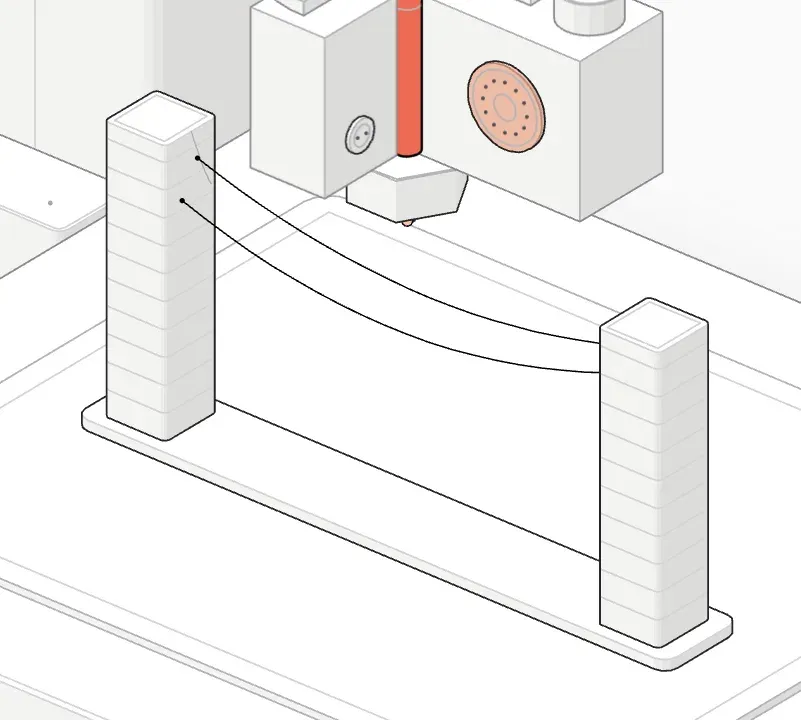 210 °C, 0.8 mm retraction: few strings.
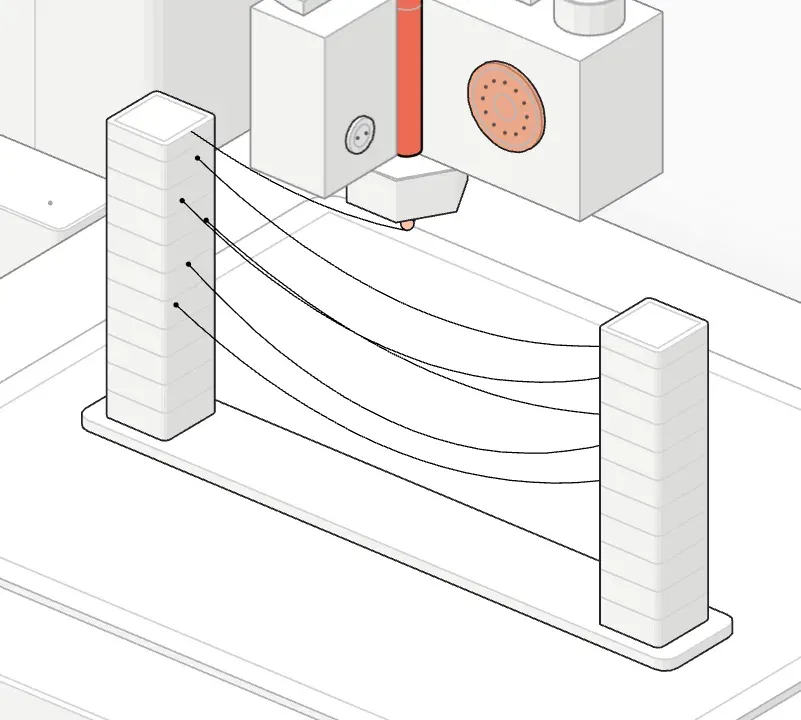 225 °C, 0.8 mm retraction: many strings.
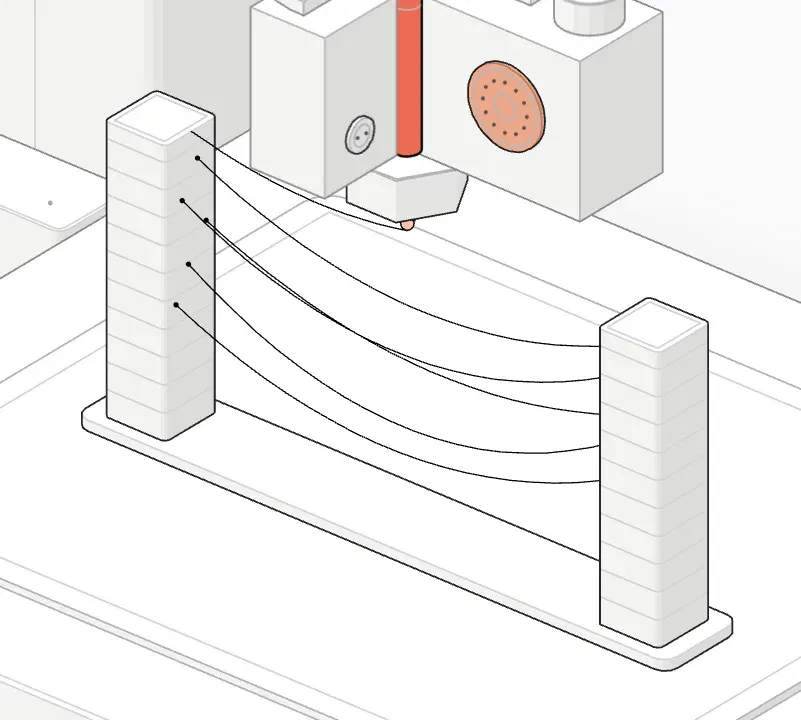 Hotter plastic is runnier: thinner, saggier strings.
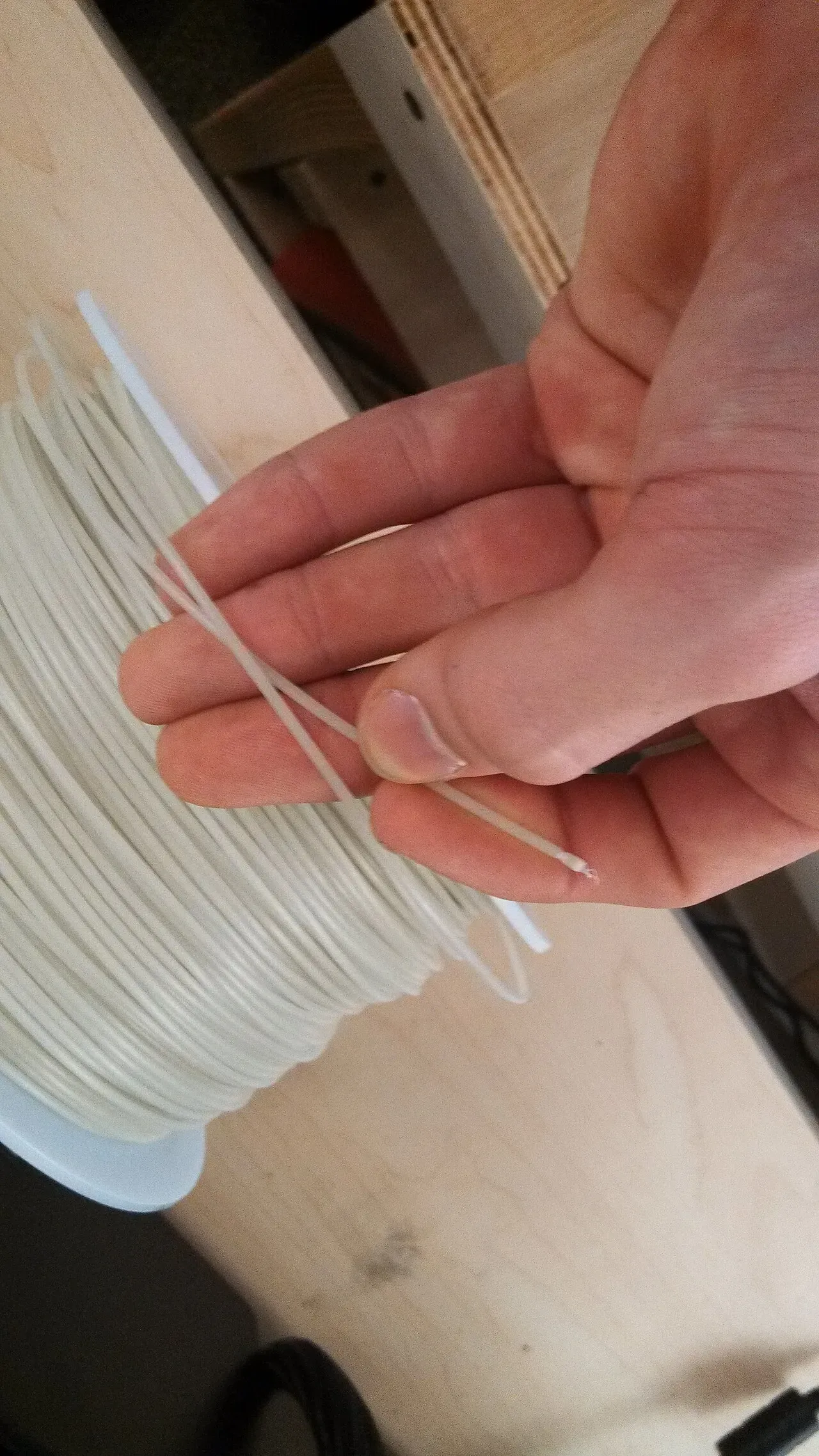 Crossed filament: a loop that can tangle and stop the extruder.Photo: SuperBlobMonster ·CC BY-SA 3.0 ·Wikimedia Commons
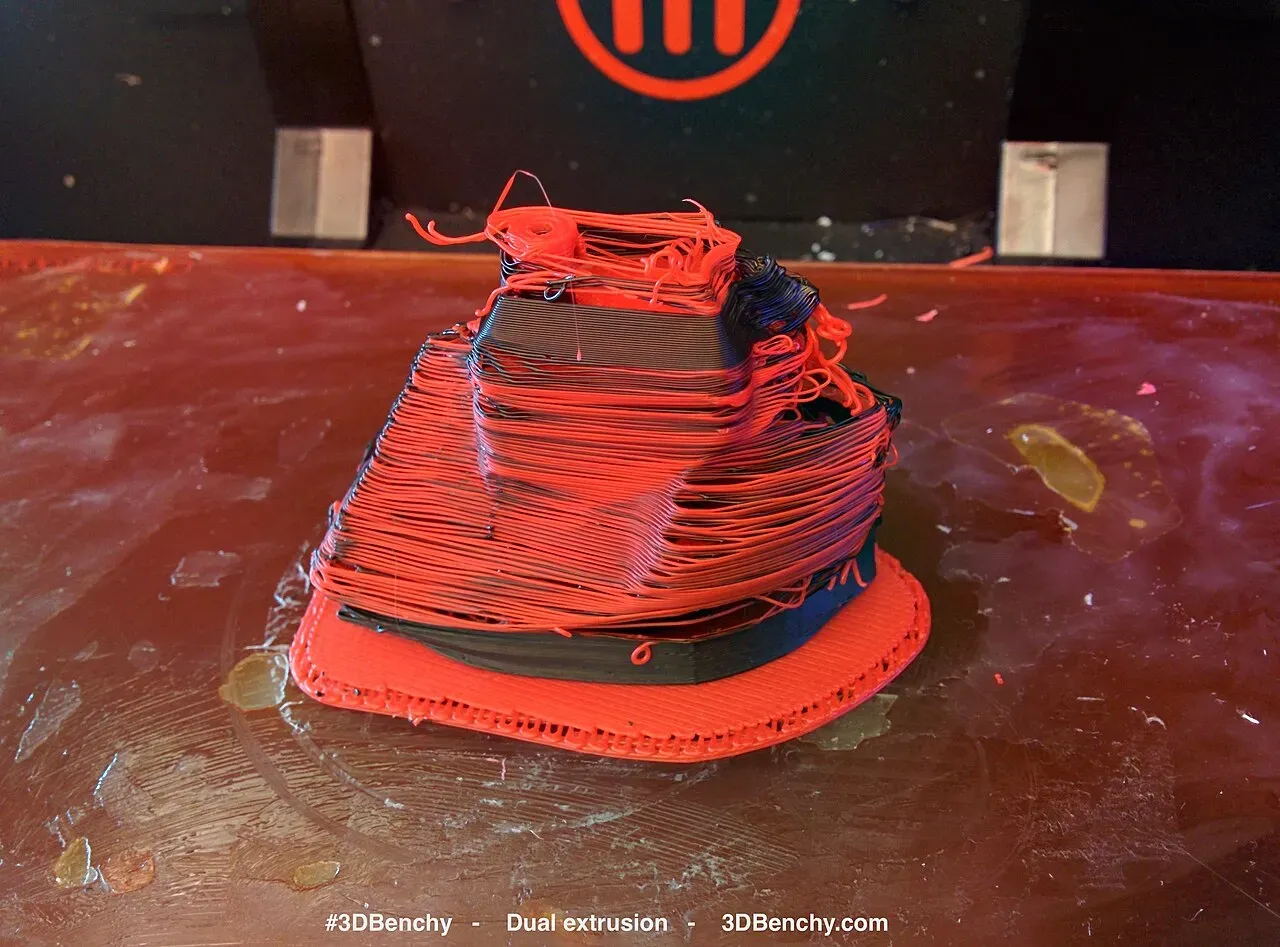 Another failed Benchy: messy, sagging layers.Photo: 3DBenchy ·CC BY 2.0 ·Wikimedia Commons
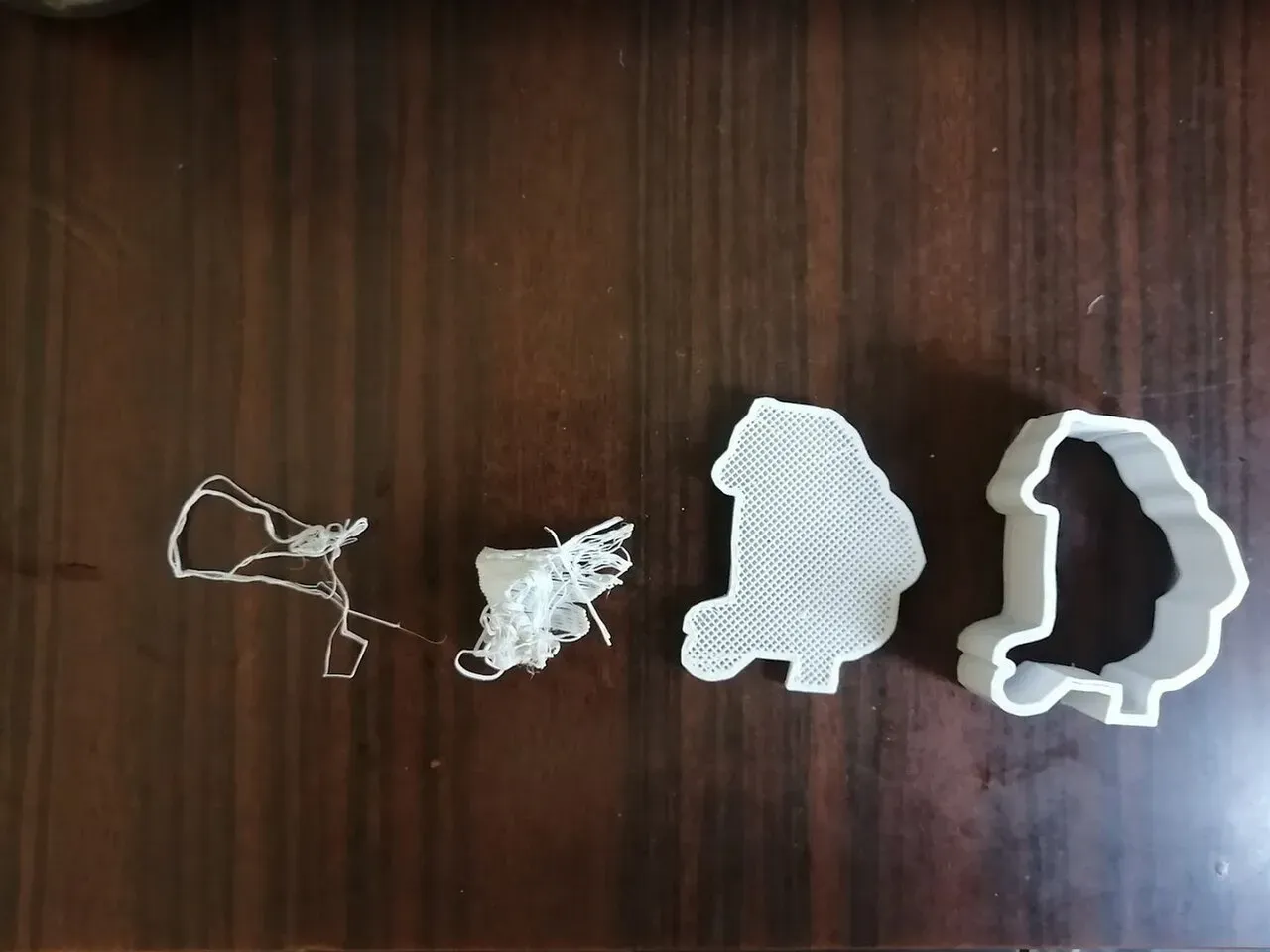 Test prints on the way from failure to a clean part.Photo: Dbsnp ·CC BY-SA 4.0 ·Wikimedia Commons
 Feed 8 mm/s: nozzle 210 °C · heatsink 38 °C · feed 8.0 mm/s · too fast.
Why moisture ruins prints: what happens in the hotend
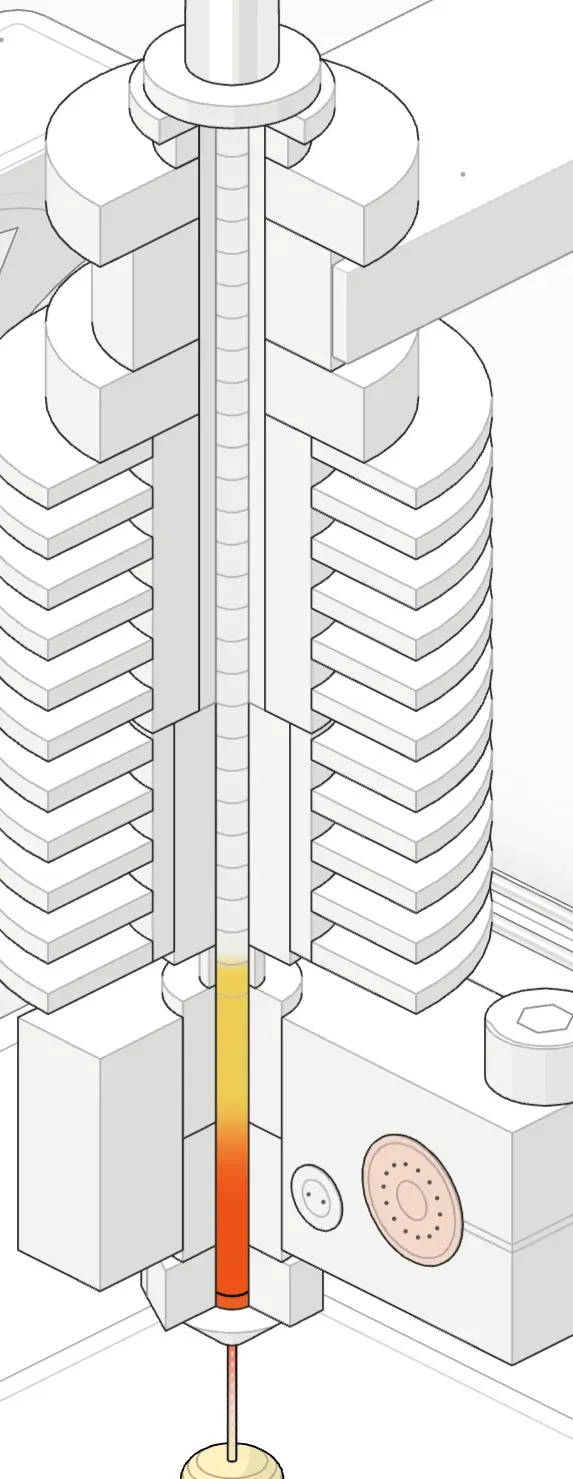
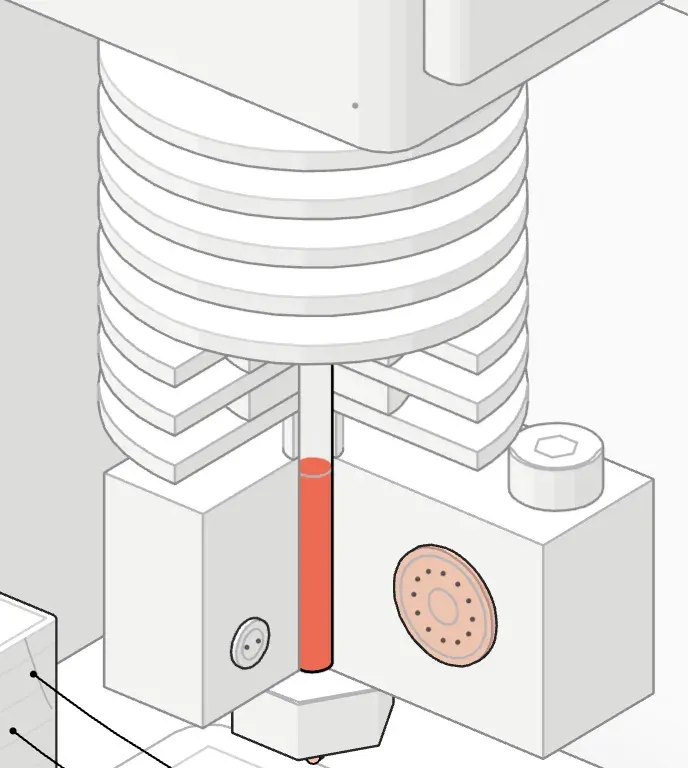
Filament enters the top of the hotend as a cold, solid rod. It passes through the finned heatsink, crosses the narrow heat break, and melts in the heater block, which holds the nozzle at 190–260 °C depending on the material. Water boils at 100 °C, so any water inside the filament turns to steam as soon as that part of the filament melts.
Steam takes up far more space than the water it came from. Trapped inside molten plastic in a closed tube, it does three things:
- It pushes. The expanding steam raises the pressure in the melt and forces extra plastic out of the nozzle, even during travel moves when the printer has retracted. That’s the ooze behind sudden stringing.
- It bursts. When a steam bubble reaches the nozzle tip it escapes with a pop, spitting a little plastic and leaving a gap or blob in the line. That’s the crackling sound and the rough surface.
- It leaves holes. Bubbles that don’t escape stay frozen inside the printed line as tiny voids, so each line has less solid plastic and layers bond over a smaller area. That’s why wet prints are weaker.
nozzle 210 °C · heatsink 38 °C · feed 2.0 mm/s · melting in block
- drag ↕ feed rate
- ↑ ↓ feed ±0.5 mm/s
- Space stop / start feed
- F hotend fan on / off
- Home reset
water 0.34 % · wet · 16 pops/s · ooze 0.34 mm³ per travel · line 91 % solid
- drag ↔ / ← → how wet the spool is: dry to left out in humid air
- D dry it in a filament dryer at 45–50 °C
- Home reset: a wet spool
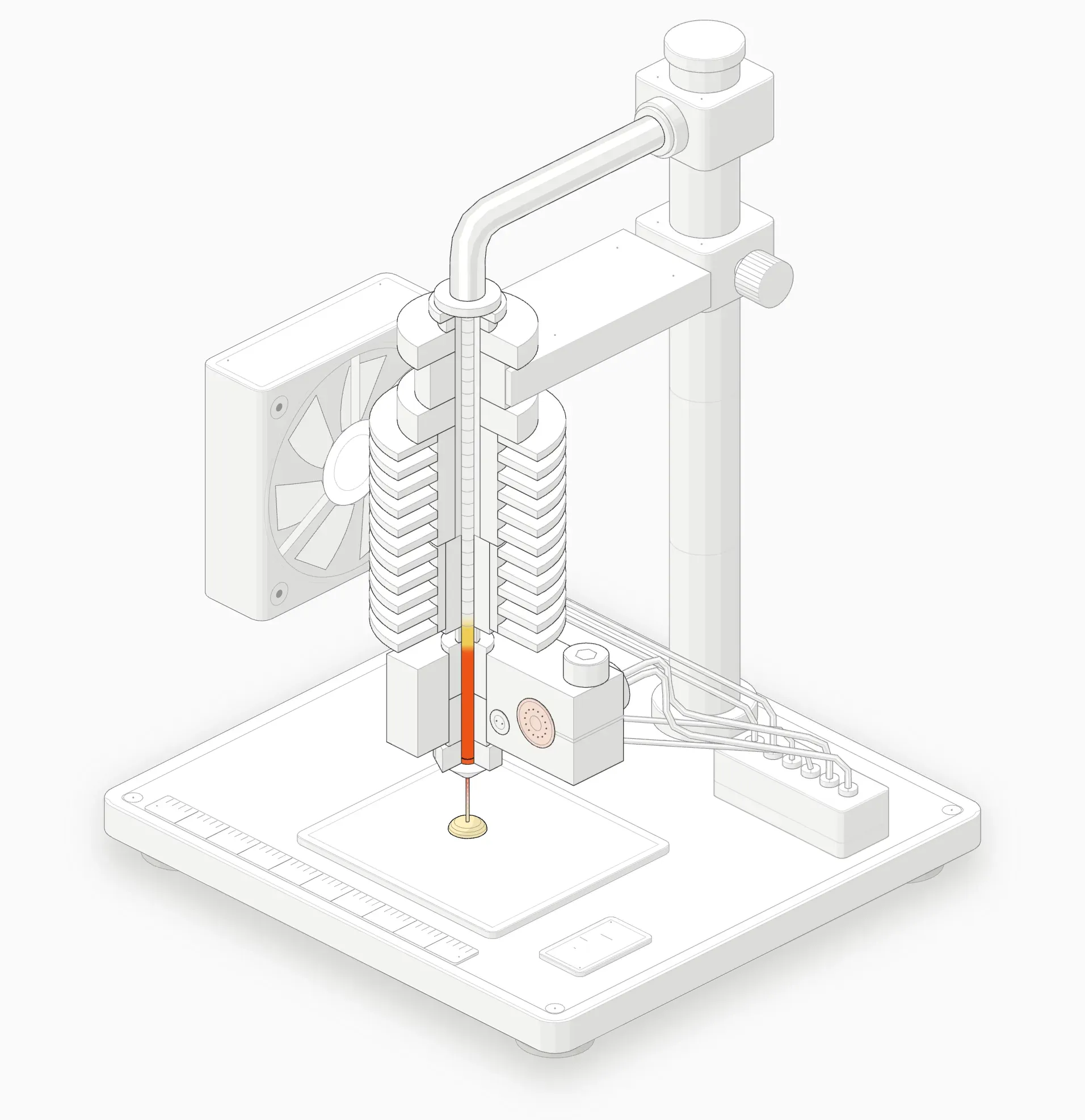 A V6-style hotend, cut away so you can see the filament inside.
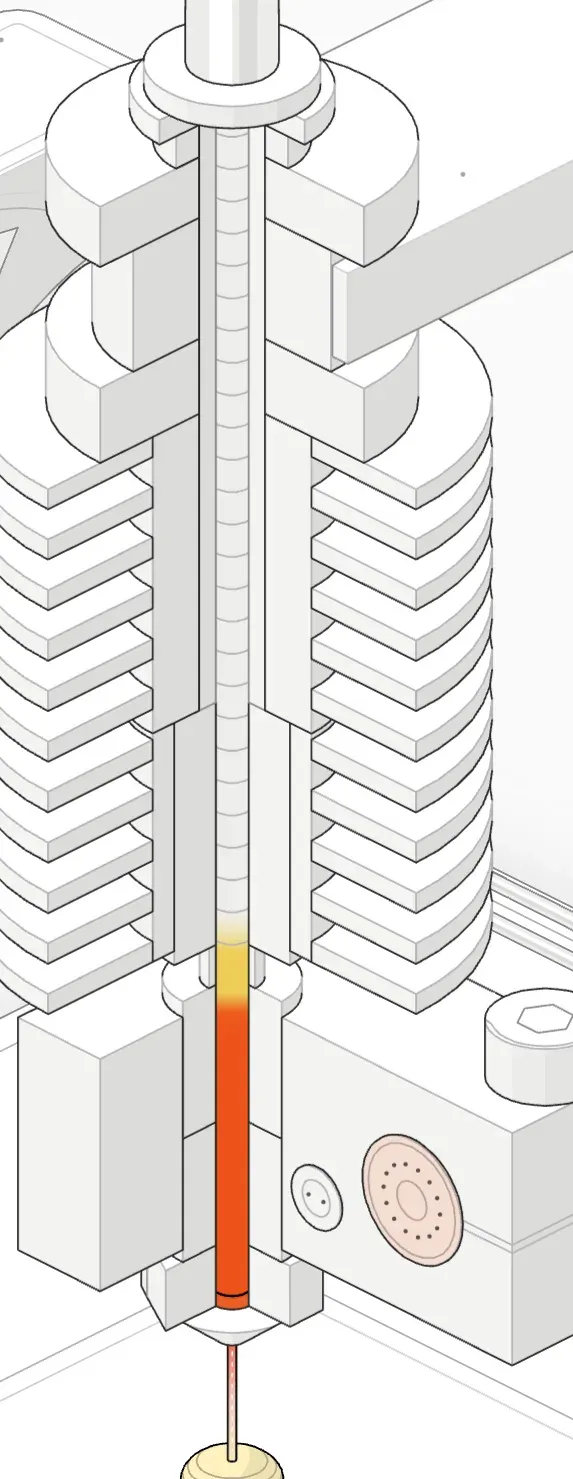 Solid filament above the heat break, molten filament in the heater block.
 Inside the hotend: solid filament above, melt below.
- Feed 2 mm/s: nozzle 210 °C · heatsink 38 °C · feed 2.0 mm/s · melting in block.
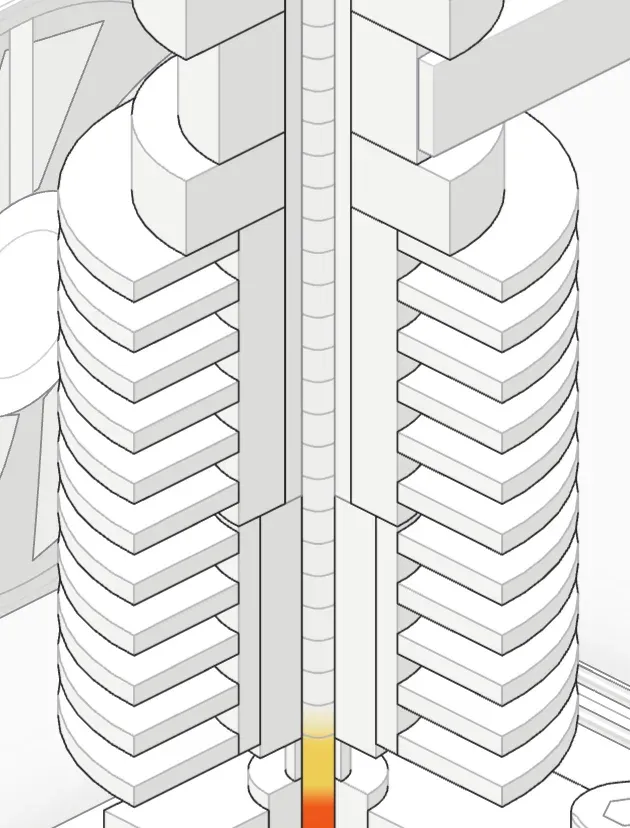 The finned heatsink keeps the top of the hotend cold.
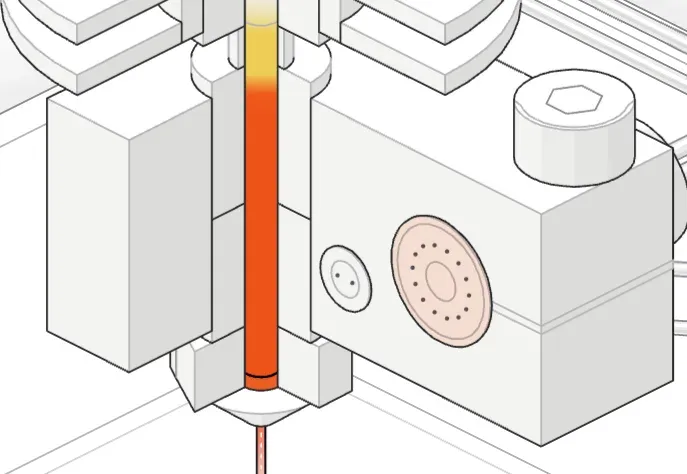 The heater block holds the heater cartridge and the thermistor.
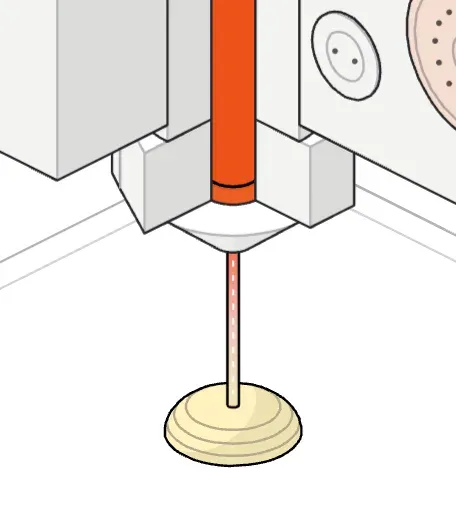 A brass 0.4 mm nozzle laying a thin strand.
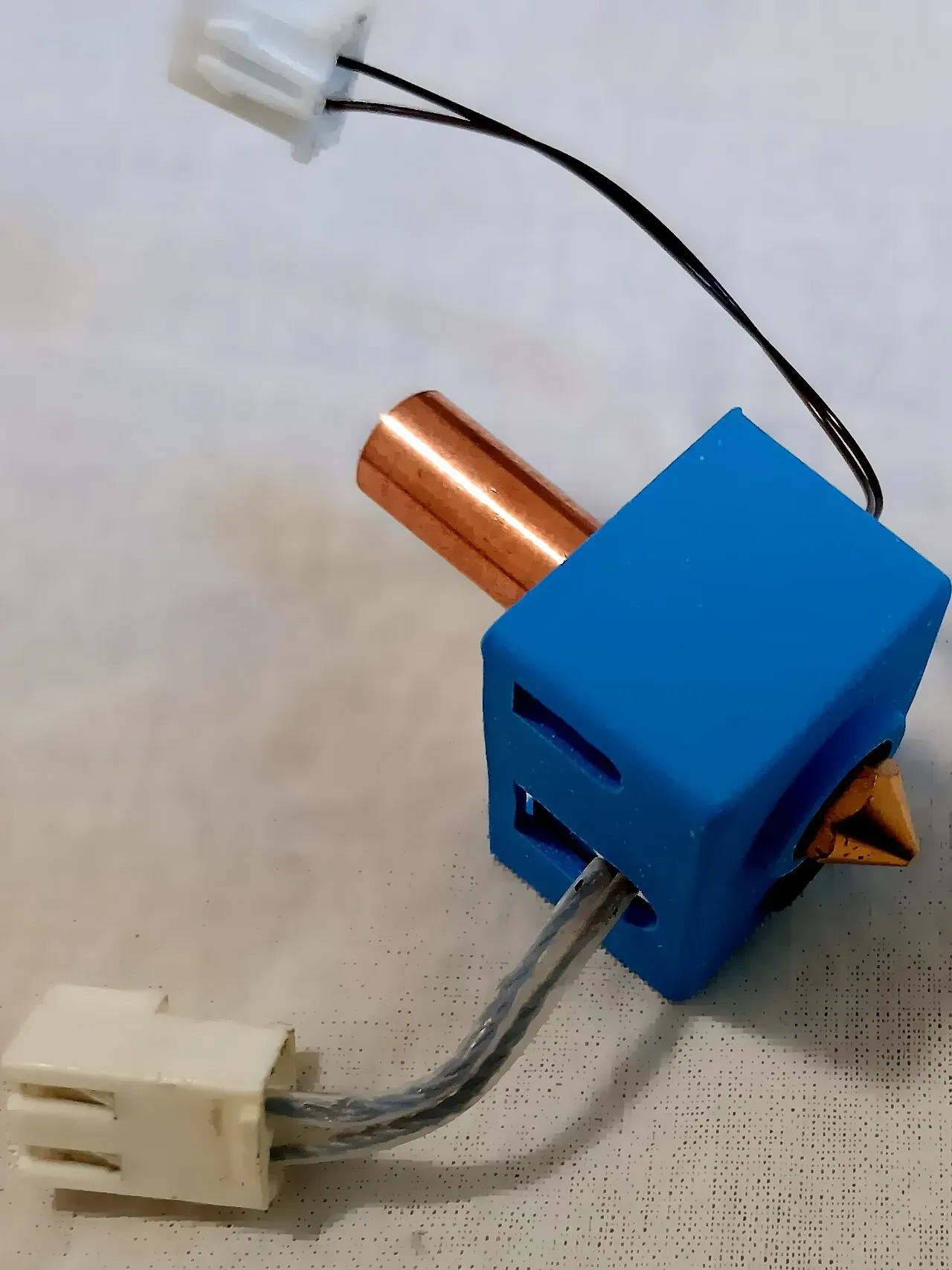 A heater block in a silicone sock, with the nozzle below and heat break above.Photo: A7N8X ·CC0 ·Wikimedia Commons
Drying temperatures and times by material
The rule behind every number in this table: dry below the temperature where the plastic starts to soften. Too hot and filament sticks to the turns around it, flattens out of round, or fuses into a solid lump on the spool. The spool itself can warp too: many spools are made of plastic that softens at a similar temperature to the filament.
| Material | Drying temperature | Drying time | Why that limit |
|---|---|---|---|
| PLA | 45–50 °C | 4–6 hours | Starts softening around 55–60 °C, so keep well under it |
| PETG | 60–65 °C | 4–6 hours | Softens around 80 °C |
| ABS / ASA | 60–80 °C | 4–6 hours | Softens around 100 °C; the spool usually sets the limit, not the filament |
| TPU | 50–65 °C | 4–8 hours | Makers range from 45 to 70 °C, so check the label; too warm and turns stick together on the spool |
| Nylon | 70–80 °C | 8–12 hours or more | Holds its shape when warm, but absorbs the most water and dries slowly |
These are conservative ranges published by many filament makers and dryer makers. If the label or the maker’s website gives a different temperature, use theirs: blends, carbon-fibre filled and specialty filaments can need different settings.
- Start at the low end of the range. A little longer at a lower temperature is safer than a shorter time at a higher one.
- A full spool takes longer than a half-empty one, because the dry warm air has to work its way into the middle turns. A very wet spool may need a second session.
- Turn the spool over or rotate it halfway through if your dryer heats from one side.
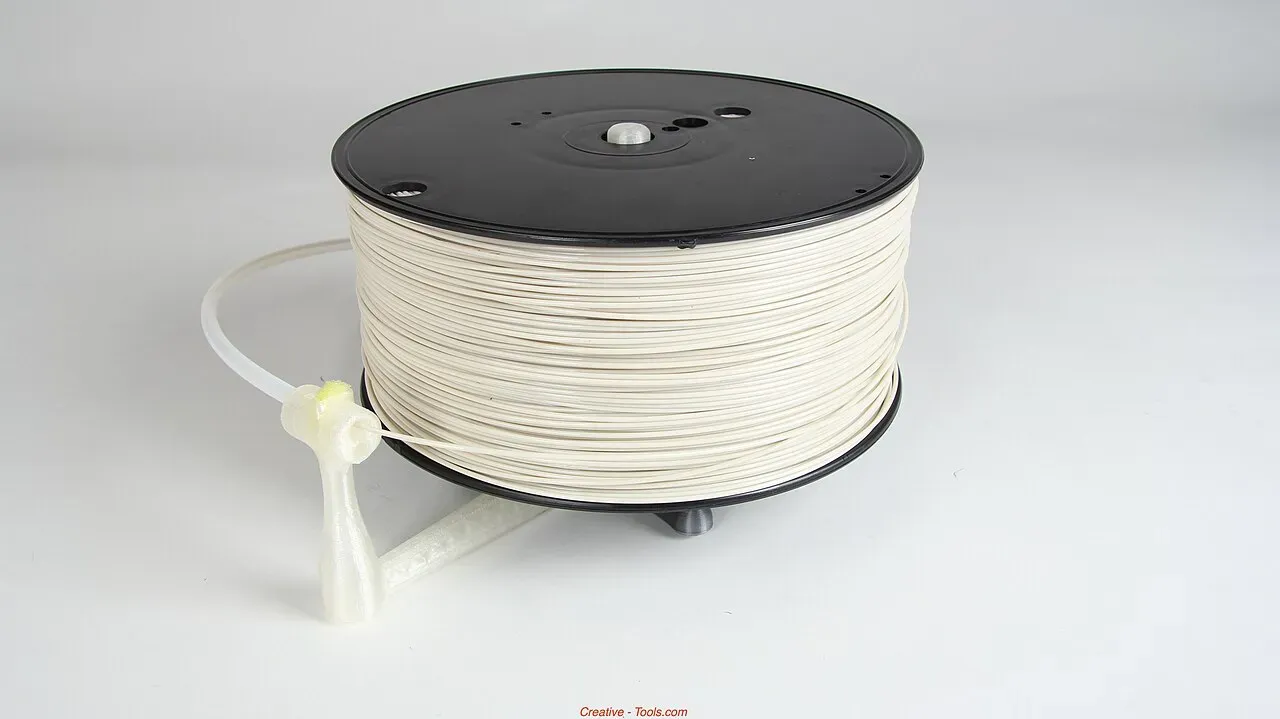 A spool of white filament.Photo: Creative Tools ·CC BY 2.0 ·Wikimedia Commons
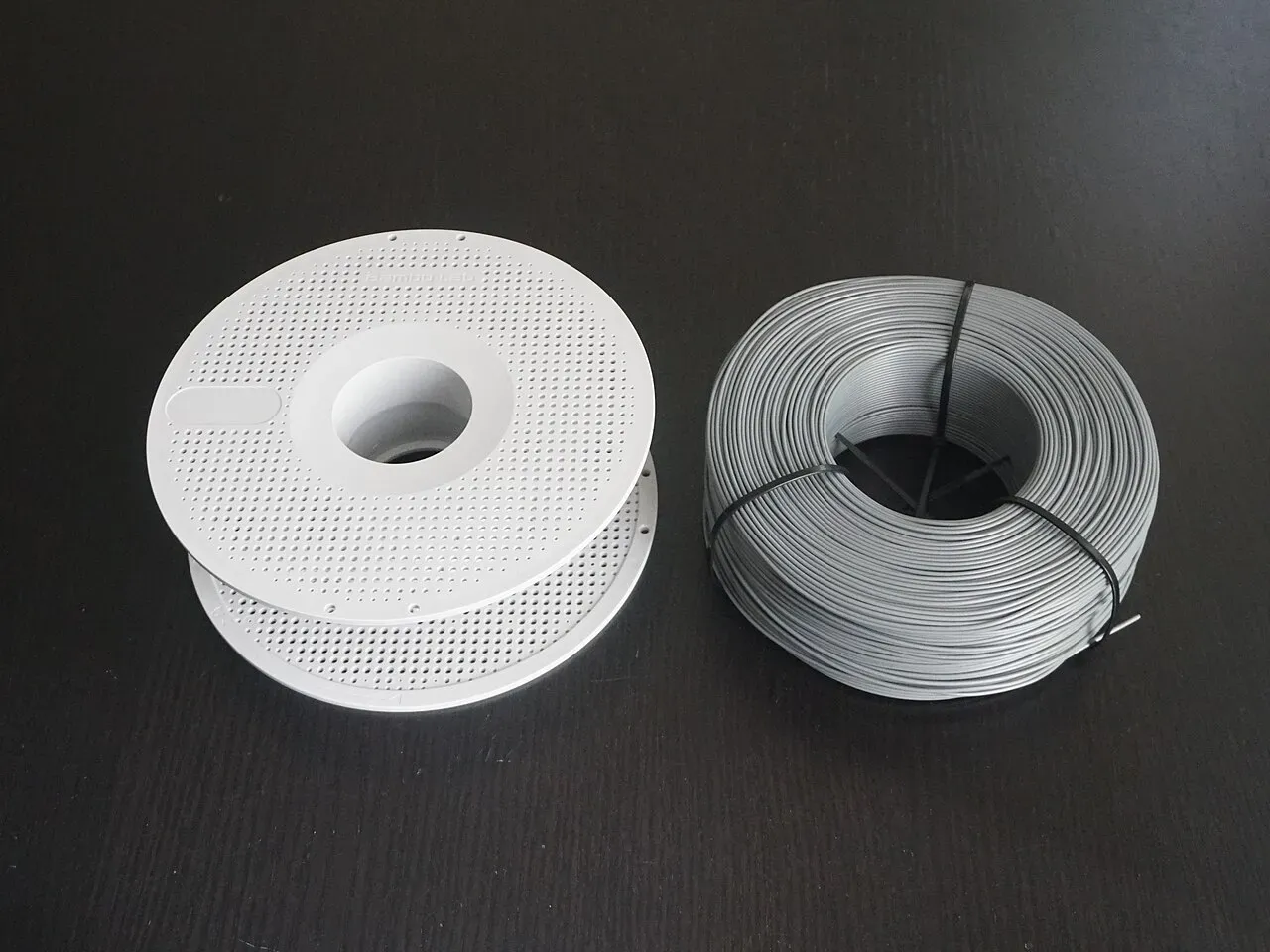 Refill filament: a coil and a reusable spool.Photo: Suit ·CC BY-SA 4.0 ·Wikimedia Commons
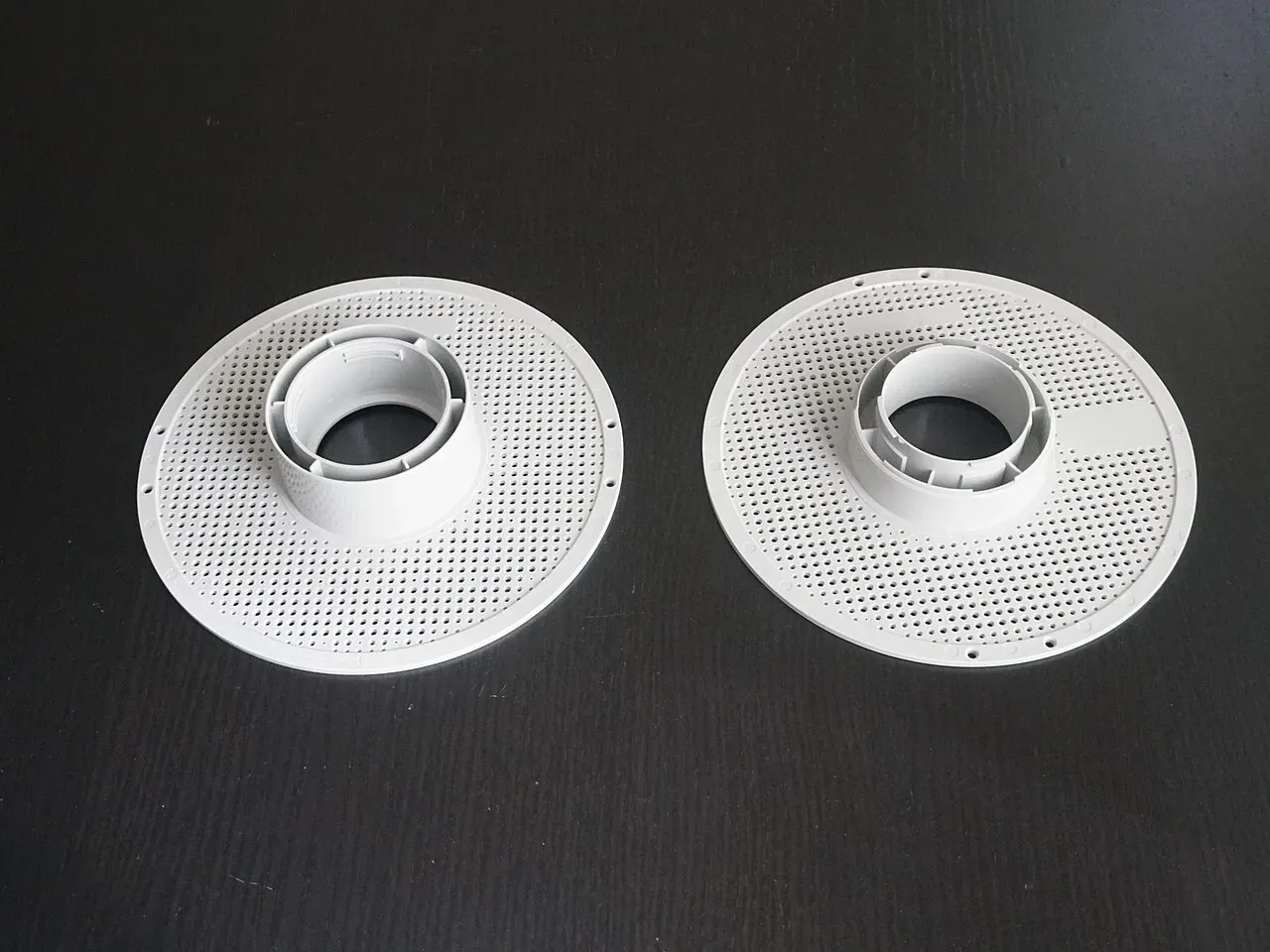 Open the reusable spool…Photo: Suit ·CC BY-SA 4.0 ·Wikimedia Commons
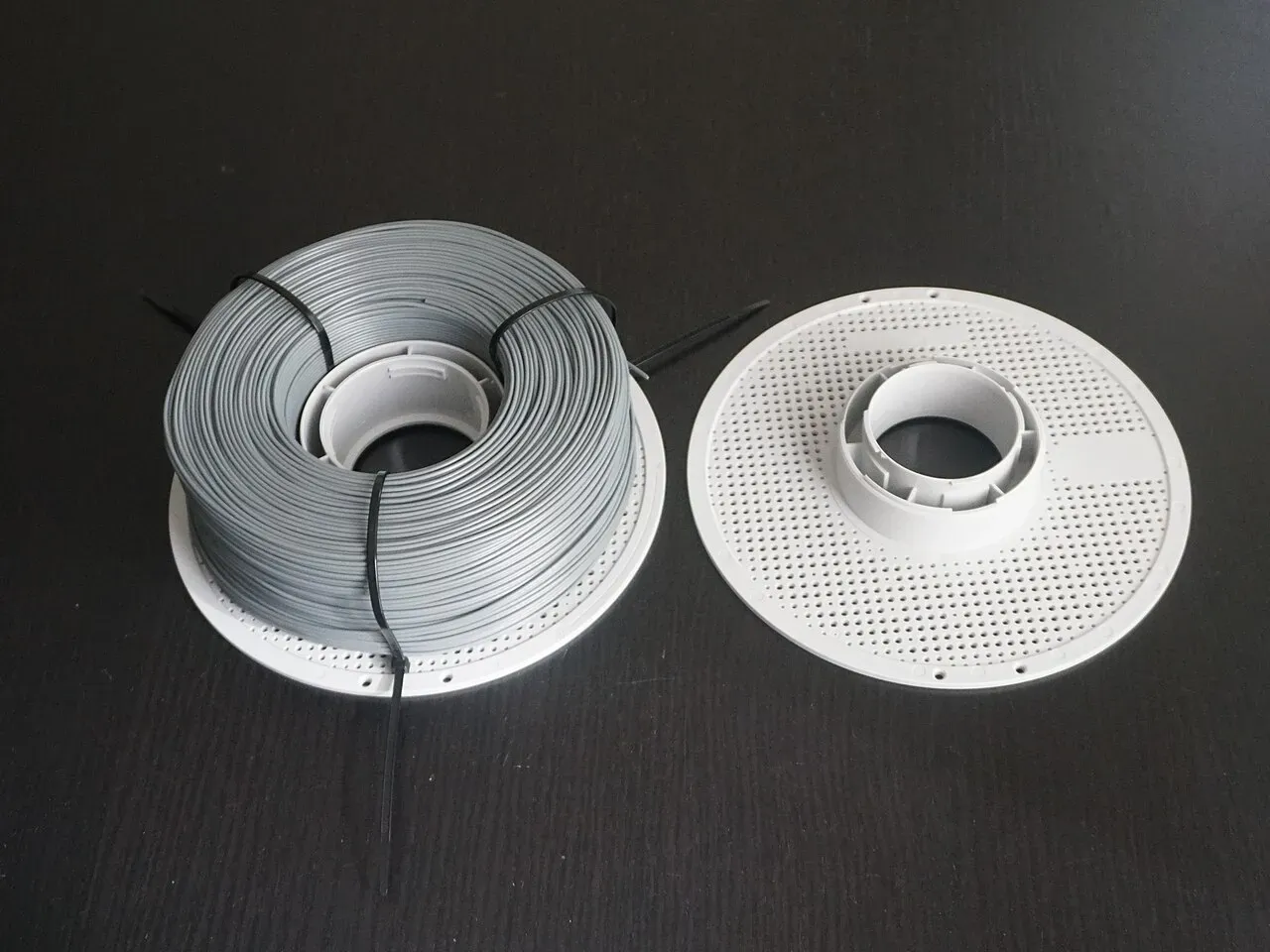 …drop the coil in…Photo: Suit ·CC BY-SA 4.0 ·Wikimedia Commons
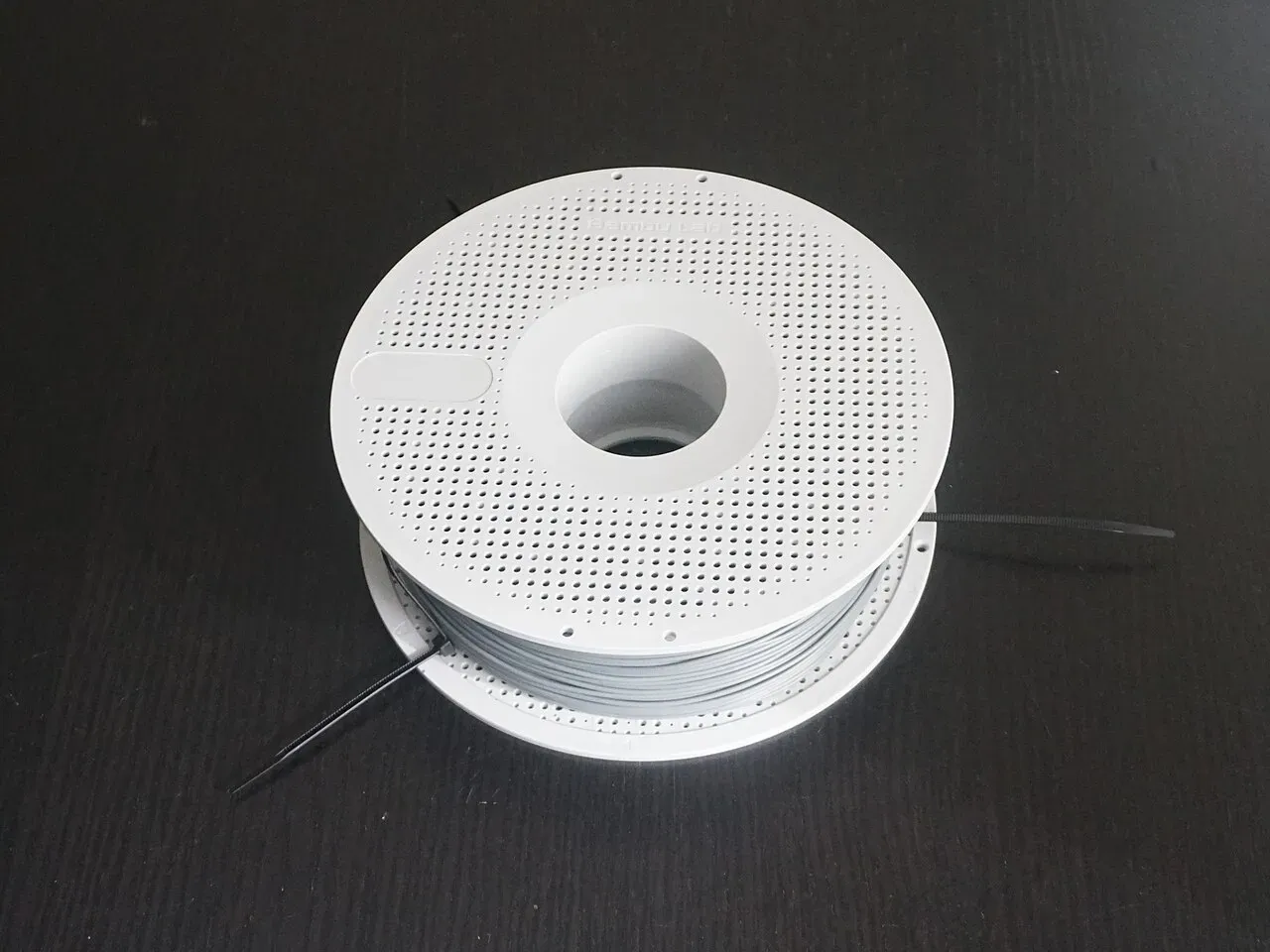 …and close it. Cut the ties last.Photo: Suit ·CC BY-SA 4.0 ·Wikimedia Commons
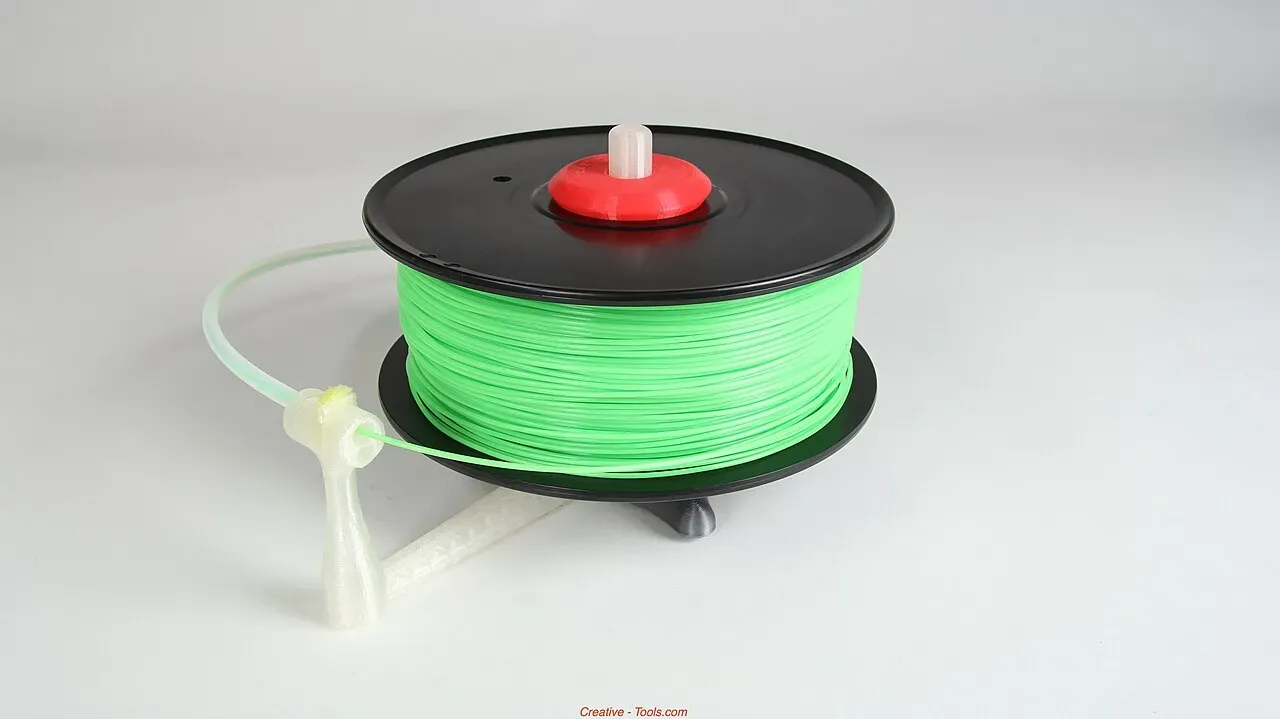 A simple spool holder lets the spool turn freely.Photo: Creative Tools ·CC BY 2.0 ·Wikimedia Commons
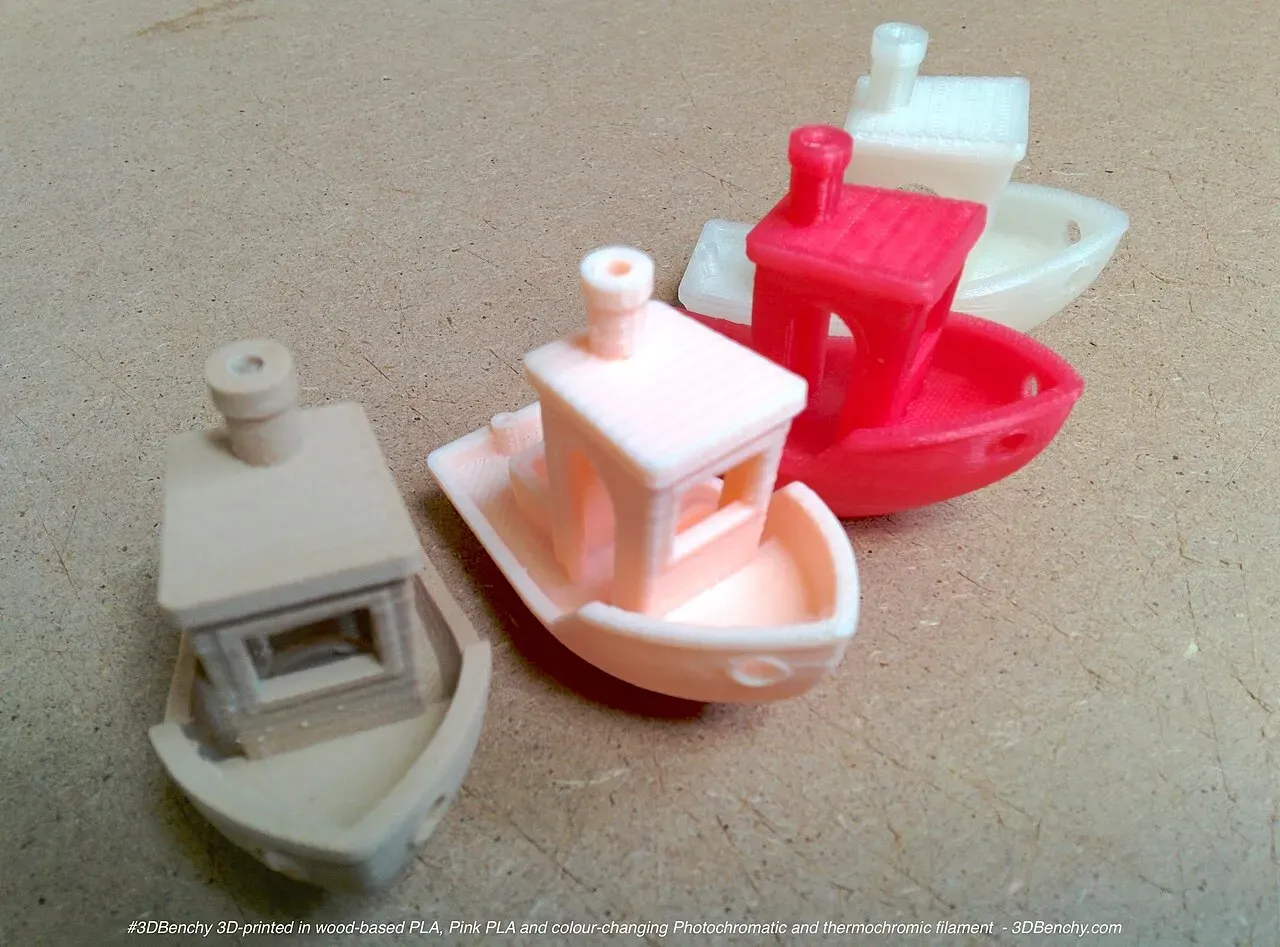 Printed Benchys in different filaments.Photo: 3DBenchy ·CC BY 2.0 ·Wikimedia Commons
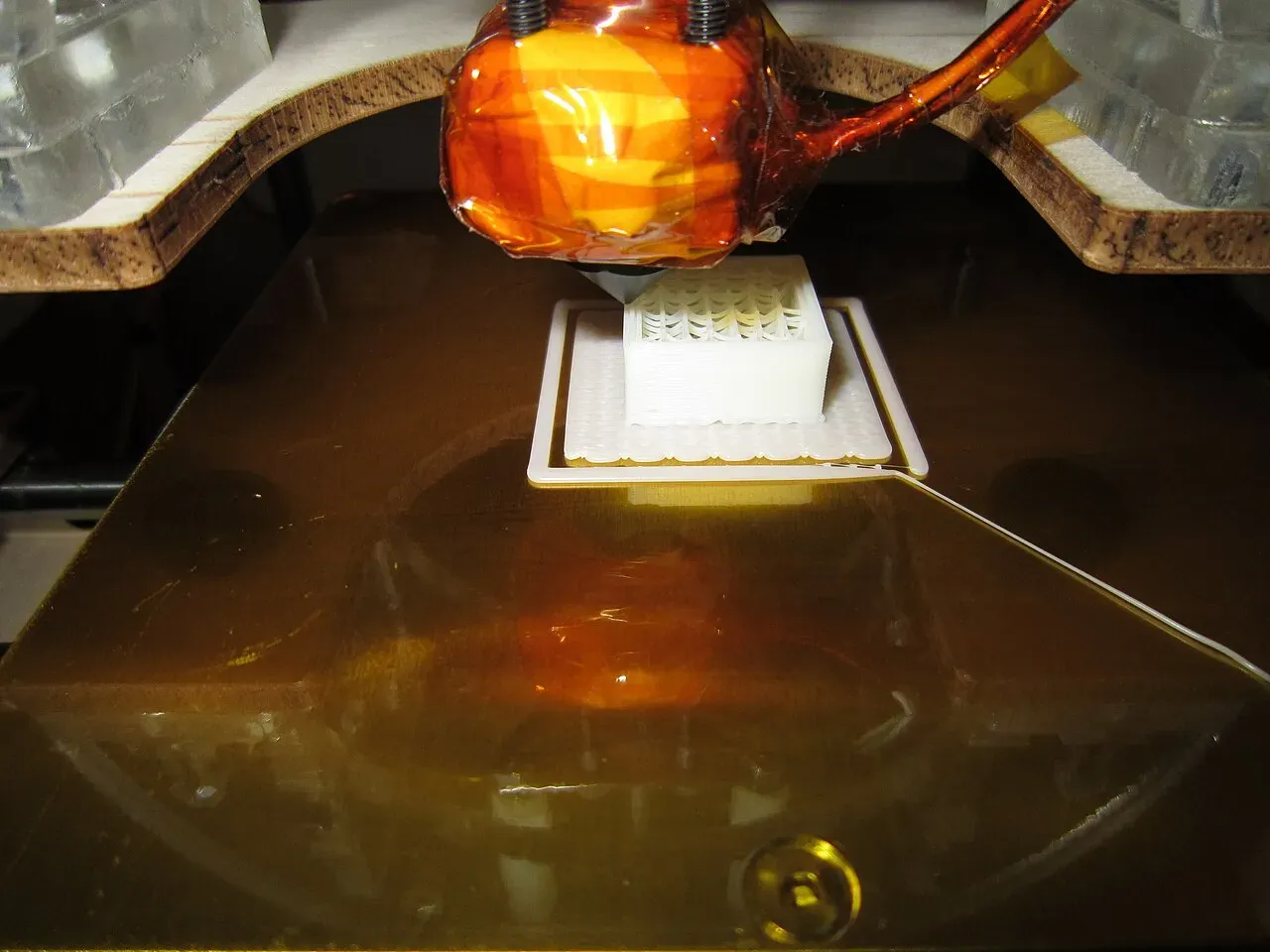 A 20 mm calibration cube, often the first print.Photo: syvwlch ·CC BY 2.0 ·Wikimedia Commons
How to dry filament: four methods
1. A dedicated filament dryer (best for most people)
A filament dryer is a small heated box made for one or two spools. It holds a set temperature, circulates warm air and usually has presets for common materials. Most have a hole or fitting so you can feed filament straight to the printer while the spool stays inside.
- Put the spool in and close the lid.
- Choose the material preset, or set the temperature from the table above.
- Set the timer: 4–6 hours for most filaments, longer for nylon.
- When it finishes, print from the dryer or move the spool straight into sealed storage.
Some dryers have a built-in hygrometer that shows the humidity inside the box. It falls as the spool dries, which is a useful sign the job is done.
2. A food dehydrator
A food dehydrator does the same job: low, steady heat with moving air. Remove enough trays to fit a spool, or use a printed spacer ring. Most dehydrators reach PLA, PETG and TPU temperatures easily. Check the top of the dial before you buy one for nylon, because not all of them reach 70–80 °C.
Check the real temperature with a thermometer on the first run. The dial on a cheap dehydrator is a rough guide, not a precise setting.
3. A kitchen oven (only with care)
An oven works, but it’s the riskiest method.
If your oven has a fan setting, use it; moving air dries filament faster and more evenly.
4. Printing straight from a dryer box
For moisture-hungry materials, drying once isn’t enough: nylon and TPU can start picking up water again during a long print. The fix is to keep the spool in a dry box while you print, with the filament feeding to the printer through a PTFE tube.
- Heated dryer boxes (most filament dryers) keep drying the spool while it prints. This is the best option for nylon and a good one for TPU and PETG.
- Passive dry boxes are sealed containers with desiccant inside, a spool holder on bearings and a sealed outlet for the filament. They keep a dried spool dry; they don’t dry a wet one.
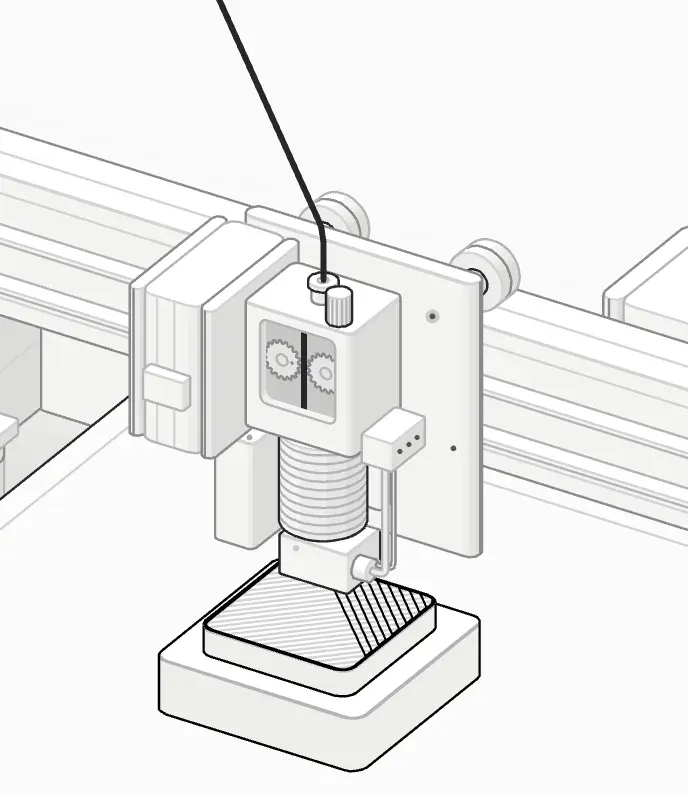 The print head: extruder on top, finned heatsink, heater block and nozzle.
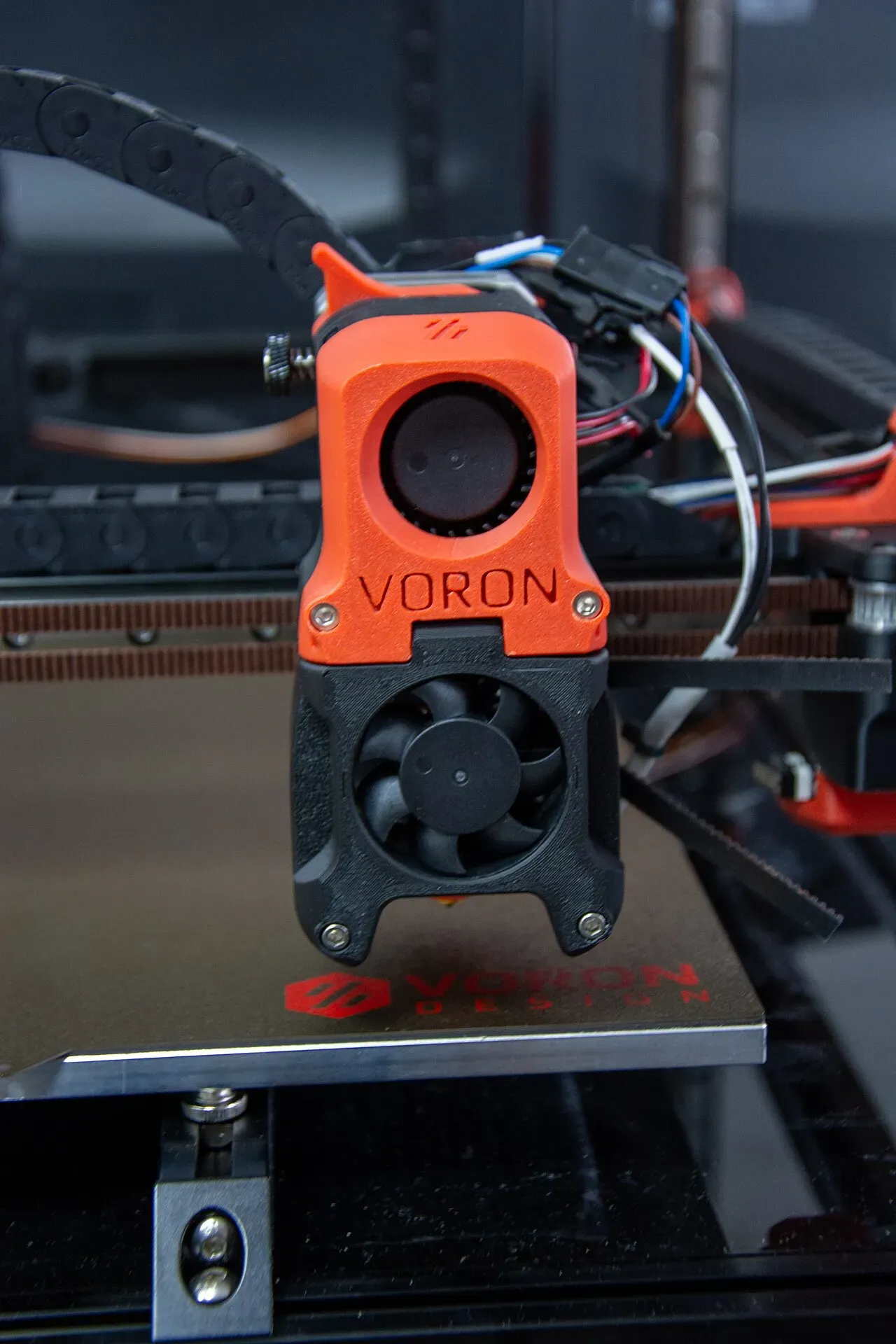 A modern toolhead: extruder, hotend and fans in one housing.Photo: disinterpreter ·CC BY-SA 2.0 ·Wikimedia Commons
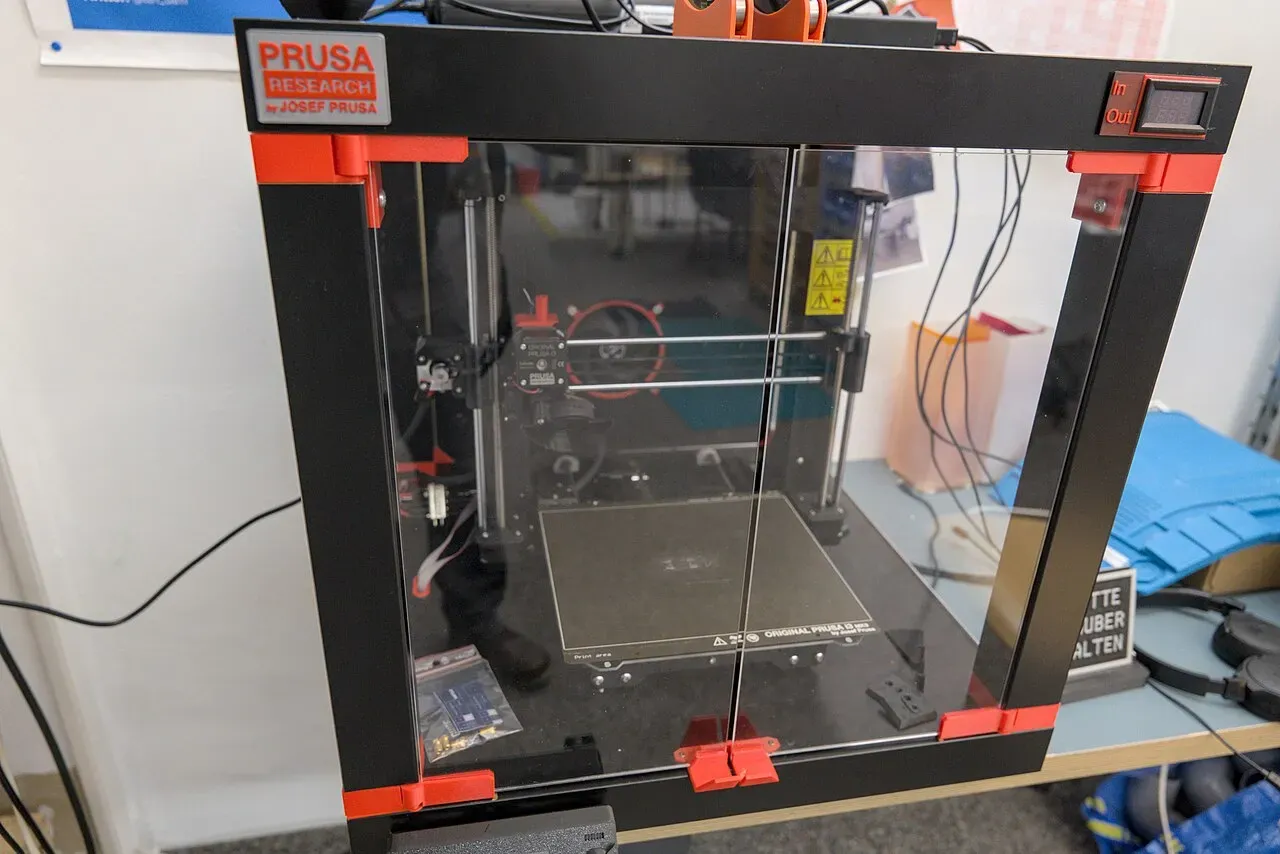 An enclosure keeps heat in for ABS and ASA.Photo: -stk ·CC BY-SA 4.0 ·Wikimedia Commons
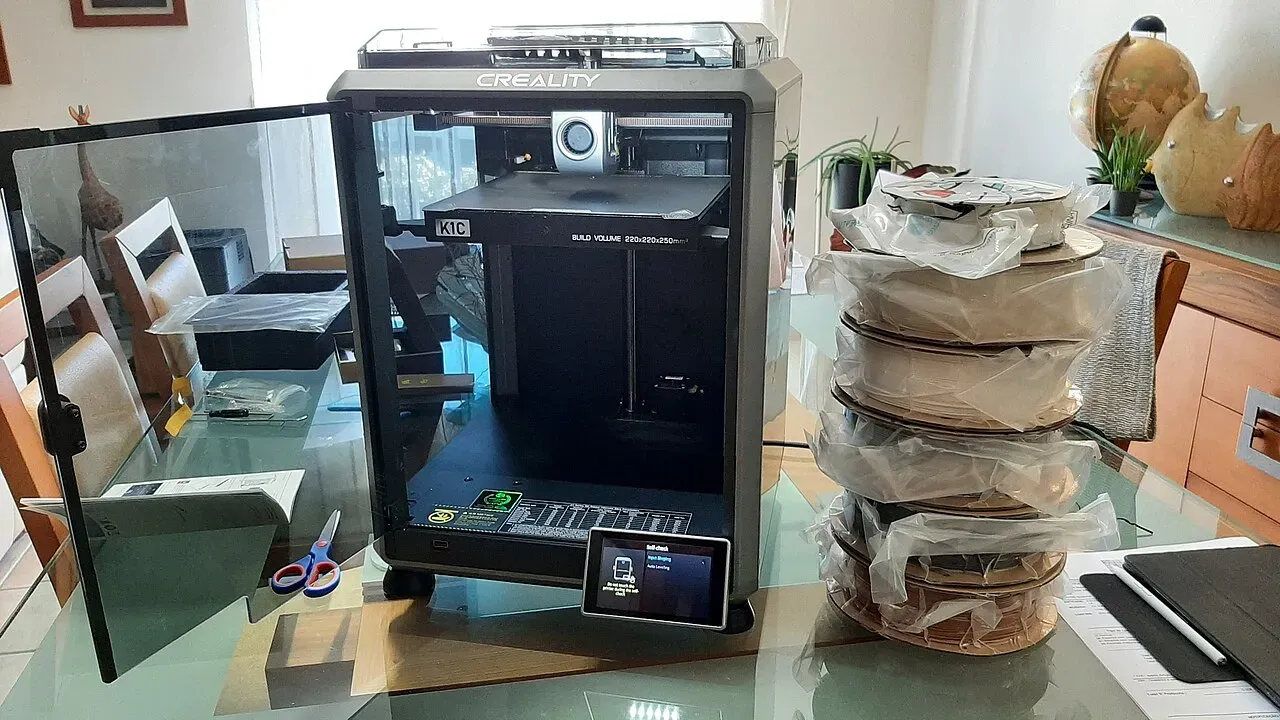 An enclosed CoreXY printer on a home desk.Photo: Mortymore ·CC BY 2.0 ·Wikimedia Commons
How to store filament dry
Drying is wasted if the spool goes back on an open shelf. Store every open spool you aren’t using sealed up with desiccant.
Sealed bags and boxes
- Resealable bags: cheap and space-saving. Zip-lock or vacuum storage bags work; squeeze out as much air as you can.
- Airtight boxes: a plastic food storage box or cereal container with a gasket in the lid holds one or two spools. Large clip-lid storage boxes with a seal hold several.
- The original bag: keep the bag a new spool came in. Many are resealable or can be closed with a clip.
Store the boxes somewhere cool and out of sunlight. A warm, damp garage is the worst place for filament, sealed or not.
Desiccant
Desiccant soaks up the moisture that gets in. The usual choice is silica gel, either in sachets or as loose beads in a breathable bag or a small printed container.
- Use colour-changing (indicating) silica gel so you can see when it’s used up. The common kinds change from orange to green or dark, or from blue to pink, as they fill with water. Check the packet for which colours yours uses.
- Use enough. A small sachet in a big box fills up quickly. More desiccant lasts longer between recharges.
- Keep it in a breathable bag or container, not touching the filament directly, so beads can’t end up in the extruder.
Regenerating desiccant
Used silica gel isn’t finished; you can dry it and reuse it.
- Spread the beads in a thin layer on a metal or glass tray, out of any plastic sachet that can’t take heat.
- Heat them in an oven at around 100–120 °C for 1–2 hours, or until they’ve changed back to their dry colour. Follow the packet’s instructions if it has them.
- Let them cool somewhere dry, then put them straight back into sealed storage.
Hygrometers and target humidity
A small digital hygrometer (humidity meter) in each storage box tells you how dry it really is, so you don’t have to guess when the desiccant is used up.
- Aim for below about 20% relative humidity inside the box for PETG, TPU and nylon. That’s a common target in filament makers’ storage advice.
- PLA, ABS and ASA tolerate more, but keeping them below about 30% is a sensible goal.
- When the reading creeps up, recharge or replace the desiccant. Cheap hygrometers can read a few percent off, so watch for the reading changing rather than trusting the exact number.
For comparison, a typical home sits well above these levels, which is why an open spool keeps absorbing water.
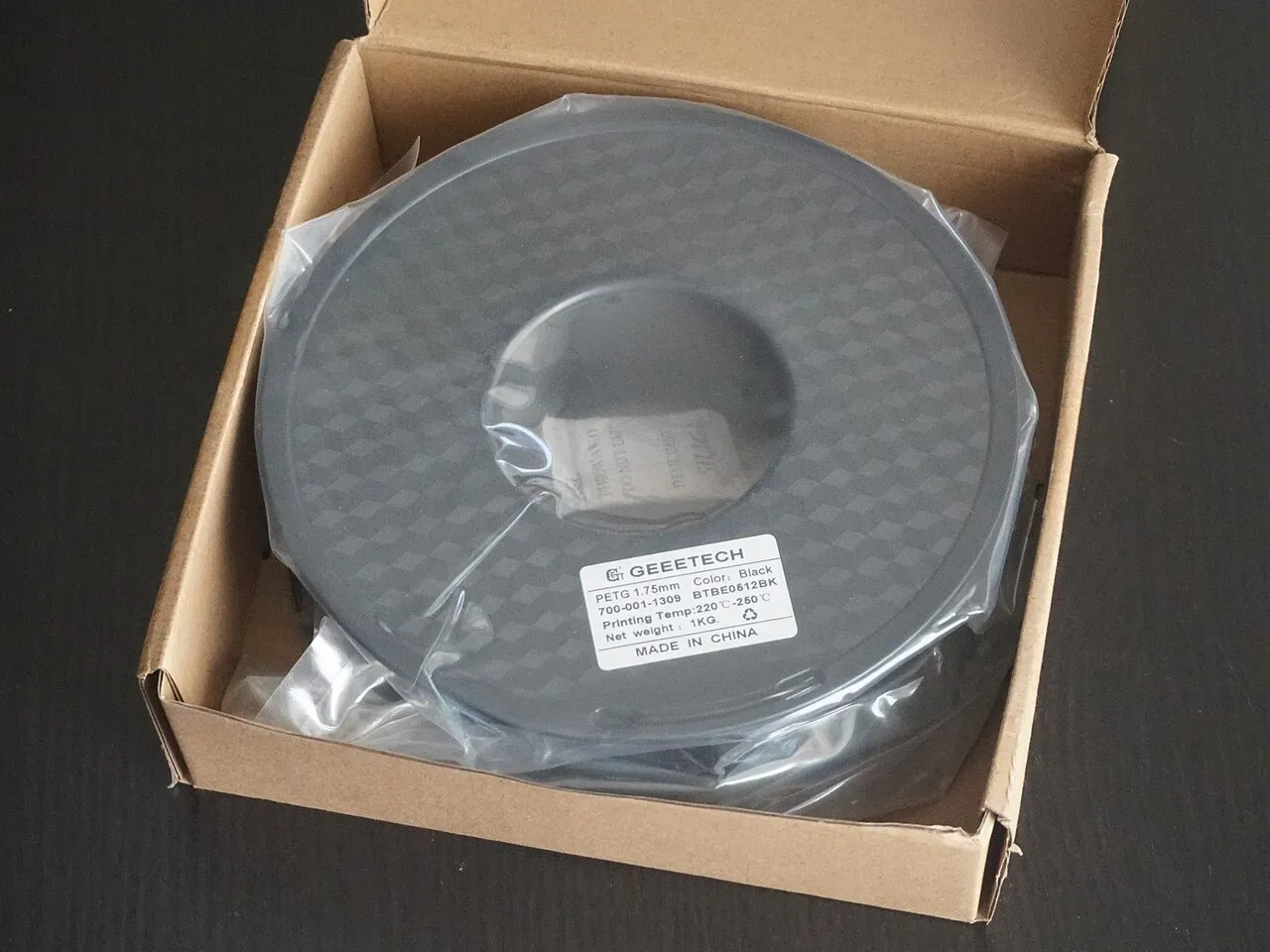 A 1 kg spool of PETG, sealed with desiccant.Photo: Suit ·CC BY-SA 4.0 ·Wikimedia Commons
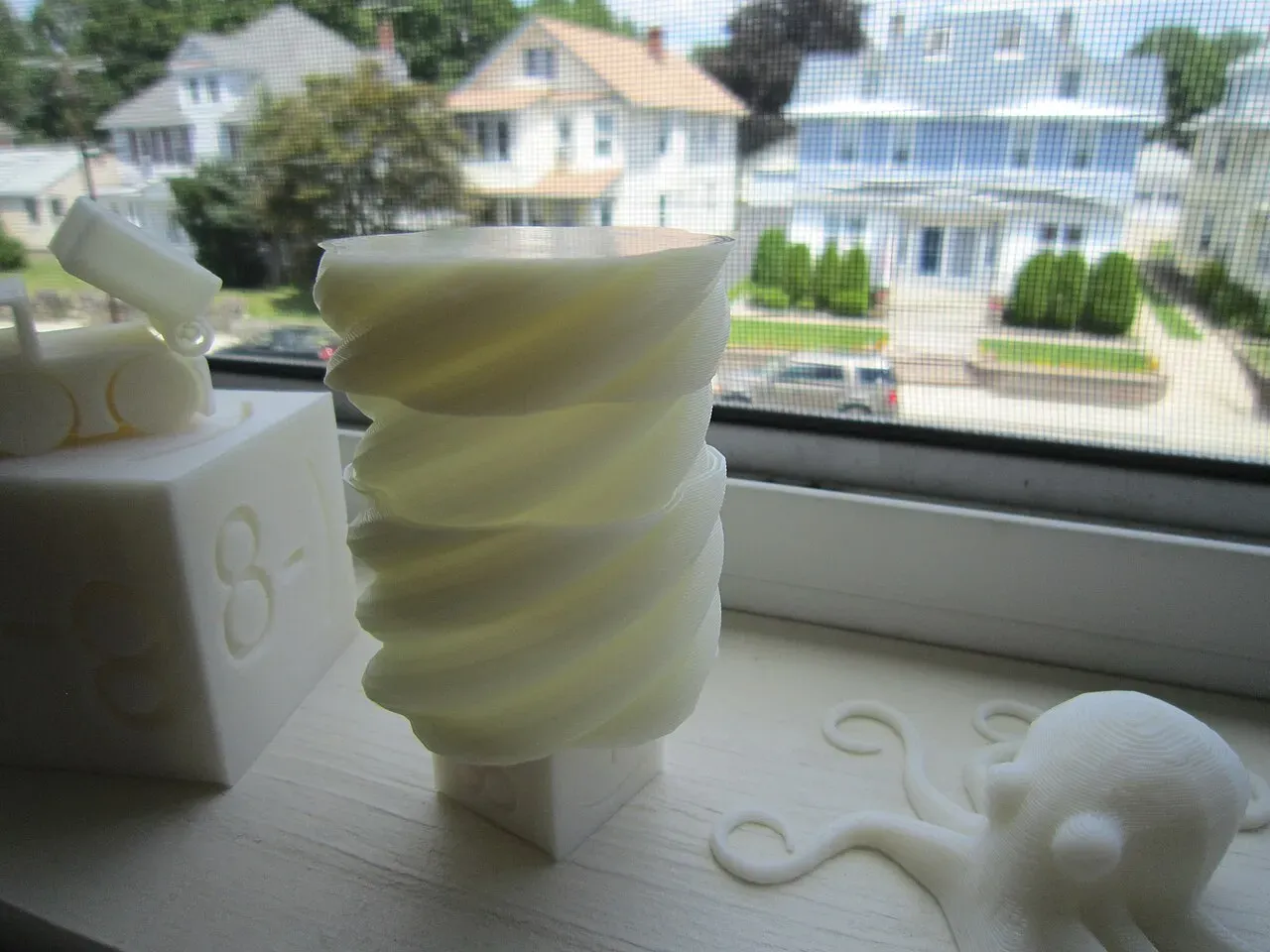 A screw-top box: threads print well at 0.2 mm layers.Photo: syvwlch ·CC BY 2.0 ·Wikimedia Commons
Common drying mistakes
- Drying too hot to save time. That’s how spools fuse into a solid lump. Stay in the range and give it longer instead.
- Drying, then storing in the open. The spool starts absorbing water again straight away.
- Trusting the dial. Dehydrator and oven dials are rough. Check the real temperature with a thermometer.
- Blaming moisture for everything. If a fresh, sealed spool has the same problem, the cause is elsewhere: see the comparison table above.
- Forgetting the desiccant. Desiccant that’s already full of water does nothing. Recharge it when the indicator or hygrometer says so.
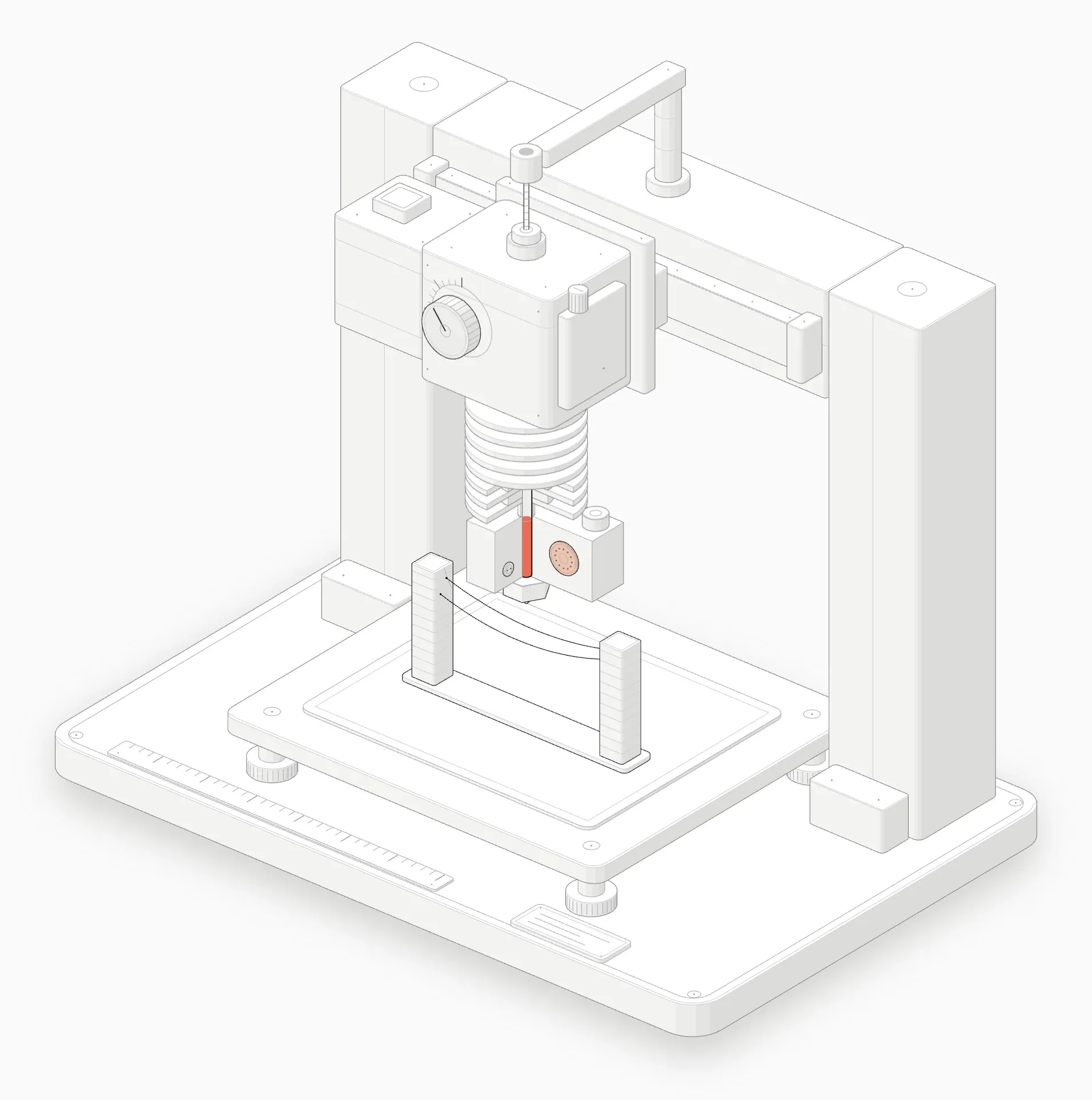 A stringing test: two thin towers and a head that travels between them.
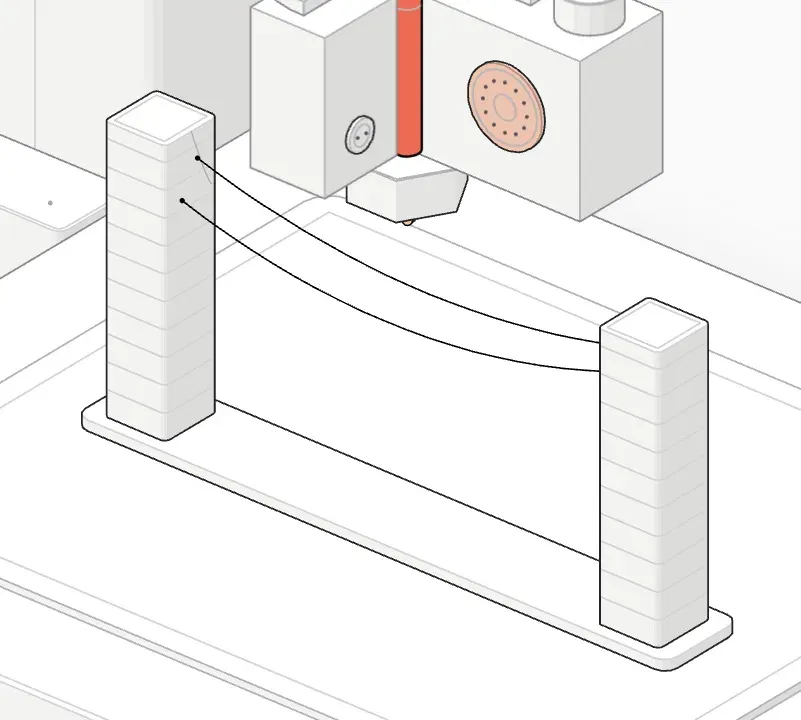 0.8 mm of retraction: a few strings.
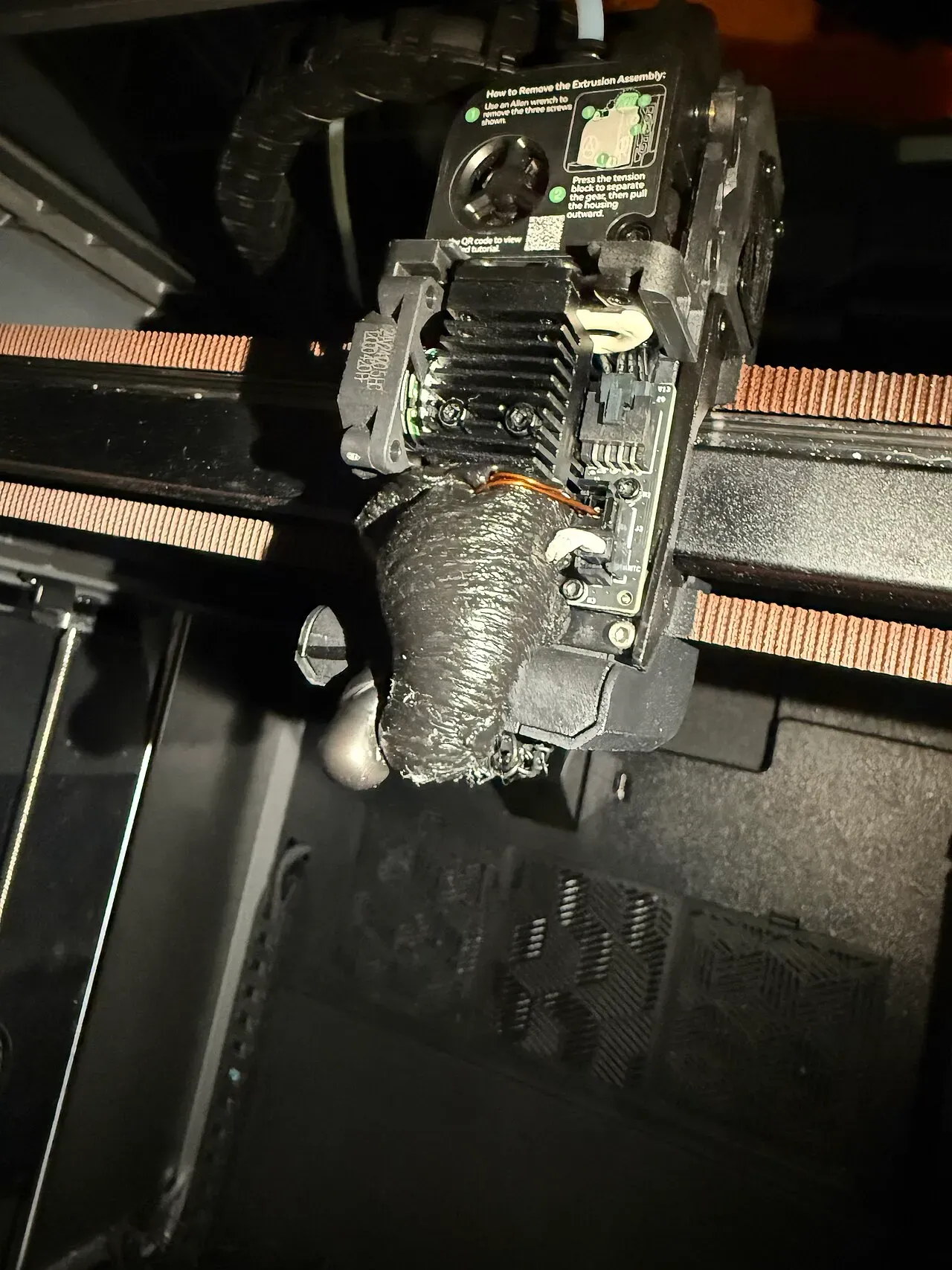 The "blob of death": plastic that leaked and wrapped the hotend.Photo: LunaEatsTuna ·CC BY-SA 4.0 ·Wikimedia Commons
Your action plan
- Listen for popping and look for bubbles in a strand pushed out into the air.
- If it’s wet, dry it: PLA 45–50 °C, PETG 60–65 °C, ABS/ASA 60–80 °C, TPU 50–65 °C, nylon 70–80 °C, for 4–12 hours.
- Use the filament maker’s settings when they differ.
- Use a filament dryer or dehydrator; treat the oven as a last resort.
- Store dried spools sealed with colour-changing desiccant and a hygrometer.
- Print nylon, TPU and PETG from a dryer box.
FAQ
How do I know if my filament is wet?
Listen and look while it prints. Popping, crackling or hissing at the nozzle, tiny bubbles in the extruded plastic, sudden stringing and rough or weak prints all point to moisture. Brittle PLA that snaps when you bend it is another common sign. Swapping in a fresh sealed spool is the surest test.
What temperature should I dry PLA at?
45–50 °C for 4–6 hours. PLA starts to soften around 55–60 °C, so stay well below that or the turns can stick together. Use the maker’s figure if the label gives a different one.
How long does it take to dry filament?
Usually 4–6 hours for PLA, PETG, ABS, ASA and TPU, and 8–12 hours or more for nylon. A full spool or a very wet one can need longer, because the middle turns dry last.
Can I dry filament in the oven?
You can, but carefully. Kitchen oven thermostats often overshoot at low settings, which can soften the filament and warp the spool. Check the real temperature with an oven thermometer first, keep the spool away from the elements, and never leave it unattended. Avoid it for PLA unless your oven holds a low temperature accurately.
Can you dry filament too long?
At the right temperature, a longer drying time is generally safe; the risk is drying too hot, not too long. Very long sessions at the top of a range can make some filaments slightly more brittle, so stay at the low end if you plan to leave a spool in for many hours.
Does new filament need drying?
Usually not. New spools come sealed with desiccant and normally print well straight out of the bag. If a new spool pops or strings badly, dry it anyway; the seal may have failed or it may have been stored somewhere damp.
How should I store filament so it stays dry?
In a sealed bag or airtight box with colour-changing silica gel desiccant, kept somewhere cool and out of sunlight. Put a hygrometer in the box and aim for below about 20% humidity for PETG, TPU and nylon.
Can I reuse silica gel desiccant?
Yes. Spread the beads on a tray and heat them at around 100–120 °C for 1–2 hours, or until the indicator turns back to its dry colour, then cool them and seal them back in. Follow the packet’s instructions if they differ.
Is it worth buying a filament dryer?
If you print PETG, TPU or nylon, or you live somewhere humid, yes. A dryer holds the right temperature and lets you print straight from it. If you print PLA only and store it sealed, a dehydrator or good storage may be all you need.
Related guides
If prints still string after the spool is dry, work through the rest of our stringing guide. For gaps and thin walls, see how to unclog a nozzle and why your extruder is clicking. Printing ABS, ASA or nylon? Read how to fix warping too. To see where the hotend sits, read parts of a 3D printer explained, and if you’re just starting out, begin with the complete beginner’s guide.
Free: the Print Problems Cheat Sheet
12 common print faults on two printable pages: what each looks like, why it happens and the fix. Plus one new guide a week.
Free: the Print Problems Cheat Sheet
12 common print faults on two printable pages: what each looks like, why it happens and the fix. Plus one new guide a week.